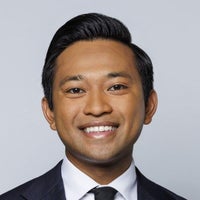
Michigan is witnessing a heated Democratic Senate primary as candidates Abdul El-Sayed and Representative Haley Stevens clash over pivotal issues. The debate is significant as it unfolds before the primary election to fill the vacancy left by Democratic Senator Gary Peters.
Progressive vs. Moderate
El-Sayed and Stevens represent distinct wings within the Democratic Party. Stevens belongs to the party’s moderate flank and has been a representative for parts of Detroit since 2019. El-Sayed, a proponent of progressive agendas, has served in prominent health roles in Detroit and Wayne County.
Debate on Outside Funding
The influx of outside funding has become a point of contention. El-Sayed criticizes Stevens for receiving millions from groups linked to the American Israel Public Affairs Committee (AIPAC). He highlights her vote against reducing annual military aid to Israel, arguing that it’s a poor use of taxpayer money.
Stevens argues that financial support from outside doesn’t sway her stance, emphasizing her critique of Israeli leaders. She points out that El-Sayed’s campaign also benefits from super PAC funding, notably the “Fighting for Michigan PAC” supported by his father-in-law. As of the last count, Stevens and her supporters have spent over $61 million, whereas El-Sayed’s campaign spent over $15.3 million.
Debating Electability
The upcoming Democratic candidate will face former Republican Representative Mike Rogers, a strong Trump supporter, in November. Although Michigan hasn’t seen a Republican senator in 25 years, the national debate about endorsing progressive candidates brings risk assessments by Stevens and her allies against El-Sayed.
El-Sayed distances himself from socialism, identifying as a capitalist critical of monopolistic practices. He gains backing from progressives like Bernie Sanders and Elizabeth Warren, while Stevens draws support from moderates including Gretchen Whitmer.
Campaign Tone and Rhetoric
El-Sayed faces scrutiny for using sharp rhetoric in a donor meeting. He aims to appeal to the progressive movement by signaling intent to challenge incumbents. He maintains that he discourages personal attacks among his supporters, suggesting that ads from Stevens’ backers fuel toxicity.
Allegations regarding El-Sayed’s past remarks on women politicians gain traction, highlighted by Stevens’ supporters. An ad features his critique of Michelle Obama’s campaign against childhood obesity and remarks on Whitmer.
Financial Disclosures
El-Sayed recently released a personal financial disclosure, showing rental property interests in Bangalore and Dubai. These properties, owned by his spouse, spark transparency questions in the eyes of Stevens, who accuses El-Sayed of vague financial reporting. She questions his commitment to full disclosure in matters of his finances.
El-Sayed dismisses Stevens’ allegations as diversions and defends the propriety of his financial affairs, while questioning the motivations behind the focus on his spouse’s inherited properties.
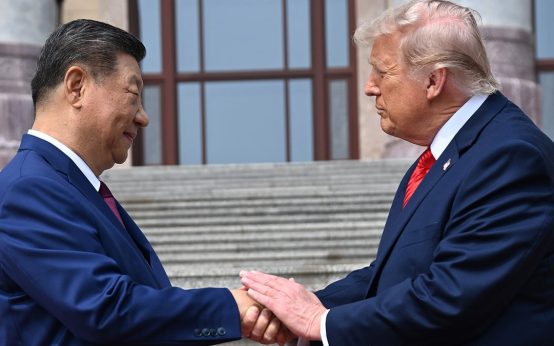 Concerns in U.S.-China Relations Ahead of Summit
 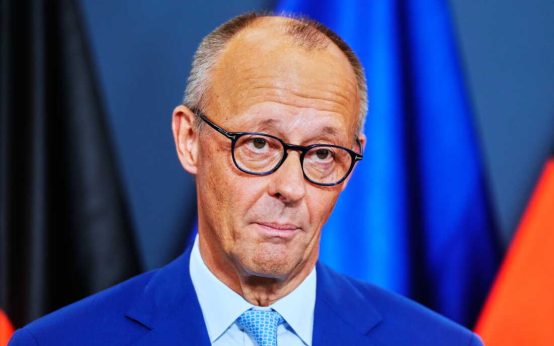 German Chancellor Friedrich Merz Vows to Continue Amid Election Losses
 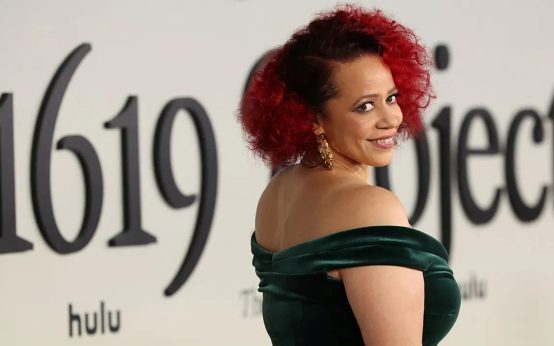 Nikole Hannah-Jones Reflects on School Choice and Its Impact
  Republican Senator Criticizes Trump’s $5,000 Check Proposal
  Trump’s Approach to Iran at the United Nations
  Trump’s Triumphal Arch Controversy