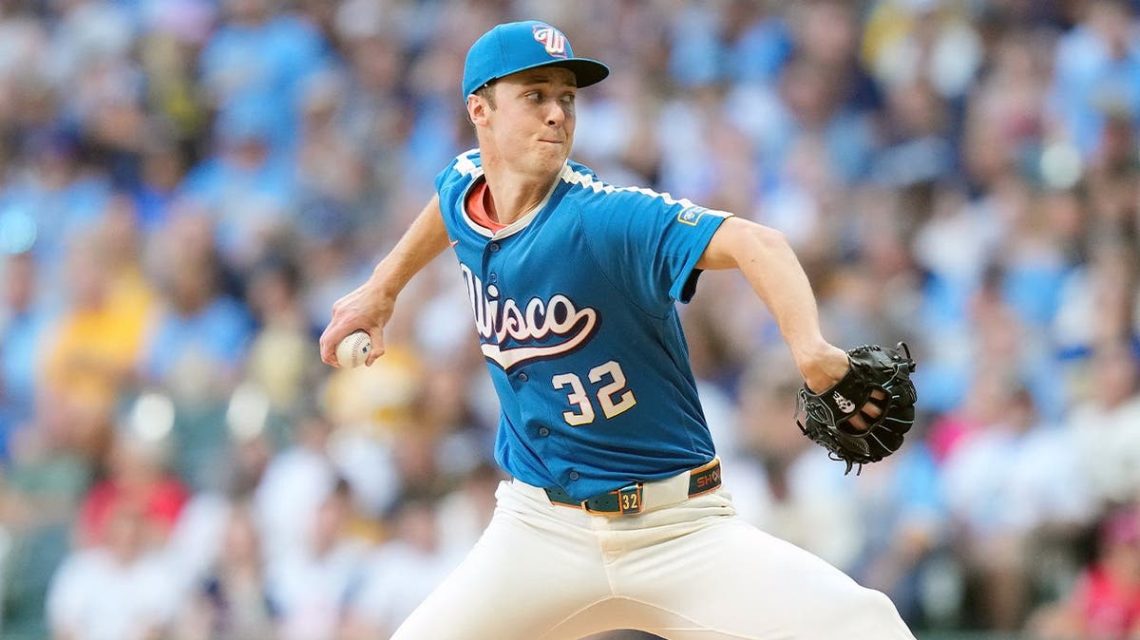
Hitting in Major League Baseball in 2026 presents significant challenges for batters. Notably, pitchers like Jacob Misiorowski are formidable with fastballs reaching 104 mph and sliders at 93 mph. A decade ago, the average fastball speed across the league was 93 mph. Currently, after his first 15 starts, Misiorowski has allowed only 15 earned runs.
Relievers also exhibit exceptional performance. For instance, Mason Miller, the closer for the San Diego Padres, has permitted just three earned runs over 32 innings. Miller has faced 123 batters and struck out 63, with a hard-hit percentage of only 7%, compared to a league average of 40%.
Misiorowski and Miller exemplify pitching dominance. Throughout the league, pitchers outpace hitters, largely due to advanced pitch development, making it easier to tailor effective pitch mixes using extensive data.
BREWERS’ FLAMETHROWER JACOB MISIOROWSKI LIGHTS UP RECORD BOOKS WITH TRIPLE-DIGIT SPEEDS IN GEM VS YANKEES.
However, despite these pitching advantages, offense has surged recently. This uptick coincides with changes in the baseball itself. Research by Eno Sarris from The Athletic reveals that current baseball drag is the lowest since 2019. Lower drag allows the ball to travel further through the air, as evidenced in 2019 when numerous players achieved high home run counts. In 2025, the league had a batting average lower than in 2019, reflecting higher drag baseballs.
Sean Zerillo’s research shows an increase in offensive analytical data, highlighting a +10.2 ft rise in barrel distance from April 2026. This is the largest in-season jump recorded by Statcast. Weather was considered, but Zerillo found a similar increase of 10.4 feet in domed stadiums, pointing to the ball as the main factor.
Variations in baseball production occur annually. The league currently controls the ball’s production and has applied humidors at all stadiums. While there’s no confirmation that MLB intentionally reduces drag, the league’s emphasis on increasing offense is clear. Rule changes in 2023 aimed to boost offense, such as banning the shift, temporarily increasing runs per game from 4.28 in 2022 to 4.62 in 2023. However, by 2025, the number declined to 4.45.
MLB seeks a balance, recognizing that while purists prefer pitching duels, casual fans enjoy seeing players like Shohei Ohtani or Aaron Judge hitting home runs. An additional six feet of travel can transform a warning track fly ball into a home run. Fans are keen to see how this trend unfolds, particularly in the critical playoff month of October.
 Kurt Angle Reflects on His TNA Wrestling Career
  Analyzing NFL Teams After Two Weeks
  Seattle Seahawks Coach Mike Macdonald’s Strategic Approach
  Massachusetts Youth Hockey Player Suspended Indefinitely After Slashing Incident
  Chicago Bears Face Quarterback Changes Amid Injuries
  Kevin Durant Chooses to Focus on WNBA Success Amid Gender Debate