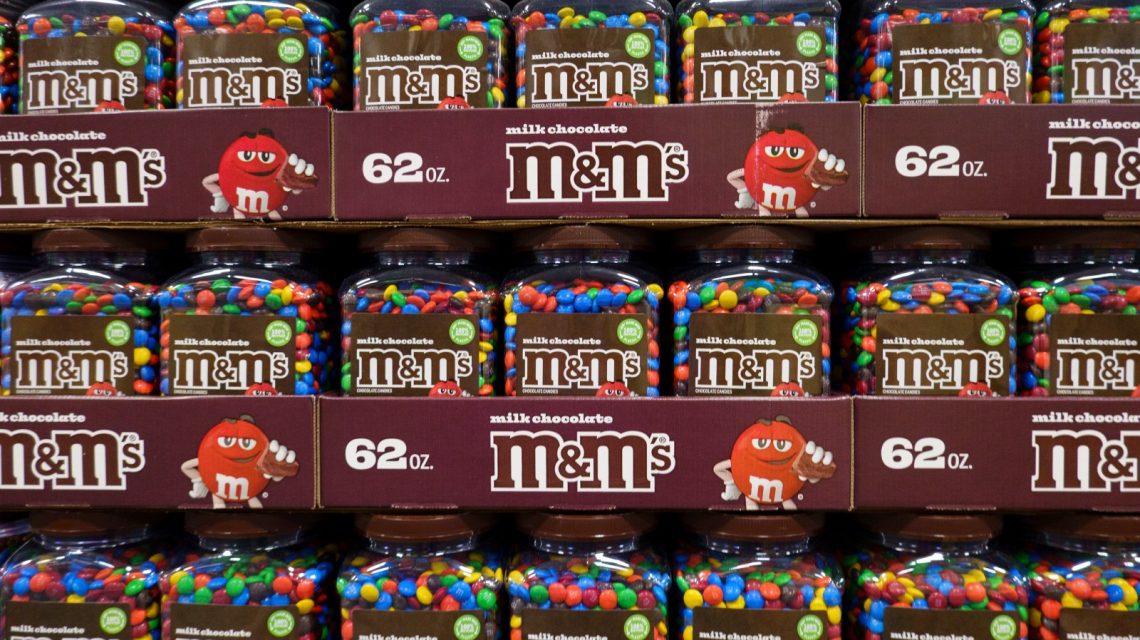
M&Ms are undergoing a significant transformation. The candies will debut without artificial dyes, as Mars company aligns with the Trump administration’s ‘Make America Healthy Again’ movement.
The New M&Ms
The new M&Ms will be naturally dyed, marking a historic first in Mars’s nearly nine-decade history. These updated candies will be available on Amazon starting this August. Mars has confirmed this debut with The Wall Street Journal.
However, changes include the omission of two iconic M&Ms. Both brown and blue M&Ms will be excluded, as Mars has not identified ways to naturally replicate their colors.
Significance of the Change
Concerns about processed foods and chemical additives have been at the forefront of public health discussions since Robert F. Kennedy Jr. took the helm at the Department of Health and Human Services. M&Ms are now joining the list of candies undergoing reformulations aimed at improving consumer health.
For instance, Skittles, also produced by Mars, will remove titanium dioxide by 2025. This chemical had faced a ban in the EU in 2022 due to health concerns.
Transformation of M&Ms
The upcoming natural dye transition for M&Ms reflects increasing pressure from Kennedy and other Republican officials urging food manufacturers to remove artificial colors from U.S. products.
Texas Attorney General Ken Paxton has launched an investigation into Mars for allegedly misleading consumers, based on Mars’s 2016 pledge to eliminate artificial colors while continuing to assert the safety of approved food dyes. Paxton claims these dyes are linked to negative health impacts.
Concerns Over Food Coloring
Artificial food coloring is a prominent issue within the ‘Make America Healthy Again’ movement. Concerns primarily focus on potential health impacts of these colorings, especially on children.
In 2025, the U.S. Department of Health and Human Services and the FDA plans to phase out petroleum-based synthetic dyes. Kennedy highlighted in a press release that these compounds offer no nutritional benefits and pose threats to children’s health.
Abroad, artificial colorings have faced stringent regulations. In Europe, manufacturers frequently opt for alternative ingredients, or products carry warning labels.
Across the U.S., interest in regulating food dyes goes beyond federal action. States like West Virginia and various legislators have proposed bans and restrictions on artificial food additives.
Other companies are also embracing these changes. Nestlé recently announced its U.S. products are free from synthetic dyes, earning commendation from Kennedy. This widespread crackdown on artificial dyes suggests a profound shift in candy manufacturing.
 President Trump Proposes ‘Super Intelligence’ as New AI Term
  Potential Changes in Medicare Reimbursement for Lab Tests
  First Lady Melania Trump’s AI Education Push Amid Concerns
  Expansion of Data Centers Fueled by AI Development
  Understanding and Addressing the Complexity of Suicide
  Recall of Meat Products from Star Meat Delivery Inc.