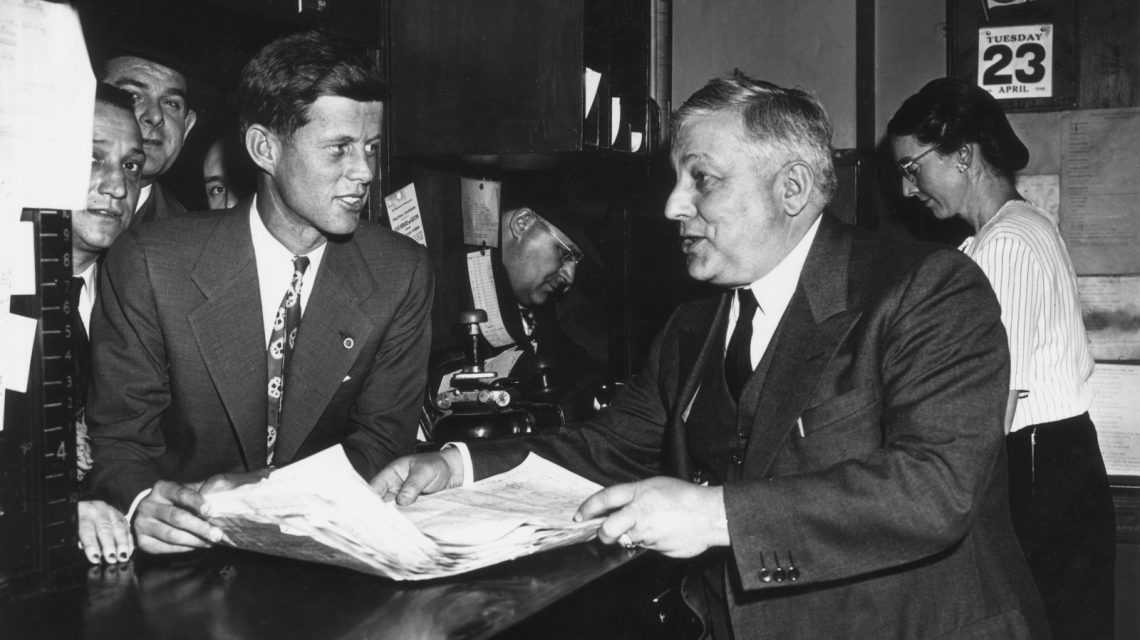
The current controversy surrounding two candidates named Dan Sullivan in Alaska’s U.S. Senate race has an unexpected historical parallel. This parallels John F. Kennedy’s first congressional campaign when two men named Joe Russo ran against him in the 1946 Democratic primary.
The Trump administration has filed a lawsuit aiming to block certification of Alaska’s Senate election if Republican incumbent Dan Sullivan loses. They argue voter confusion with another candidate, Daniel J. Sullivan Jr., might affect results. Alaskan officials are pushing for dismissal, stating this federal lawsuit lacks legal support. This November 3 contest could be pivotal in determining Senate control.
The Case of the Two Joe Russos in JFK’s Campaign
In 1946, Kennedy, a Navy veteran from a wealthy political background, began his political journey by seeking the Democratic nomination for Massachusetts’ 11th Congressional District. His opponents included Joseph Russo, a notable Boston City Council member, and another Joe Russo, a janitor. The latter’s entry led to speculations of political manipulation.
Joseph Russo, the councilor, was a well-known figure who arrived from Sicily at 8, eventually establishing a funeral home and a political career. He challenged Kennedy’s experience, labeling him a “young squirt” and criticized the advantage gained from family connections with an ad: “Congress seat for sale. No experience necessary.” Despite his established status, Russo faced unintended competition.
Allegations of Election Manipulation
According to the West End Museum, the 27-year-old janitor Joe Russo was reportedly encouraged by Kennedy’s campaign members to enter the race, thereby possibly splitting votes for the established Russo. Joseph P. Kennedy Sr., JFK’s father, allegedly supported this tactic.
A PBS documentary supports this claim, with Mark Dalton, a campaign worker, confirming that Joseph Kennedy Sr. arranged for the second Russo’s candidacy. Despite these maneuvers, JFK won decisively, gaining 22,183 votes compared to the city councilor’s 5,661 and the janitor’s 773 votes.
Joseph Russo continued in public service and even served as chairman of Boston’s Election Commission. He reportedly held no grudge against JFK, highlighting how these historical figures interacted despite past electoral rivalries.
Alaska’s Sullivan Duo in Legal Conflict
Currently, in Alaska, Republican Senator Dan Sullivan faces a name twin, Daniel J. Sullivan Jr., a retired teacher, who insists he is an independent candidate. Allegations suggest vote siphoning, but Daniel J. Sullivan denies colluding with political interests.
The Alaska Supreme Court upheld the inclusion of Daniel J. Sullivan Jr. on the ballot. The election setup distinguishes between the two by emphasizing the senator’s incumbency and the challenger’s complete name without a party tag. The state’s ranked-choice voting permits voters to list preferences individually for each candidate.
The Justice Department, under President Trump’s directive, sought legal intervention to block election certification if the incumbent loses under these grounds. Alaskan officials, however, argued in court that federal intervention lacks a foundation and emphasized concerns over ballot privacy.
These American political episodes, separated by eight decades, highlight similar name dilemmas in elections. While the Kennedy-era case had alleged manipulation tactics, in Alaska, the challenge revolves around whether similar names justify federal election intervention.
Both scenarios reflect ongoing complexities and potential controversies arising from candidate name similarities, spotlighting differences in legal maneuvering allegations and electoral guidelines.
 Ethical Concerns in Hormone Therapy Policy and Government Financial Disclosure
 Debate Over Data Centers in Arizona Sparks Health Concerns and Political Divisions
 Corporate Influence in Politics: Voters Must Act
 Michigan Senate Candidate El-Sayed Calls for Diplomatic Efforts Against Cartels
 Tight Senate Race in South Carolina with Graham and Andrews Deadlocked
 Federal Judge Rejects DOJ’s Request on Noncitizen Voting in California