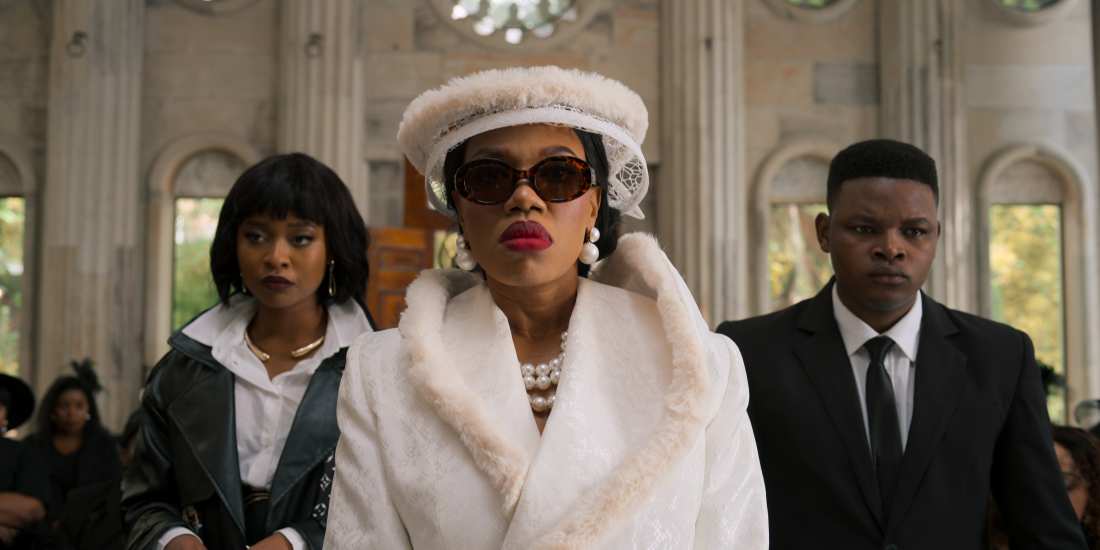
JOHANNESBURG, South Africa – Netflix’s The Polygamist, a Zulu-language telenovela, has become a sensation in South Africa and a global hit. The series, centered on a cheating husband’s double life, attracted over 23 million views in its first month. It reached the top ten in 62 countries, including the U.S., and secured the number one spot in nearly two dozen countries.
Set in Johannesburg, the story follows the wealthy Gomora family. The matriarch, Joyce, maintains appearances while her husband, Jonasi, starts a second household with another woman. Across 22 episodes, viewers experience intense drama, including fights, betrayal, and scandalous twists, capturing the attention of viewers worldwide.
Notable personalities like Sherri Shepard have expressed enthusiasm for the series. Shepard, a former host of The View, shared on Instagram, “Crazy rich Africans, I thought Crazy Rich Asians was something, but crazy rich Africans is a whole other level. Good grief!”
“It showcases a different kind of African lifestyle that viewers are not familiar with,” notes Sue Nyathi, the Zimbabwean author of the novel The Polygamist. “It’s always the poor struggling Africans. But this shows a society of wealthy Africans.”
The show features Johannesburg’s luxurious settings with opulent mansions, expensive cars, and designer clothes, emphasizing a different African narrative. Nyathi believes the series resonates internationally because it reflects universal themes like infidelity.
Nyathi’s book struggled initially but gained popularity post the show’s release. She aimed to highlight the women’s perspective in polygamous relationships, challenging traditional narratives by giving voice to the women participating in or affected by such arrangements.
In South Africa, polygamy is acknowledged under traditional law, where wives are aware of each other. In contrast, the show’s modern secretive portrayal has sparked discussions about the practice’s impact. Gugu Zuma-Ncube and Thuli Zuma, the show’s producers, are familiar with polygamy due to their father, former President Jacob Zuma, a prominent polygamist.
Zuma-Ncube stresses the significance of The Polygamist’s international success. “We were surprised, blown away by its reception abroad. We hope its success helps the industry and benefits African storytellers.”
The series is primarily in Zulu, also blends English and other languages, reflecting South Africa’s multilingual culture. A dubbed version offers audiences a flavor of local vernacular. Nyathi mentions a foreign creator learning Zulu through the show.
In South Africa, the series sparks debates on issues beyond polygamy, such as women’s rights, safe sex, and HIV. UNAIDS and local government departments use the show in campaigns addressing gender-based violence and sexual health, urging viewers to “Break the cycle.”
The Polygamist, while full of scandal, fosters important conversations and provides a fresh perspective on African lifestyles and societal issues.
 Stallone Surprised by Appointment as Hollywood Ambassador by Trump
  Sylvester Stallone: A Multifaceted Hollywood Icon
  Fat Bear Week 2026: A Look at the Contest and Its Competitors
  Riot Fest’s Muddy Weekend and Commitment to Park Restoration
  Presley Gerber: A Look Back at His Life and Legacy
  Rhiannon Giddens on Music, Heritage, and Hope