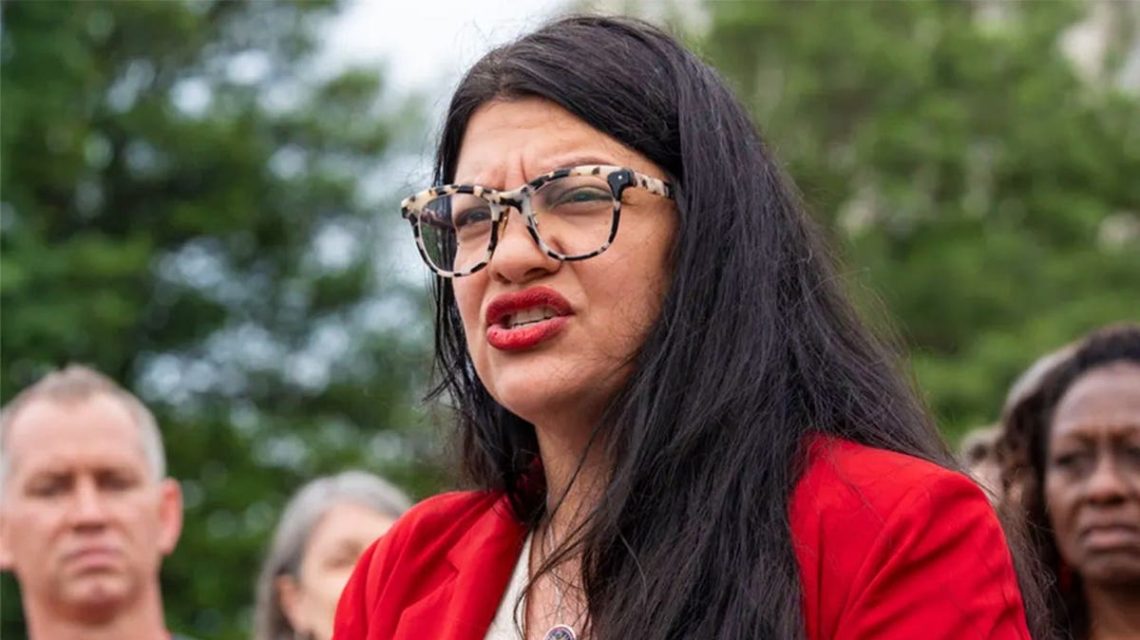
“Words taken down.” The term might sound unfamiliar outside Capitol Hill, but in the House of Representatives, it signals turmoil. Such a disturbance occurred recently when lawmakers debated a war powers resolution concerning Lebanon. The proposal was driven by Rep. Rashida Tlaib, D-Mich., aiming to limit President Donald Trump’s operations in Iran due to emerging regional flashpoints.
Tlaib, a Palestinian-American and one of only two Muslim women in Congress, frequently voices opposition to Israel. She stated, “We must end U.S. participation in the Israeli apartheid regime’s invasion of Lebanon. The Israeli military continues to target journalists like Amal Khalil and use our tax dollars to commit war crimes.”
Rep. Rashida Tlaib faces House censure threat, accused of ‘celebrating terrorism’ in a pro-Palestinian speech. She urges protection of rights for the homeless, including freedom from harassment by law enforcement and property owners.
The House erupted into a verbal altercation when Rep. Max Miller, R-Ohio, challenged Tlaib, accusing her of having associations with Hezbollah. Miller, who is Jewish, stated, “Its members are butchers that you like to hang out with to a certain extent,” and further accused her of advocating for terrorists. Tlaib shouted back, but her words were not audible as she was not using a microphone.
“Oh, I’m sorry. Are we getting a little emotional?” Miller mocked, prompting Tlaib to yell louder across the chamber.
Rep. Jay Obernolte, R-Calif., who presided over the debate, intervened, calling for decorum. “Colleagues, this is a serious topic. We will debate it respectfully and deliberately,” he admonished.
Tlaib approached one of the microphones, saying, “Yes, Mr. Speaker, I am. That is a direct attack on my character. I please request to strike the words down.” With this, the debate halted. “Words taken down” is a parliamentary procedure that pauses all House business to scrutinize whether House rules were violated.
The phrase refers to documenting or taking down language deemed as a potential breach of rules, prohibiting personal attacks or impugning colleagues’ motives. Tlaib felt Miller overstepped by alleging she supports terrorists and by commenting on her emotional state.
Rep. Max Miller, R-Ohio, stood by his remarks connecting Rep. Rashida Tlaib with Hezbollah “butchers.”
Offending members might withdraw their words and apologize when confronted. If resistant, they get ruled out of order, speeches are expunged, and they’re barred from speaking for the rest of the day.
If the chair rules a member violated rules, an appeal can be made, entailing a roll call vote. Alternatively, another member might motion to “table the appeal,” putting it aside without direct voting on the chair’s decision.
Despite an hour’s delay, Miller refused to apologize or retract his remarks. Obernolte noted, “The words of the gentleman from Ohio contain an allegation that the gentlewoman from Michigan is a ‘butcher’ and affiliated with a terrorist organization,” deeming them discriminatory and impugnatory. The House expunged Miller’s words and suspended him.
House Foreign Affairs Committee Chairman Brian Mast, R-Fla., continued the Lebanon war powers debate for the GOP in Miller’s stead. Mast quoted Miller, “Yes, I said it. I own it. And I stand by it.” Mast attempted to submit articles about Tlaib’s alleged ties with terrorist groups, which she objected to.
Past incidents mirror this, like a 1994 parliamentary altercation involving Rep. Maxine Waters, D-Calif., and then-Rep. Pete King, R-N.Y. Then-Speaker Tom Foley, D-Wash., personally enforced the decorum rules.
The following day, Obernolte unveiled a bipartisan framework for AI guardrails, commenting on AI’s potential in rule compliance oversight.
“AI is very good at this,” Obernolte stated, suggesting its capacity to assess rule compliance. While AI’s role in parliamentary matters isn’t imminent, it poses intriguing possibilities for addressing disorder in the House.
 Trump Delivers Warning to Iran, Cuba at UN General Assembly
  Trump Delivers Stern UN Speech on Iran, AI, and Global Security
  Lukashenko and Putin’s Unique Relationship and Belarus’ Strategic Role
  Harris Discusses Potential 2028 Presidential Run
  Far-Left Groups Allegedly Organize Protests in Austin
 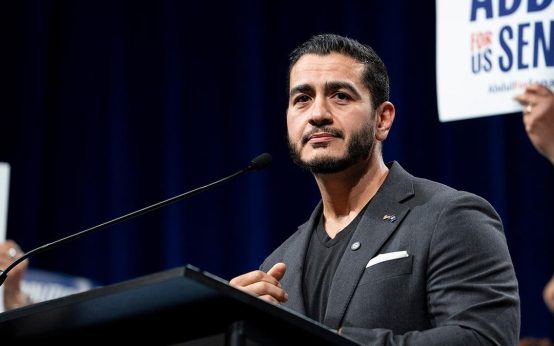 Michigan Senate Nominee Abdul El-Sayed Criticized for Remarks on Reproductive Rights