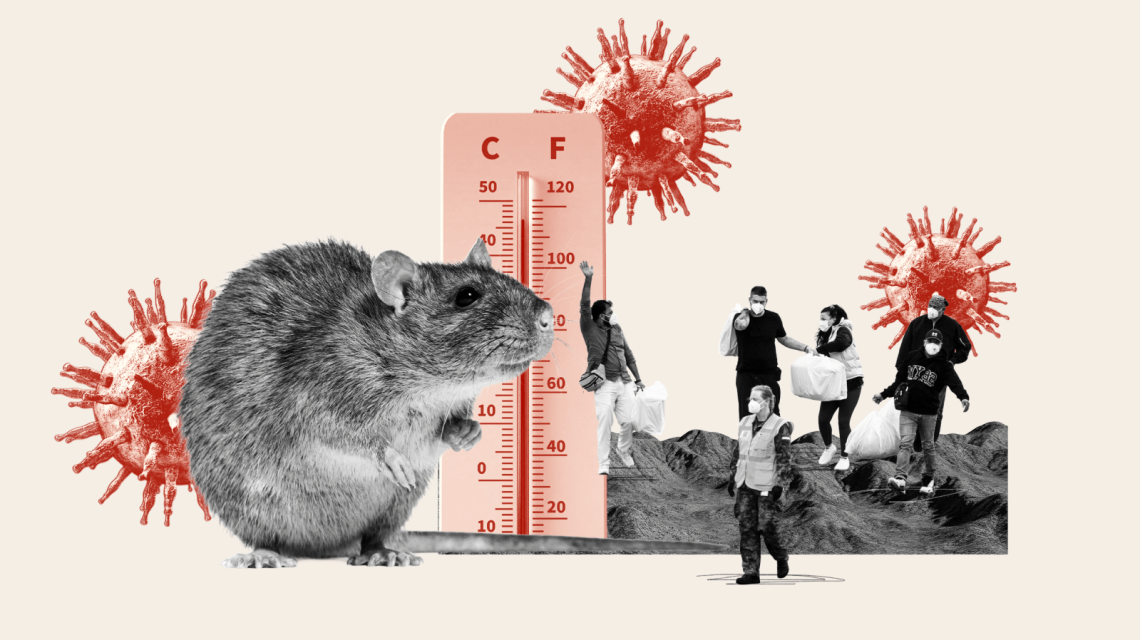
A possible “super El Niño” forming in the Pacific might not only alter weather patterns but also increase the threat of rare but deadly hantavirus outbreaks in parts of the United States this summer. Experts indicate that a surge in rodent populations, which carry the disease, could occur.
The recent hantavirus outbreak on the MV Hondius cruise ship has brought significant attention to this rare but potentially lethal virus. Many Americans were previously unfamiliar with hantavirus before this incident. The infection cluster led to several fatalities and an international response, garnering widespread media coverage and prompting monitoring and quarantine measures in multiple countries, including the U.S.
The U.S. Centers for Disease Control and Prevention (CDC) has been monitoring hantavirus since 1993. This was during an investigation into a mysterious, often fatal respiratory illness in the Four Corners region, encompassing Arizona, Colorado, New Mexico, and Utah. The strain identified then was the Sin Nombre strain, not the Andes strain involved in the cruise ship outbreak.
The 1993 outbreak resulted in the discovery of hantavirus pulmonary syndrome (HPS). This led to the establishment of national surveillance, as health officials realized such diseases likely went undetected before formal recognition. Although 1993 was an ENSO-neutral year, above-average rainfalls were noted across parts of the Southwest.
Currently, similar weather conditions could affect the population of deer mice, which carry hantavirus, in the U.S. Southwest this summer.
Understanding Super El Niño
“Super El Niño” describes an exceptionally strong occurrence of El Niño. This climate pattern involves unusually warm surface waters in the central and eastern Pacific Ocean. While these events happen periodically, a “super” event involves ocean temperatures rising to extremes, reaching at least 2 degrees Celsius (3.6°F) above average for several months. These high temperatures disrupt wind and atmospheric patterns, intensifying the typical global weather effects of El Niño.
Recently, NOAA’s Climate Prediction Center forecasted a strong possibility for El Niño development:
- An 82% chance between May and July.
- A 96% chance of continuation across the northern hemisphere during December to February 2027.
In the U.S., El Niño can affect weather patterns significantly. For instance, it can weaken the Atlantic hurricane season and increase rainfall during the Southwest’s monsoon season.
How Super El Niño Could Raise Hantavirus Cases
Researchers suggest that a strong El Niño might indirectly heighten exposure risks by altering environmental conditions. Increased rainfall and warmer temperatures promote vegetation growth, which in turn provides food and shelter for deer mice, the primary carriers of the Sin Nombre virus in the U.S.
Washington State University associate professor Stephanie Seifert notes the “trophic cascade” linked to the Four Corners outbreak. More rain results in more vegetation, supporting more rodents, thereby increasing hantavirus risk.
Seifert points out that while weather impacts deer mouse populations, rainfall alone isn’t the sole factor. Milder winters and extended breeding seasons might also contribute to rodent population spikes. El Niño conditions often bring increased precipitation and warmer winters across the western U.S., enhancing the survival and breeding of deer mice.
As rodent populations grow, human contact is more likely, especially in rural or agricultural areas or enclosed spaces. This raises the risk of infections. Such environmental dynamics were evident in the 1993 Four Corners outbreak, which initially raised awareness of hantavirus.
Symptoms of Hantavirus
Unlike the cruise-related outbreak, any increased U.S. risk would likely involve the Sin Nombre virus, not the Andes strain. Sin Nombre is transmitted through contact with infected rodent urine, droppings, or saliva, often inhaled in enclosed spaces. Person-to-person transmission is not known.
The early symptoms of hantavirus pulmonary syndrome often mimic the flu:
- Fever
- Fatigue
- Muscle aches, especially in the thighs, hips, back, and shoulders
- Headache
- Chills
- Gastrointestinal symptoms
Within four to ten days, symptoms can progress to a severe respiratory phase with:
- Cough
- Shortness of breath
- Chest tightness
- Rapid breathing
- Increasing fatigue
Fluid buildup in the lungs causes this respiratory distress. In severe cases, it might lead to:
- Low blood pressure
- Irregular heart rate
- Respiratory failure
The fatality rate for HPS can reach up to 60%.
Understanding Deer Mice
Deer mice differ from house mice, which do not typically carry hantavirus as per Orkin Entomologist and National Technical Director Shannon Sked. Yet, deer mice, also known as field mice, can invade homes, especially during colder months.
Deer mice obtain water from their food, but increased rainfall enhances vegetation, possibly boosting their population numbers. To distinguish from house mice, note that deer mice are bicolored, with gray or brown bodies and white bellies. House mice are usually uniformly gray or brown.
When cleaning up droppings, Sked advises caution. Assume all droppings are recent as hantavirus can survive in them for up to six days.
Use sanitizer before cleaning. The best defense is preventing mice from entering the home, as they can squeeze through dime-sized holes.
Preventive Measures
Even with favorable conditions for rodent population growth, hantavirus infections remain rare in the U.S. and can be largely prevented with basic precautions. Avoid contact with wild rodents, seal home gaps, and use protective measures. Ventilate enclosed spaces and avoid sweeping or vacuuming droppings without disinfectant.
While the full impact of El Niño on the U.S. and the deer mouse population is uncertain, infections are possible. Despite the rarity, there hasn’t been a year without HPS cases in the U.S. since 1993, noted by Seifert.
 Living with Sickle Cell: The Glover Family’s Journey
  Living with Alzheimer’s: A Young Man’s Journey
  Understanding the Q-Collar: What Athletes Need to Know
  Medicaid Fraud Impacts Autism Services and Military Health Care Program
  Understanding Everyday Memory Lapses and Cognitive Health
  The Impact of Tibet-Nepal Floods and China’s Role