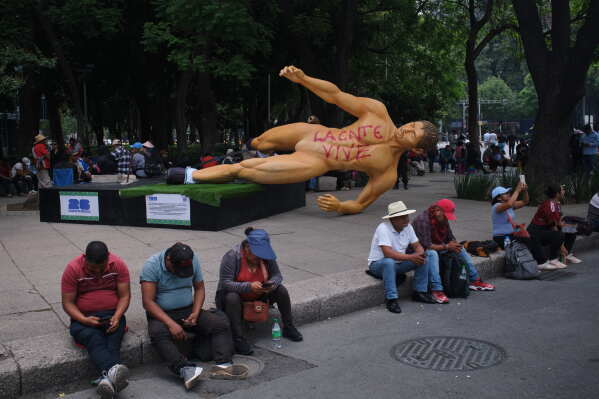
In Mexico City, escalating protests threaten to disrupt FIFA World Cup celebrations scheduled to commence with the opening ceremony. Protesters have blocked access to the plaza designated for the main fan events. Mexico, co-hosting the tournament with the U.S. and Canada, plans to kick off festivities with a star-studded event even as critics claim excessive spending has been directed at international visitors.
Political and Social Climate
As games begin, Mexican President Claudia Sheinbaum navigates a tense political climate. The deteriorating relationship with the U.S. adds pressure before July trade talks. Additionally, political scandals and security issues linger post-violence in a host city. With the influx of visitors, residents argue that authorities have prioritized the tournament over crucial social needs.
On Wednesday, Sheinbaum expressed uncertainty about hosting the free fan festival due to a teachers’ union protest blocking the plaza. Political analyst Carlos Pérez Ricart stated, “Mexico wants to project an image to the world that doesn’t exactly square with reality.” The situation places the government under significant pressure.
World Cup as a Showcase
FIFA’s logo and various World Cup decorations adorn Mexico City and fellow host cities, Guadalajara and Monterrey. Anticipation builds among fans, eager for the tournament. The Mexican Soccer Federation anticipates a $3 billion benefit to local hotels, restaurants, and sports venues.
The fan festival and opening match, featuring Mexico against South Africa, is expected to attract significant attention. Performances by stars like Colombian singer Shakira add to the excitement. Successful events would bolster Sheinbaum’s reputation by demonstrating Mexico’s ability to handle large events.
Security and Social Tensions
Authorities have intensified security measures following earlier violence in Guadalajara. Over 100,000 security personnel are poised to safeguard host cities, but social tensions remain a concern, particularly in Mexico City.
A teachers’ union has been at the forefront of protests, demanding better working conditions. Road blocks and toppled World Cup statues mark their dissatisfaction. Families of Mexico’s missing persons have called for attention to humanitarian issues over event organization.
Protest organizer Luis Antonio Rosales Narváez emphasized education investment over city makeovers. Mexico City’s Mayor assured alternatives if the Zócalo remains inaccessible for the opening, stating, “Everything is under control.”
Economic Impact of the Event
Airports are teeming with fans from across the Americas. Puerto Panamăăa’s airport, a major travel hub, showcases multicolored jerseys from football fans worldwide.
Emilio Sosa from Buenos Aires loudly expressed support for Argentina. Meanwhile, Colombian David Botero traveled with family for Colombia’s match against Uzbekistan, eager to see his team up close.
Dr. Jose Luis Muñoz, a longtime fan, finds himself priced out of attendance. Ticket costs prevent many, except foreign visitors, from enjoying the events live, leading to feelings of discrimination. Despite this, Muñoz plans to cheer on Mexico’s team from home.
As events unfold, Mexico’s World Cup preparations seek to balance sporting excitement with addressing societal concerns.
 Trump Administration’s Plan to Resettle Afrikaners as Refugees
  Trump’s Vision on Iran, AI, and Global Security at the UN
  Deion Sanders Enforces Discipline After Colorado’s Defeat to Northwestern
  Lithuanian Leader Seeks U.S. Military Commitment Amid Rising Russian Threats
  Italian PM Giorgia Meloni Skips UN General Assembly Amid Growing Tensions
  Steve Lotysz: From Medinah’s Gates to Presidents Cup Artistry