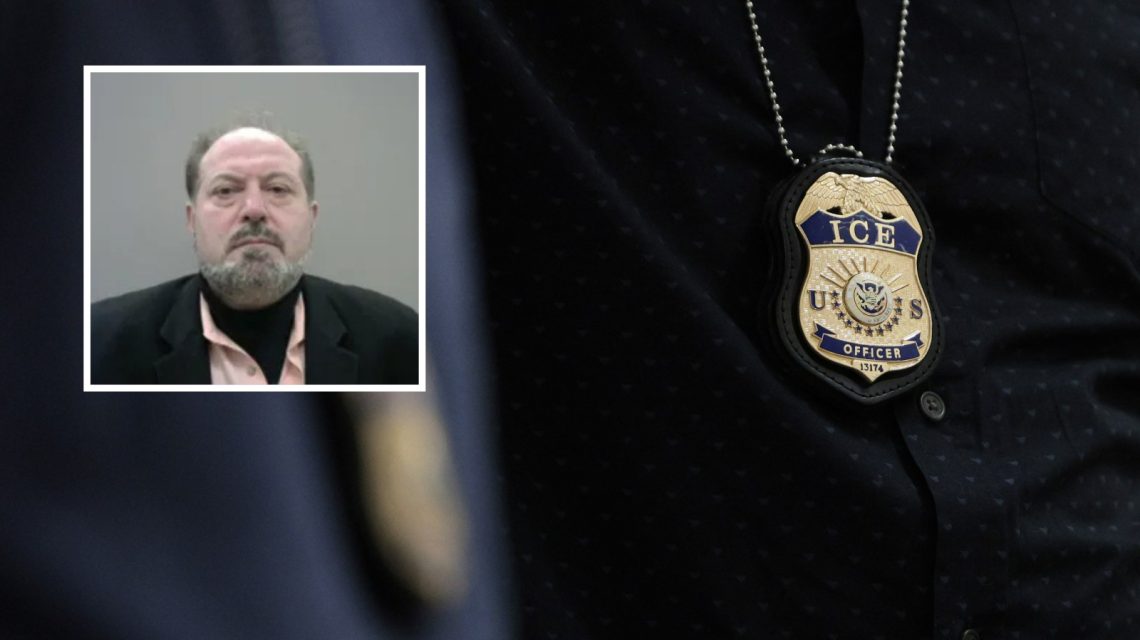
A federal judge has ordered the release of Salah Sarsour, the president of the Islamic Society of Milwaukee, from U.S. Immigration and Customs Enforcement (ICE) detention. Judge James Patrick Hanlon, appointed by President Donald Trump, issued this decision following Sarsour’s three months in detention.
In a comprehensive 29-page order, Judge Hanlon highlighted that Sarsour has raised a significant First Amendment retaliation claim. This claim challenges the lawfulness of his detention. The Trump administration had accused Sarsour of funding a terror organization. Despite this, Sarsour maintained a green card for nearly three decades. The Department of Homeland Security (DHS) alleges that Sarsour lied on his application back in 1998. The judge questioned the timing of the enforcement actions.
Upon his release, Sarsour received a warm welcome from a large gathering at the Islamic Society of Milwaukee. Addressing the crowd, he expressed gratitude, stating, “Because of people like you, and people of freedom that stood with justice, that’s why I’m back. I owe this to my community.”
Who Is Salah Sarsour?
Salah Sarsour’s immigration journey began in 1993 when he applied for a visa at the American Consulate in Jerusalem. His application faced rejection due to allegations involving a Molotov cocktail incident and illegal possession of weapons. Despite these accusations, he entered the U.S. later that year as a conditional resident. Five years later, DHS claims he committed fraud on his green card application.
Sarsour has been a longtime resident of Wisconsin, where he has vehemently denied DHS’s allegations. His contributions to his community include supporting various members, creating jobs, and advocating for immigrants, Palestinians, and Muslims.
Judge’s Ruling
The ruling from Judge Hanlon emphasized several key points:
- Sarsour’s political speech is protected under the First Amendment.
- Detention represents a severe deprivation of liberty.
- Evidence suggests a potential retaliatory motive by the federal government.
The ruling does not determine the ultimate deportation outcome. It focuses instead on whether his continued detention is lawful as his legal challenge proceeds.
First Amendment Considerations
Central to Sarsour’s case is his assertion of discrimination due to his advocacy for Palestinian rights. The court acknowledged that his speech is protected. The order states that political speech is central to the First Amendment’s protections.
Moreover, the judge reinforced the principle that noncitizens in the U.S. retain constitutional rights upon lawful entry. Concerns about foreign policy alone do not override First Amendment rights.
Evidence of Retaliation
Sarsour’s claim of retaliation appears plausible based on several factors. The government had long been aware of the past allegations against him. His arrest only came years later, coinciding with actions against pro-Palestinian advocacy.
A DHS spokesperson disputed allegations of discrimination. The spokesperson labeled Sarsour as a “terrorist” responsible for past violent acts and accused him of lying on immigration forms. Despite these statements, the court focused on the First Amendment claims.
Next Steps
Sarsour’s release is conditional. He must continue residing in Wisconsin, attend all court hearings, and participate in immigration proceedings as his case unfolds.
 Senator Bernie Moreno Urges DOJ to Address Drug Policy Enabling Forced Abortions
  Karoline Leavitt Offers Insights on Trump’s Calls With Putin and Xi
  Curtis Pushes for Investigation into Trump Jr. and Biden
  Israeli Prime Minister’s Visit to the U.N. Amid Controversy
  Reader Perspectives on Social Security Reform and Competency-Based Degree Programs
  Republicans in Battleground States Urge End to Iran Conflict