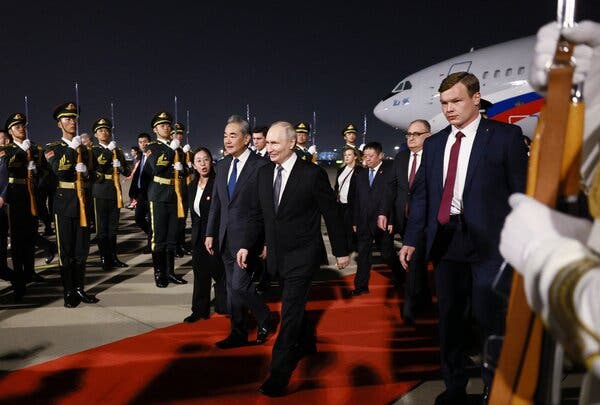
With the turmoil in the Persian Gulf affecting oil and gas supplies, Russia is striving to strengthen its energy relations with China. This move comes as President Vladimir V. Putin visits Beijing amid challenges on various fronts.
Russia’s military efforts in Ukraine have stalled, with Ukrainian drones posing threats to Moscow. The economy of Russia faces significant stress, and there is growing public discontent with a seemingly unending conflict.
Even in better times, the economic relationship between Russia and China was unbalanced. According to Aleksandr Gabuev, director of the Carnegie Russia Eurasia Center in Berlin, China holds substantial influence and can dictate the terms of their cooperation.
Despite this, Russia seeks to avoid being merely a junior partner. Its extensive nuclear arsenal gives it strategic importance in potential superpower conflicts, such as over Taiwan. The Ukraine invasion has positioned Russia as a leader in a new non-Western world order, backed by China.
An additional factor is the United States and Israel’s war against Iran, creating an opportunity for Russia to leverage its position.
As these dynamics unfold, Russia’s engagement with China is set against a backdrop of complex geopolitical challenges.
 New U.S. Military Bases Planned in Greenland Amid Strategic Security Deal
  Twitch Streamer Hasan Piker Discusses Controversial Commentary
  A Shifting Political Landscape: The Decline of Autocratic Power
  Trump Delivers Warning to Iran, Cuba at UN General Assembly
 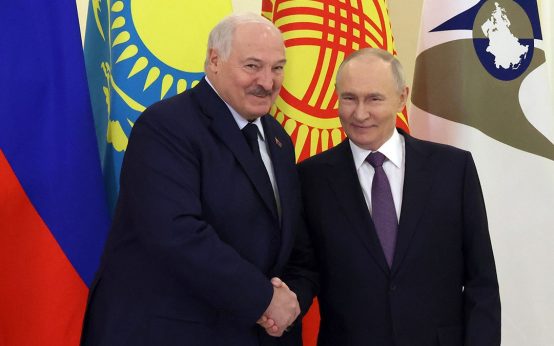 Lukashenko and Putin’s Unique Relationship and Belarus’ Strategic Role
  Alan Ritchson Faces Backlash Over Political Remarks