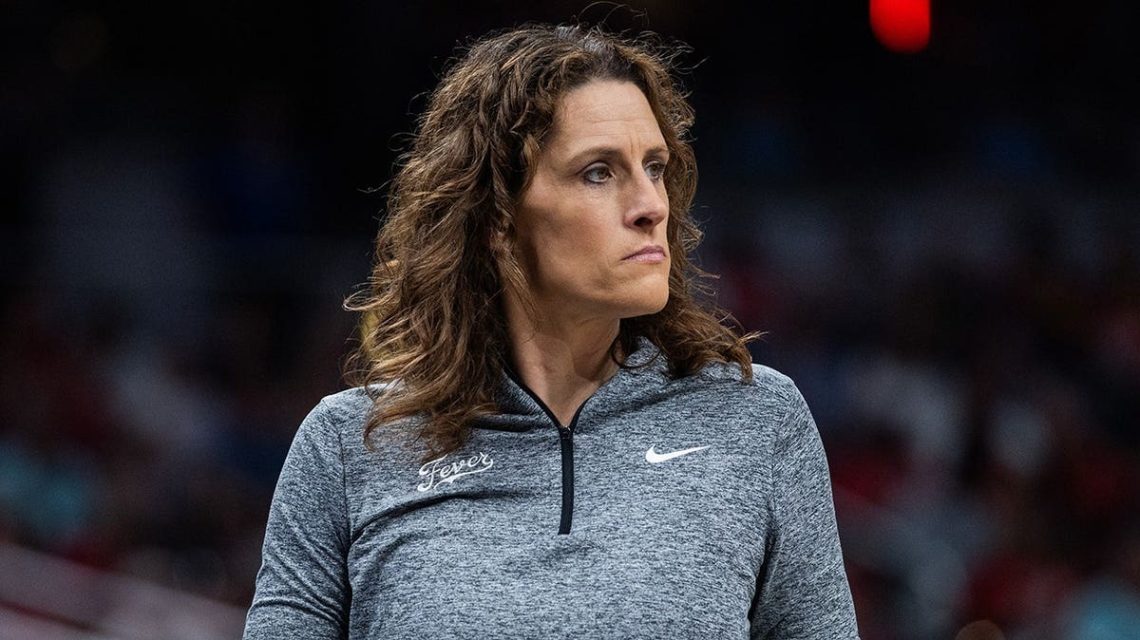
Before the Indiana Fever clinched their fifth consecutive victory, Caitlin Clark achieved her fourth career triple-double, and Sophie Cunningham excelled in shooting from the three-point line. In a pregame discussion, Indiana Fever head coach Stephanie White expressed uncertainty about whether males should compete in women’s sports from a scientific perspective.
Despite her comments, decades of research in biological and sports science offer clear insights. After puberty, males develop physical advantages supported by medical and performance research, which remain even if they identify as female.
Coach White left reporters questioning after refraining from taking questions on the matter, while emphasis remained on Caitlin Clark’s triple-double performance.
Biological differences between males and females are well-documented:
- Males develop notably more lean muscle mass than females.
- Men typically have 30%-40% greater upper-body strength.
- Post-puberty, males have significantly higher testosterone levels, enhancing muscle growth, power, and strength gains.
- Men generally possess higher bone density, broader shoulders, and a longer reach.
- Males often have a larger proportion of fast-twitch muscle fibers, boosting speed and power.
- Men’s larger hearts and lungs increase aerobic capacity.
- On average, males have a 10%-12% higher hemoglobin concentration, enhancing oxygen delivery during exercise.
- VO₂ max in males is often 15%-20% higher than in comparably trained females, aiding endurance.
- Males typically have stronger tendons and ligaments, enabling them to withstand greater force.
- They usually boast larger skeletal frames, leading to better leverage in many sports.
- More absolute muscle mass and anaerobic power aid quicker recovery between efforts.
Fans of the Fever expressed concerns, accusing Coach White of undermining Clark after a loss to Portland.
Megan Rapinoe recently highlighted concerns regarding efforts to exclude trans athletes, labeling them as societal attacks on women.
These biological discrepancies underpin the separation of men’s and women’s sports, underpinning equal competitive opportunities and underscoring Title IX’s importance. Men typically surpass women in nearly all athletic metrics, from speed and jumping to lifting and endurance.
This distinction is not about women’s dedication or talent. Female athletes deserve fair competition against similar opponents. Hence, biological sex is crucial for fairness and safety in women’s sports.
Coach White claimed insufficient scientific knowledge. Now, you’re informed.
In 2025, U.S. President Donald Trump signed a directive to restrict male participation in women’s sports.
The discussion should focus on biology, physiology, and competition fairness. Recognizing male participation in women’s sports as unsafe or unfair isn’t about avoiding inclusivity. Rather, it affirms support for women’s sports in essence.
The science supporting this stance has long been recognized. Now is the moment for women in the WNBA to prioritize principles over politics, acknowledging those who helped build its reputation and potential profitability over the past three decades.
Coach White, collaborate with Sophie Cunningham and advocate for common sense, safeguarding opportunities for women and girls.
The author, Jon, is a content creator for OutKick.
 Deion Sanders Enforces Discipline After Colorado’s Defeat to Northwestern
  Steve Lotysz: From Medinah’s Gates to Presidents Cup Artistry
  Calls Grow for Ireland’s Soccer Team to Boycott Matches Against Israel
  Is NHL Preseason Necessary?
  Impact of World Baseball Classic on Paul Skenes’ Performance
  Ronald Acuna Jr. Suffers Injury During Game Against Cincinnati Reds