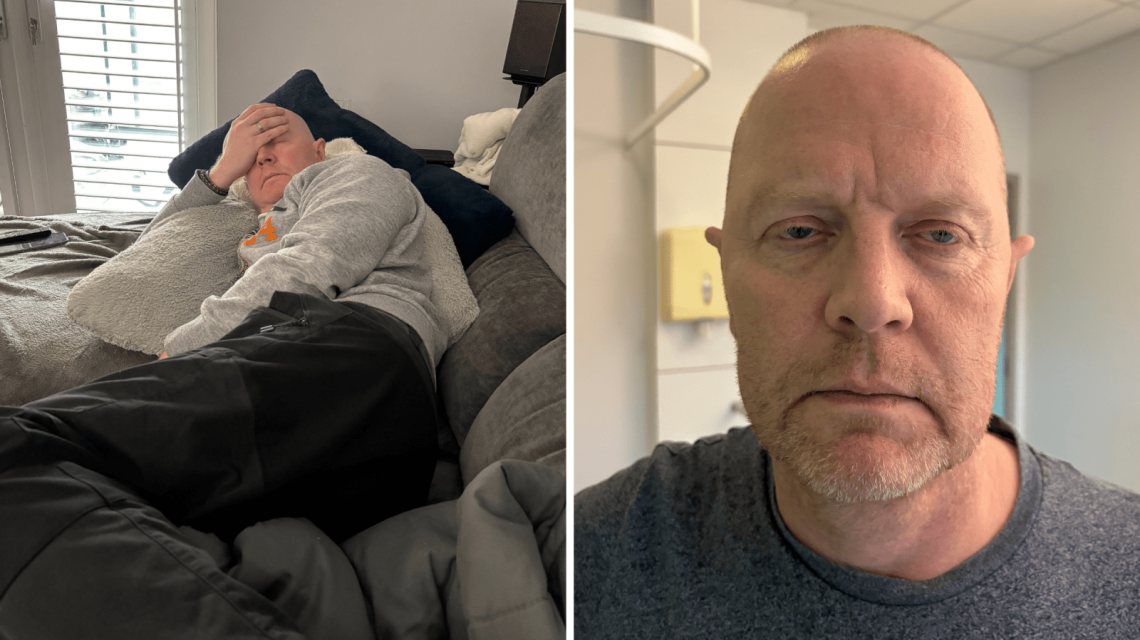
A stroke drastically changed Matt Wright’s life on January 29, 2026. For a month, he stayed in the hospital, reflecting on the signs he missed in the weeks leading up to the emergency. Wright, aged 48 and from Essex in the U.K., experienced early symptoms including dizziness and fatigue. Later, pain in his neck and ear developed, which he easily dismissed as minor issues.
Wright recounted to Newsweek, “I then had a terrible headache, but it was localized in one area, as if someone was pressing against the side of my head.” These symptoms seemed trivial, likening them to an ear infection or stress.
“Like most people, I dismissed them all as everyday symptoms,” Wright said.
The night of the stroke, Wright went to bed earlier than usual due to the severe headache. Awakening at midnight, he felt odd and realized he could not speak. His wife tried to help him up, only to discover he could not walk. She called emergency services and was told there might be a 90-minute wait. Understanding the urgency, they prepared to head to the hospital by car. Fortunately, an available ambulance arrived quickly. Although his initial CT scan showed no issues, an MRI later revealed blood clots in his brain. He was diagnosed with bilateral carotid artery tears, primarily affecting the left side.
The Centers for Disease Control and Prevention (CDC) reports over 795,000 strokes occur annually in the U.S. Strokes can happen at any age, so recognizing early warning signs is crucial. The American Stroke Association advises remembering the acronym B.E. F.A.S.T. for stroke symptoms:
- B—Balance loss
- E—Eye (vision) changes
- F—Face drooping
- A—Arm weakness
- S—Speech difficulty
- T—Time to call 911
After a month of hospitalization, Wright continues to struggle with balance, mobility, and speech. “I also have nerve damage in my neck, due to the artery tear, affecting my tongue and swallowing,” he shared. Wright endures headaches, pain, and neuropathy on the left side of his face.
Once an avid gym-goer, he has adapted his lifestyle. His diet now consists of soft foods, and he requires specialized equipment at home, like an adjustable bed and a shower seat. Wright relies on a walking stick for short distances.
Wright documents his journey on social media, @matty_stroke_survivor, sharing the warning signs and long-term effects of his stroke. Many of his videos resonate widely, encouraging prompt medical consultation for alarming symptoms.
“Make the most of every day,” Wright advises. “Strokes are dangerous because they hide behind everyday symptoms, so if you’re experiencing anything unusual, don’t be afraid to seek help.”
Concerned about a health issue? Contact Newsweek at [email protected] for expert advice or to share your story.
 Antibiotic Resistance in Shigella Infections
  A Mother’s Journey Through Her Daughter’s Congenital Cataracts Diagnosis
  Family Seeks Answers in Daniel Magaña’s Jail Death
  Facing Pancreatic Cancer: Vicky Titcomb’s Journey
  A Pressing Solution for Alzheimer’s
  Understanding the Perils of Ectopic Pregnancy