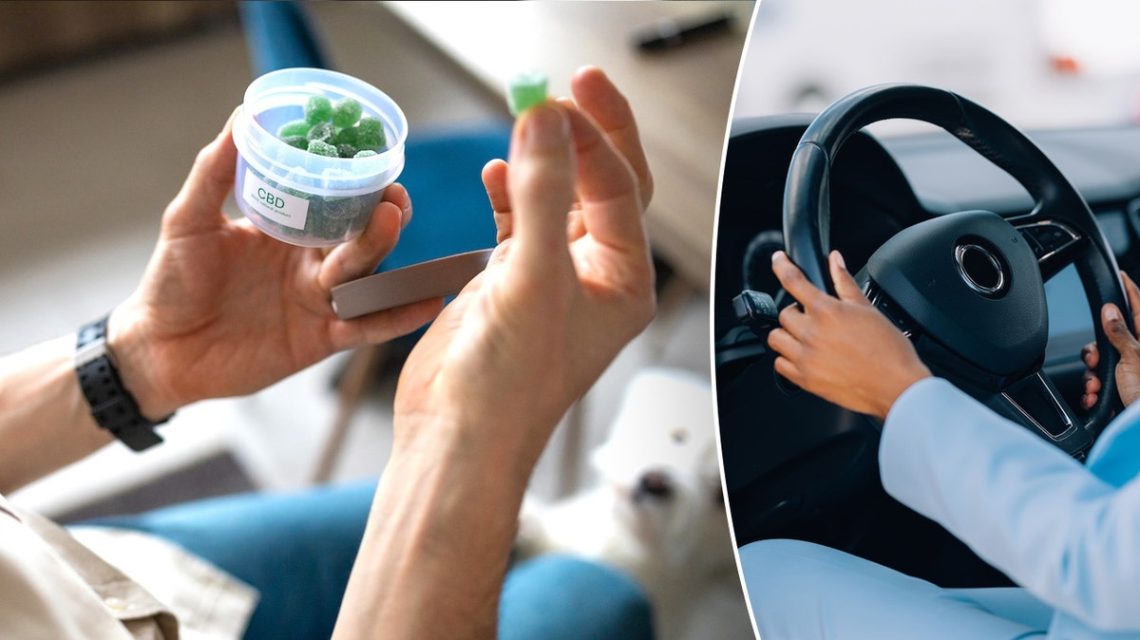
A new study has found that consuming cannabis edibles can significantly impair driving performance and reaction times, even when blood tests show THC levels below legal limits. These findings, published in JAMA Network Open, pose a challenge for impaired-driving enforcement in Canada and parts of the U.S.
Understanding THC Levels and Impact
Most cannabis-driving research has focused on smoking or inhaling marijuana, which causes a rapid increase in blood THC (tetrahydrocannabinol) levels. However, edibles absorb slowly and can impair driving despite low blood THC concentrations.
Researchers discovered that drivers consuming higher doses of THC edibles had difficulty controlling lanes, experienced slower reactions, and showed inconsistent speed. Nonetheless, their blood THC levels were below legal impairment thresholds.
Study Overview
The study, conducted by the Centre for Addiction and Mental Health in Toronto, involved 40 regular cannabis users. Participants attended four sessions, consuming gummies with varying THC doses: 0, 2, 10, or 20 milligrams.
Using a driving simulator, researchers assessed driving skills at two, five, and 24 hours post-consumption. The study focused on lane control, reaction time, and speed consistency, alongside blood tests and self-reported intoxication levels.
Findings
The results showed impairment at two and five hours after consuming 10- and 20-milligram gummies. Participants displayed increased lane variability and slower reaction times. Many recognized their limitations, reporting reduced confidence and willingness to drive.
The average blood THC concentration reached 1.6 nanograms per milliliter for 10-milligram doses and 3.4 nanograms per milliliter for 20-milligram doses. These levels fall under the common 5-ng/mL threshold, yet some individual samples exceeded 5 ng/mL.
Comparison with Smoked Marijuana
In previous smoked-cannabis studies, similar impairment correlated with an average peak THC concentration of 30.3 nanograms per milliliter, highlighting the difference in THC absorption between edibles and smoked cannabis.
Study Limitations
Though conducted on virtual simulators, not real roads, the study focused on regular cannabis users, leaving unanswered questions about occasional users’ reactions.
Minimal residual effects were noted after 24 hours, with intoxication perceptions largely dissipated, although maximum speed remained slightly higher post-consumption.
Law Enforcement Challenges
Dr. José Ignacio Nazif-Munoz of Université de Sherbrooke commented on the law enforcement challenges posed by edible cannabis due to its slow digestion and prolonged effects. He highlighted the need for more reliable roadside testing tools.
 Study on Dementia Diagnosis Underreporting Among Older Americans
  Exploring Human-Pet Interactions Through AURAL-Pet System
  Maternal Mental Health: The Importance of Mother and Baby Units
  GLP-1 Medications Linked to Hair Loss in Men
  Decreasing Verbal Communication: Concerns for Cognitive Health
  Pentagon Implements Mandatory Testosterone Screening for Service Members