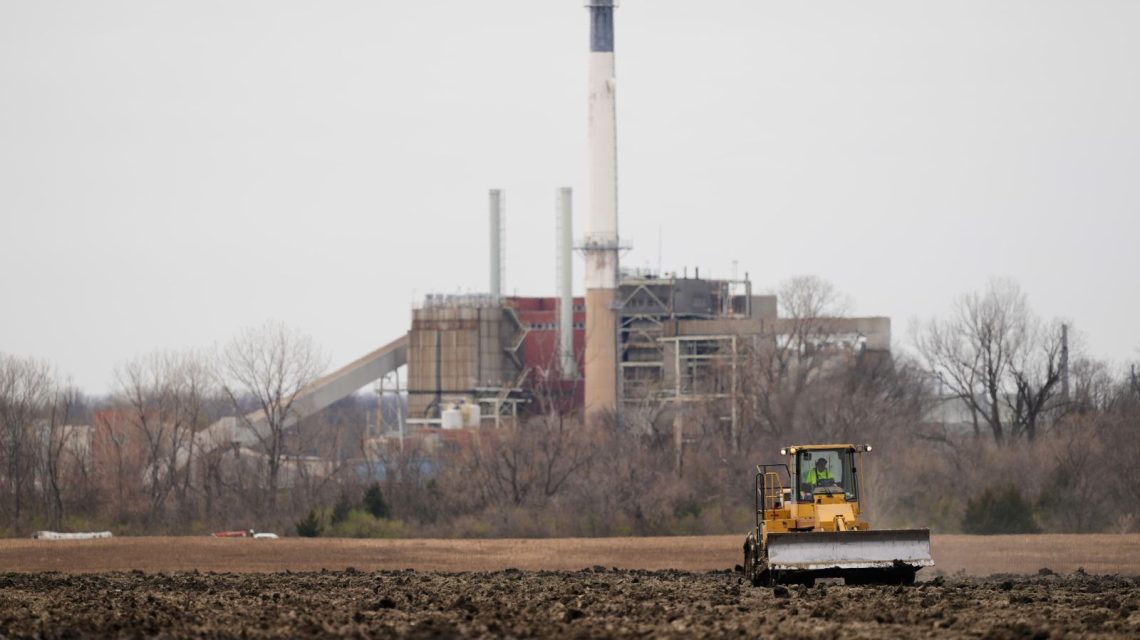
The global race in artificial intelligence (AI) is driving a rapid increase in data center construction in the United States. This surge is prompting lawmakers and city officials across the country to advocate for caution amidst the construction boom.
According to the National Conference of State Legislatures (NCSL), legislators in at least 14 states are considering implementing bans or temporary moratoriums on new data center facilities. These centers, which demand substantial amounts of electricity and water, face criticism from those urging restraint. Critics argue that caution allows local leaders to thoroughly evaluate the long-term effects. On the other hand, proponents, including figures from the Trump administration, argue that data centers are essential for maintaining an edge over China in the AI race.
Particular attention is being focused on the 14 states considering moratoriums. In addition, several local municipalities, such as Monterey Park in California, have already enacted bans. They join municipalities in Georgia and Indiana that have existing restrictions.
Efforts to curb data center proliferation include proposals like a statewide construction block in Georgia until 2028 and a moratorium on larger facilities in Maine until late 2027, although the latter was recently vetoed. Similar legislative attempts have not succeeded in Oklahoma, Minnesota, and New Hampshire, among others.
In South Carolina, proposals seek to halt local approvals of data centers until comprehensive oversight is adopted. Meanwhile, Pennsylvania lawmakers aim for a three-year moratorium partnered with impact studies.
Currently, more than 3,000 data centers operate in the United States, with over 1,500 new ones under construction, as reported by the Pew Research Center. While most planned data centers are situated in rural areas, particularly in the South and Midwest, 87% of current facilities are in urban locations. Virginia and Texas lead with the highest number of operating data centers in the U.S., followed by California, Ohio, and New York.
Many proposed or under-construction data centers are near the Ogallala Aquifer. This aquifer is crucial to American agriculture. A 438-acre site in Texas near Odessa is scheduled to begin construction next year. Microsoft announced plans in April to acquire about 3,200 more acres in Wyoming for data center expansion. Additional proposed facilities near the aquifer include sites in Natrona County, Wyoming, and San Angelo, Texas.
The Ogallala Aquifer spans beneath eight states and is a key groundwater resource in North America. Substantial water loss in parts of this aquifer has persisted for decades. Depletion rates exceed 100,000 acre-feet per year, with some areas losing nearly 27% of stored water.
Sudeep Pasricha, a professor at Colorado State University, noted that the aquifer’s recharge rate is extremely slow. In regions like the Great Plains, annual recharge often amounts to less than an inch, far below irrigation demands. Pasricha warned that in some areas, replenishing lost water might take centuries or even millennia.
 Beijing’s Tactical Undermining of U.S. Supremacy Through AI
  Controversy Surrounds Automated License Plate Readers Across the U.S.
  Trump and Harp Sued Over Truth Social Subscriber Program
  Implications of AI in College Admissions
  Cold Weather Alerts and El Niño Influence
  Turning Home Food Waste into Compost: A Guide