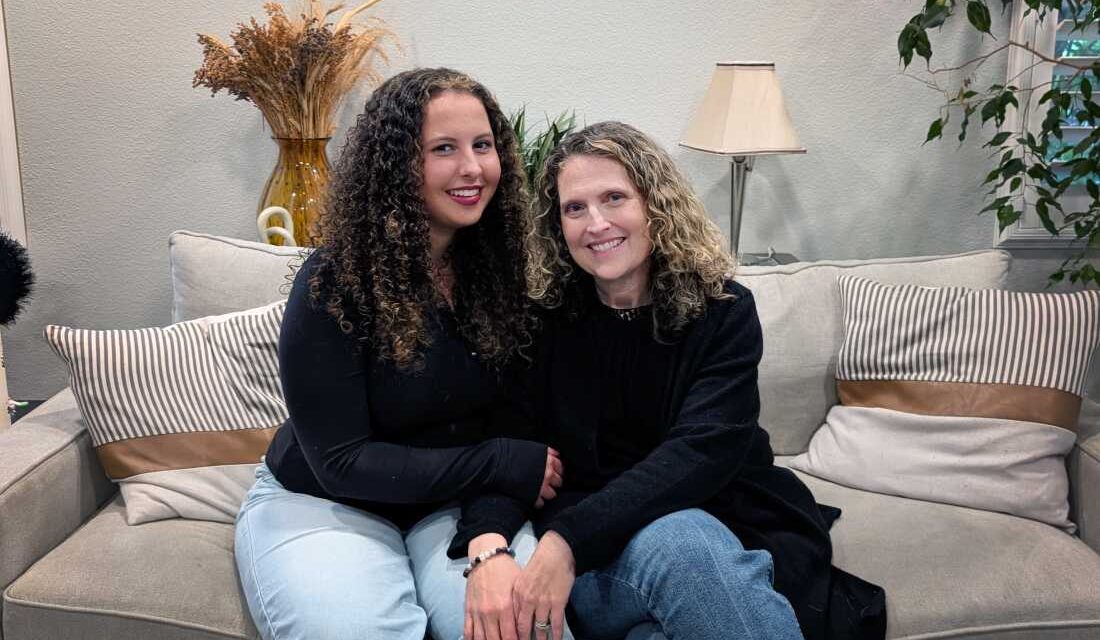
Ninth grader Soraya Martin, a lively and social teenager, enjoys creative writing. Despite her passion, she faces challenges due to dyslexia. “School has always been a big challenge,” Soraya shares. However, technology has transformed her education experience. By using tools like speech-to-text, audiobooks, and photo capture, her academic performance soared. “I started getting really good grades,” Soraya reveals, boosting her confidence.
Her mother, Heather Martin, sees the value of screens for students like Soraya. She is concerned that discussions on screen bans in schools don’t always consider students with disabilities. Nationwide, over 30 states have banned cellphones in schools, and some propose removing screens entirely. Recently, the U.S. Department of Health and Human Services highlighted the potential harms of screen use for children. While some parents worry about screen-related distractions, Heather emphasizes the lack of focus on students with disabilities in these debates.
Disability advocates argue that screen-time policies often overlook the needs of students with disabilities. Over 8 million students rely on technology for daily activities like note-taking and reading. States like Alabama, Tennessee, and Utah have already imposed screen limits. Lindsay Jones, CEO of the Center for Applied Special Technology (CAST), stresses that laws addressing screen use could quickly disadvantage communities. Exceptions for assistive technology exist, but advocates feel it’s not enough.
The laws should offer better support for students with disabilities.
Jones notes that recent policies have left educators and communities scrambling. With more involvement from disabled individuals, policies could better protect their rights. The U.S. Department of Education, already weakened, faces challenges enforcing civil rights related to assistive technology. A recent delay in a digital accessibility rule for public institutions adds to these concerns.
Soraya’s high school recently imposed a phone restriction during classes. Heather fears this could lead to further screen bans at the school. “A completely screen-free environment isn’t ideal,” she argues. Screens serve as a critical accessibility tool for many students. The lock-up pouches make Soraya anxious, especially when accessing her phone for note-taking as part of her Individualized Education Program (IEP). With different teachers each day, inconsistencies in understanding her needs pose problems.
Jones warns about unintended consequences of moving away from technology for students with disabilities. CAST’s framework, Universal Design for Learning, promotes diverse teaching methods catering to different learning styles. This includes using e-books or multiple presentation methods for lessons, accommodating various needs.
Technology, when used wisely, can create more flexible learning environments.
As screen restrictions become more prevalent, advocates stress the importance of involving educators and people with disabilities in policy development. Jones believes this approach will help achieve educational goals while respecting rights.
For Soraya, embracing technology has meant overcoming learning challenges. She now excels academically and expresses herself more deeply. “I have so much more to say.” Her newfound confidence reflects the profound impact of accessibility tools on her education.
Visual design and development by: LA Johnson
 Family Files Lawsuit Following Tierra Walker’s Death Due to Preeclampsia
  A Controversial Stance on Immigration Policies Sparks Debate in South Carolina
  Concussions Increase Alzheimer’s Risk in Older Adults
  Porsha Williams Opens Up About Her Health Journey
  Politics, Academia, and Their Impact on Standards
  Communicating with Children about Weight Loss Medications