The Supreme Court’s October term often aligns with significant events in sports, as it tackles high-stakes cases akin to the playoffs in football and baseball. This term already appears monumental, with cases addressing climate change, gun rights, and more.
Climate Change
In the Suncor Energy Inc. v. County Commissioners of Boulder County case, Boulder accuses energy firms of deliberately worsening climate change and misleading the public. The Colorado Supreme Court backed Boulder, allowing these lawsuits despite federal preemption. If upheld, companies might face extensive climate-related legal challenges.
Gun Rights
This term focuses heavily on Second Amendment rights. Disputes over firearm bans in Chicago and New York are at the forefront, providing crucial clarifications on these restrictions. The court may also review Calce v. New York, challenging the stun gun ban, emphasizing that constitutional protections extend to weapons not existing at the Second Amendment’s ratification.
Religious Schools and Discrimination
In St. Mary Catholic Parish v. Roy, the Tenth Circuit supported a Colorado rule requiring non-discrimination in preschools. Catholic challengers argue that it forces them to compromise their beliefs to join the program and receive funding.
Parental Rights
The International Partners for Ethical Care, Inc. v. Ferguson case challenges Washington’s law delaying parental notification in situations involving gender-affirming treatment for runaways. The Ninth Circuit dismissed the parental claims for lack of standing.
The Right to a 12-Member Jury
In Kian v. Florida, Hamed Kian contests his conviction by a six-person jury, arguing it breaches his Sixth Amendment right to a 12-member jury.
First Amendment Cases
Freedom of speech cases are on the horizon. The court is yet to decide on D.A. v. Tri-County Area Schools, involving a ban on “Let’s Go Brandon” sweatshirts, seen as a potential major First Amendment ruling. Tiny Zaps v. Traxler concerns face, neck, and head tattoo bans, raising free speech issues about body art. The South Carolina Supreme Court upheld this ban, highlighting a potential reinforcement of speech protections.
The Supreme Court, as Justice Ruth Bader Ginsburg noted, rarely sees an uneventful term. With more cases to consider, this term is shaping up as one of significant impact.
Jonathan Turley, a law professor and author of “Rage and the Republic: The Unfinished Story of the American Revolution,” provides his insights into the Constitution and Supreme Court dynamics.
 Senator John Fetterman Discusses Democratic Party and Support for Israel
  Trump’s Public Appearance at the Presidents Cup
  Ex-Athletes in Senate Champion College Sports Reform
  Judge Restores CNN’s Access Amidst Media Tension with Trump
  Prospects for Negotiated Solution to Iran Conflict
 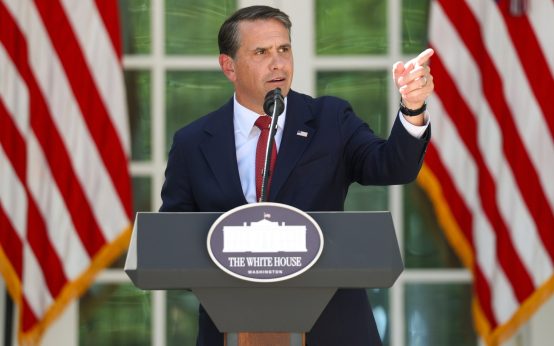 Attorney General Todd Blanche Defends Trump Administration’s Restrictions on News Outlets