In much of modern American popular culture, Arabs initially appeared as threats rather than individuals. They often held guns, took hostages, or plotted to destroy the nation that paid to see them defeated on the big screen. Post-Cold War, Hollywood found a faceless enemy in the Middle East, from Baghdad to Beirut. Real-world politics soon mirrored fiction, as the Gulf War made Saddam Hussein a constant villain on American television.
The September 11 attacks linked terrorism to Muslim identity in the American imagination, influencing everything from airport security to comedy shows. Professional wrestling, reflecting American fears, turned this stereotype into a literal portrayal. The Iron Sheik emerged as a notable villain, while Muhammad Hassan’s Arab American character disappeared after a storyline clash with real-world terrorism in 2005.
Now, Michigan voters may elect Abdul El-Sayed, an Egyptian American Muslim, to the U.S. Senate. After narrowly winning the Democratic primary, he faces Republican Mike Rogers. If successful, El-Sayed would be the Senate’s first Muslim member, representing a state Trump carried in 2016. The shift from a stereotyped terrorist to a Senate nominee may seem sudden, but it reflects a gradual evolution. As Arabs and Muslims became visible as neighbors, colleagues, and leaders, the monolithic stereotype weakened.
The Evolving Arab Image
Arabs appeared exotic or menacing long before the Gulf War, but conflicts in the 1980s and 1990s reinforced this stereotype. Hijackings and hostage crises provided Hollywood with an enemy as the Cold War ended. Films like True Lies and The Siege depicted Arab terrorism in familiar American settings, exploiting fears of uninvited threats. Wrestling amplified these fears theatrically, with the Iron Sheik’s partnership with Nikolai Volkoff as an anti-American act in the 1980s.
Two decades later, WWE introduced Muhammad Hassan, whose character lamented post-9/11 discrimination before adopting militant imagery, ultimately disappearing after linking to real terrorism events. These portrayals thrived as many Americans lacked alternative narratives. With little personal contact with Arabs or Muslims, foreign news and fiction defined the group.
From Foreigners to Neighbors
Change came as Arab and Muslim communities took root rather than through sudden immigration. Children and grandchildren of immigrants entered American schools and professions, engaging in politics and building careers unrelated to their ancestral conflicts. Their American accents and concerns reshaped their image from foreign to familiar.
Dearborn, Michigan, exemplifies this shift. In 2023, census data showed that 54.5% of Dearborn’s residents identified as Middle Eastern or North African, marking it as America’s first Arab-majority city. Dearborn evolved from a cultural enclave to a politically significant locale, forcing national candidates to recognize and engage with its community.
While exposure does not erase prejudice, interaction typically reduces hostility, provided conditions are right. Daily life introduced millions to Muslim Americans as classmates and colleagues, altering earlier Hollywood-driven perceptions.
Political Representation and Power
As integration deepened, political representation followed. In 2006, Keith Ellison became the first Muslim in Congress, followed by André Carson in 2008 and Ilhan Omar and Rashida Tlaib in 2019. Although facing scrutiny tied to religion and ethnicity, these figures normalized Muslim political participation.
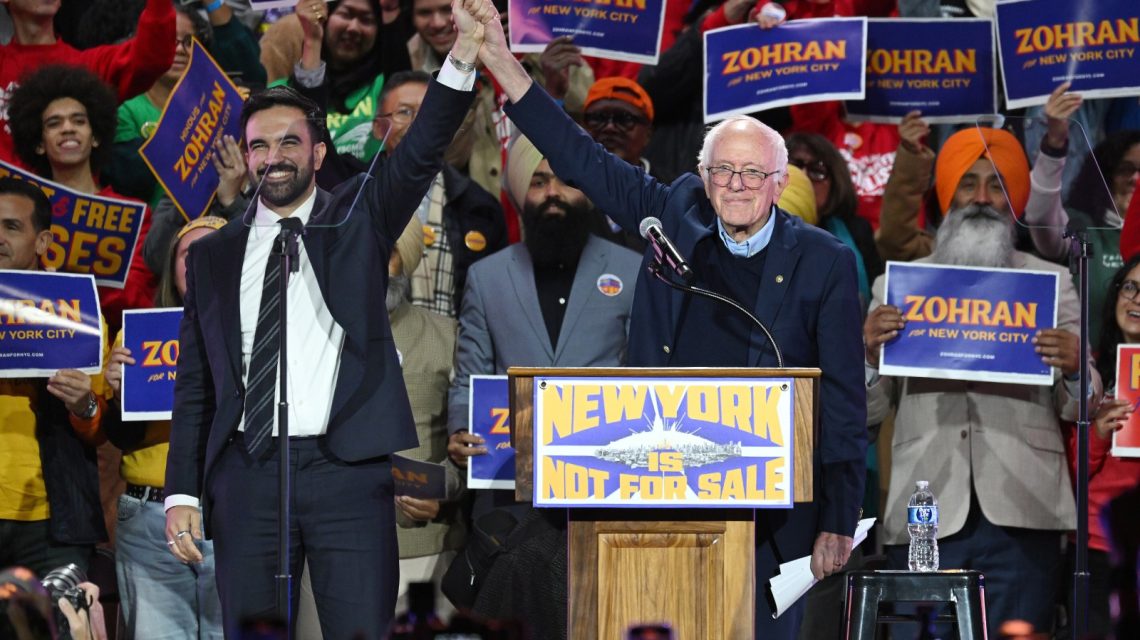
Zohran Mamdani advanced this change, becoming New York City’s first Muslim mayor in January, focusing his campaign on issues like rent and transportation rather than religion. El-Sayed aligns with this generation of politicians, campaigning on Medicare for All and reducing political corruption. His Muslim identity is part of his public persona but not his entire political case.
Critics still assess El-Sayed as too progressive or inexperienced, but these are typical partisan criticisms. His campaign embodies the intersection of progressive politics and growing Arab and Muslim political influence, driven by organizations emphasizing equality and Palestinian rights.
Even with increased representation, suspicion endures. A 2025 Pew Research survey noted that 53% of Muslim adults leaned Democratic, while 42% leaned Republican, illustrating a divided political landscape. Nevertheless, El-Sayed’s candidacy signifies a cultural shift where Arabs transition from outsiders to central political participants.
America once viewed Arabs as foreign threats; now, it considers their voices integral to its legislative body. As Arab and Muslim communities integrate and expand influence, American political and cultural landscapes continue to evolve.
 Trump and NYC Mayor Mamdani: Political Divides and Collaborative Efforts
  Rep. Jared Golden Endorses Mike Lawler for Reelection
  Seattle Protects Nonmonogamous Relationships from Discrimination
  Democratic Lawmakers Criticize Trump’s $5,000 Payout Promise
  Judge Assigned to White House Press Access Case
  Hasan Piker Faces Backlash Over Controversial Comments