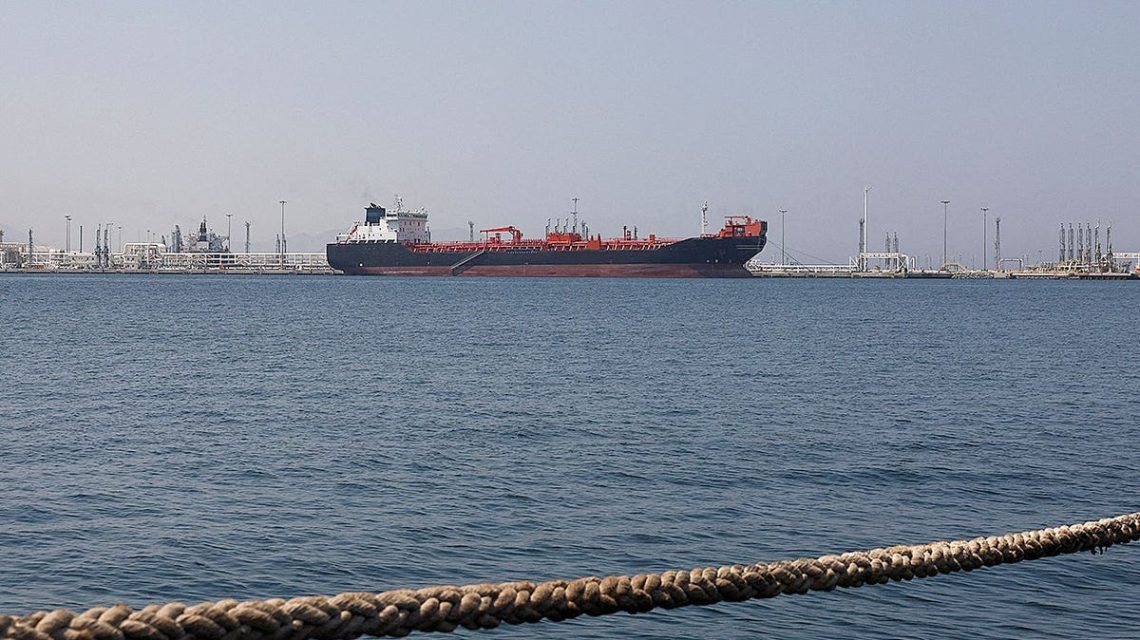
President Donald Trump has intensified efforts to ensure free passage through the Strait of Hormuz, challenging Iran’s claims of controlling the maritime zone and imposing potential tolls. The U.S. is exerting pressure through blockade measures, economic sanctions, and diplomatic actions with Gulf allies to address Iran’s nuclear ambitions and regional influence.
Recent disruptions in maritime tracking near the UAE’s main oil hub have increased concerns in the Persian Gulf. Hours before Trump’s announcement of progress on a peace deal with Iran, maritime intelligence firm Windward AI observed a blackout in Automatic Identification System (AIS) transmissions near Fujairah. This suggests potential electronic warfare, jamming, or deliberate shutoffs near the vital UAE oil port.
“Fujairah goes dark: AIS transmissions collapse after Iran’s PGSA announcement,”Windward AI reported.
Shipping operations in the region have slowed down. Some vessels have reduced their loads, while others have turned off tracking systems.
Following Trump’s announcement of a nearly finalized deal with Iran aimed at reopening the Strait of Hormuz, Fujairah continued activities by dispatching 1.35 million barrels of crude bound for South Korea on a single tanker. Although not a complete return to normal, it signaled progress since the blackout incident.
In parallel, Iran maintains a firm stance on controlling the strategic Strait of Hormuz. Iranian officials emphasize that any agreement will not undermine their sovereignty over the area.
“The Strait of Hormuz will remain under full Iranian administration and sovereignty,”declared Iran’s official military spokesperson, Ibrahim Al-Fiqar.
The situation escalated with the launch of Iran’s Persian Gulf Strait Authority (PGSA), managed by the Islamic Revolutionary Guard Corps (IRGC) Navy. The PGSA enforces regulations on ships, demanding vessel, cargo, insurance, and crew details, alongside mandatory payments for safe passage.
Regional analysts highlight Iran’s expanding territorial claims impacting areas associated with Oman and UAE, challenging the geopolitical landscape.
Alex Vatanka from the Middle East Institute argues that Iran’s influence relies on the IRGC Navy’s strategies, including fast boats, drones, radar tracking, and coastal missiles. Tehran seeks acceptance of its oversight over the Strait of Hormuz.
While nuclear issues remain central in current negotiations, the PGSA provides Iran with an economic leverage tool affecting global oil and shipping markets. Vatanka likens the system to an extortion mechanism.
Non-compliant ships risk delays, harassment, and interception, pushing compliance without blocking the strait. Discreet facilitation payments and preferential treatment for allies complicate the scenario further.
 Karoline Leavitt on Trump’s Tense Calls with Putin and Xi
  Florida Governor Race: Byron Donalds Adjusts Campaign Approach
  Trump Meets Zelensky and Plans for U.S.-China Relations
  Tight Senate Race in Maine as Susan Collins Faces Criticism
  Trump Administration’s Plan to Resettle Afrikaners as Refugees
  Trump’s Vision on Iran, AI, and Global Security at the UN