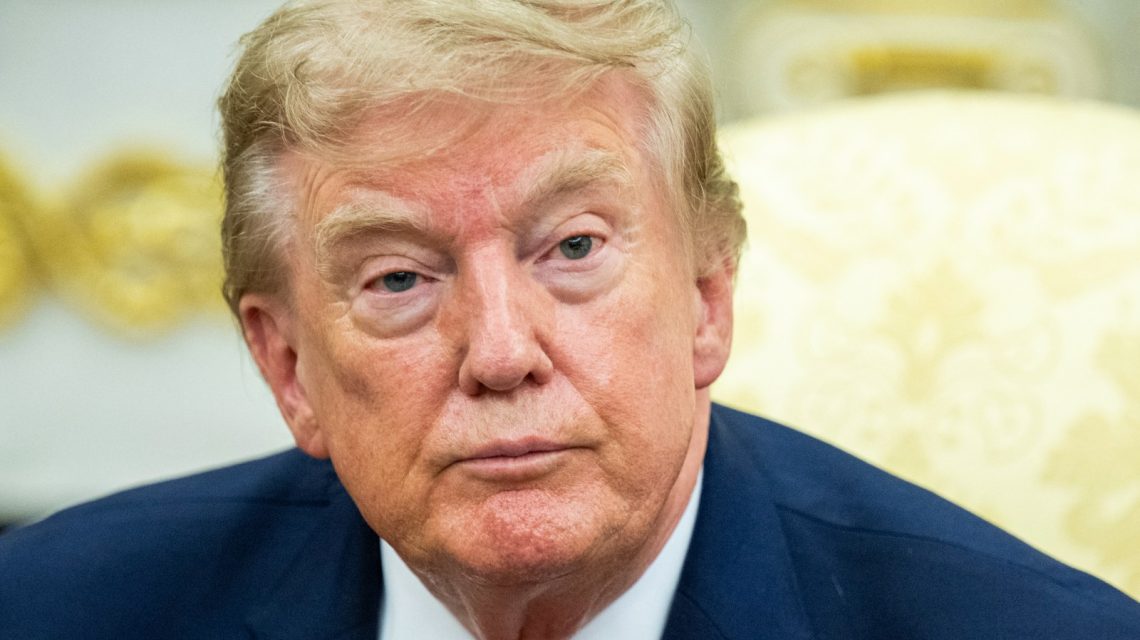
President Donald Trump has criticized the reliability of recent polls that show his approval rating has dipped as the midterm elections approach. Historically, low presidential approval correlates with the party in power losing seats during midterms. Democrats aim to leverage this by framing the elections as a referendum on Trump’s policies, hoping to secure victories in Congress.
Issues Influencing Approval
The economy and foreign affairs significantly affect public opinion about Trump. Despite his campaign focus on affordability issues, inflation persists, leading to dissatisfaction with his economic management. Additionally, the Iran conflict has driven up gas prices, negatively impacting his popularity.
The White House has been approached for comment regarding these polls.
Claims of Skewed Polling
In a Truth Social post, Trump described recent polls as “Demoralization Operations” by “Radical Left Democrats.” He insists that internal polls show strong support for his administration, claiming high national morale.
Current Approval Ratings
Polls indicate Trump’s approval ratings have fallen nationwide since re-entering office in 2025:
- A Reuters/Ipsos poll records a 65% disapproval rate, with 33% approval.
- Echelon Insights shows 40% approval versus 59% disapproval.
- YouGov/The Economist reports 35% approval, with 61% disapproval.
- Though less unfavorable, a Morning Consult poll shows 43% approval and 54% disapproval.
State-by-State Approval
Trump’s approval varies by state, with declines in some states he won in 2024. Civiqs tracks these ratings across different regions.
Comparative Popularity
Currently, Trump’s approval is lower than in his first term and falls behind former President Joe Biden’s ratings at the same point during their presidencies.
Nate Silver’s aggregate indicates slight improvement from Trump’s all-time low approval rating, yet still unfavorable overall.
Midterm Implications
Trump’s approval ratings could challenge Republican prospects in the midterms. Democrats hope to expand their influence by exploiting Trump’s unpopularity, especially in traditionally conservative areas.
Calculations for the House indicate Democrats need to gain minimal seats from Republicans, who hold a narrow majority. Prospects for the Senate are more challenging. Only two seats from states Trump barely won are contested, and Democrats would need additional victories in conservative states.
Analysts expect Democrats to lead in the House, with higher prediction market probabilities for their success. Predictions give mixed signals for Senate control, reflecting the uncertainty.
Future Watch
Trump’s approval will be closely monitored in the lead-up to November 3, 2026 midterms. Economic circumstances and foreign policy will play crucial roles in shaping public perception and his rating fluctuations.
Editors for Newsweek on this story include Jason Lemon and Gray R. Thomas.
 The White House and Communication Challenges
 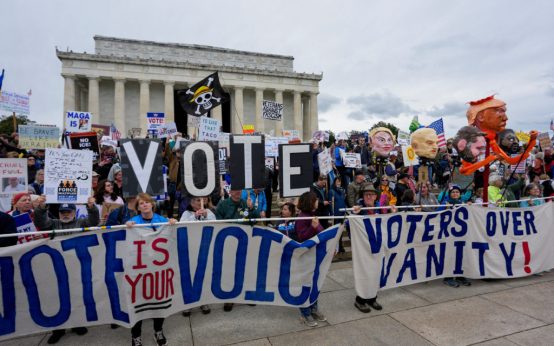 Rallies Encourage Early Voting Amid Tensions Over Voting Rights
  Geography and Politics Shape Future of AI Data Centers in Red States
 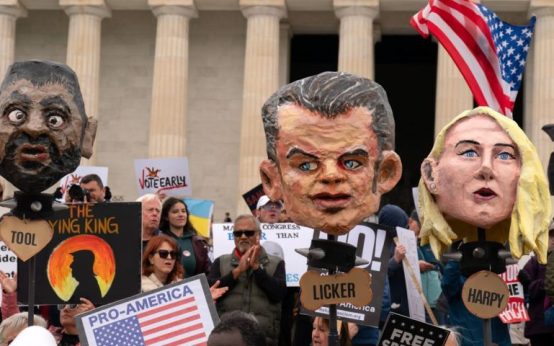 Protests and Early Voting Initiatives Mark ‘No Kings’ Day of Action
  The Movement for Guaranteed Income Gains Momentum
  Thousands to Participate in ‘No Kings’ Rallies Across Southern California