The interim agreement between the United States and Iran is intended to address Tehran’s contentious nuclear program over a two-month negotiation period. President Donald Trump, alongside Israel, initiated a war in February aimed at preventing Iran from developing nuclear weapons. However, the interim deal, which is set to be signed in Switzerland, offers limited time to tackle this persistent challenge.
Key aspects of the initial agreement involve reopening the Strait of Hormuz for global oil transport, providing Iran with financial incentives upon meeting specific conditions, and a 60-day timeframe for discussions on halting Iran’s nuclear activities. Despite these steps, skepticism abounds among lawmakers, pro-Israel advocates, and Israel itself regarding the feasibility of the deal. Republican Senator Lindsey Graham, a staunch critic of Iran, expressed doubts about the potential for a lasting resolution.
“My skepticism is Iran itself. What would a good deal look like? No enrichment. And we’ll see if we can get there,”Graham stated.
David Schenker, head of the Arab Politics Program at the Washington Institute for Near East Policy, questioned the U.S. administration’s dedication to the intricate negotiations needed. Schenker highlighted the complexity of such agreements, criticizing the administration’s perceived lack of focus on Iran’s strategy.
The previous nuclear deal, the Joint Comprehensive Plan of Action (JCPOA), took more than 18 months of negotiations. It involved high-level interventions by the then-Secretaries of State and Energy, and required technical expertise. While the Trump administration withdrew from the JCPOA in 2018, leaving many challenging aspects unresolved, the current talks present a renewed but challenging opportunity.
Vice President JD Vance emphasized that any benefits for Iran under the new deal are conditional on progress in dismantling their nuclear program. He expressed distrust in verbal assurances, prioritizing observable actions by Iran.
Republicans insist that any deal should be subject to congressional approval. Senator Ted Cruz expects the Senate to have the final say, while others like Senator Roger Marshall argue that a time-constrained negotiation could prevent Iran from stalling for tactical reasons.
On the Democratic side, Senator Tim Kaine pointed out that past negotiations provide a foundation for current discussions, though replicating such a comprehensive deal is challenging given the differing circumstances and lack of experienced negotiators.
U.S. envoys have made several efforts in negotiations, notably with Omani mediation, though these did not culminate in a deal. Tensions heightened following U.S.-Israel attacks on Iranian sites, with Pakistan stepping in as a primary mediator thereafter.
The interim agreement does not explicitly address other regional concerns such as Iran’s missile program, support for militant groups, or internal repression. This leaves uncertainties about broader implications beyond the nuclear issue.
Brian Katulis of the Middle East Institute commented on the limited success of the past war efforts against Iran, suggesting the new agreement attempts to rectify previous challenges and present a favorable resolution.
 Court Declares Deportation Policy Unlawful
  FAA Approves Trump’s Proposed Triumphal Arch at Arlington
  Hegseth Supports Trump’s Media Ban in Defense of National Security
  Political Interference and the Threat to Free Press
  Impeachment and Limiting Executive Power: A Democratic Imperative
 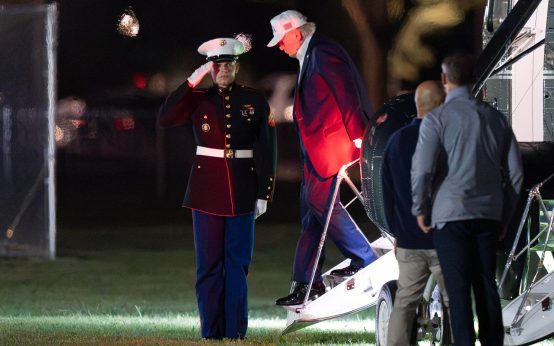 Trump Shortens Camp David Trip Amid Middle East Tensions