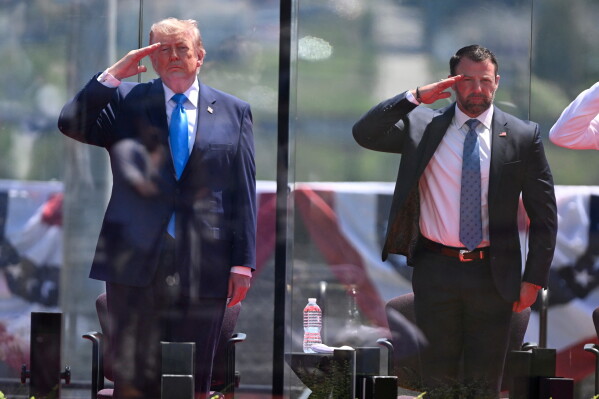
The U.S. government’s strategy towards Cuba mirrors the approach used in Venezuela, according to analysts. This includes a petroleum blockade, increased U.S. military presence, federal charges, and repeated threats of intervention. Although campaigns of pressure look similar, outcomes might differ. President Donald Trump often stated ‘Cuba is next.’
Brian Finucane, a senior adviser at the International Crisis Group and former State Department attorney, remarked, ‘President Trump saw the intervention in Venezuela as a massive success.’ He explained that Trump aimed to replicate this approach in other nations, including Iran. However, Finucane stressed that, unlike Venezuela, Cuba and Iran are distinct from Venezuela.
If the U.S. were to overthrow the Cuban government, there is no obvious successor, unlike Venezuela, where the U.S. helped Nicolás Maduro get caught, and Delcy Rodríguez assumed power with U.S. approval. Cuban officials, speaking anonymously, note there is no ‘Delcy’ for Cuba.
The U.S. military presence in the Caribbean is now smaller and less daunting than the deployment near Venezuela before Maduro’s capture. Charges against a former Cuban leader, Raúl Castro, at 94, have less impact than accusing Venezuela’s sitting president of drug trafficking.
Threats of Military Operations
President Trump increased threats for a potential U.S. intervention in Cuba, similar to Venezuela. He warned Caribbean leaders to align with the U.S. or face consequences. Weeks before capturing Maduro, Trump made public threats, warning he would act if Maduro remained defiant.
After Maduro went to the U.S. for trial, Trump pivoted towards Cuba, saying it was next. Trump mentioned tariffs for countries supplying oil to Cuba and claimed the U.S. might ‘take Cuba.’ He labeled Cuba a ‘failed state.’
Petroleum Embargoes
U.S. oil embargoes on Cuba and Venezuela target ruling elites by different means. In Venezuela, the focus was on halting oil exports to weaken Maduro’s regime. Once Maduro was gone, the U.S. blocked Venezuelan oil exports to certain countries, mainly cashless Cuba. Much of Venezuela’s crude now goes through U.S. refineries.
For Cuba, the goal is to block oil imports, complicating its fuel supply amid energy shortages. The long-standing U.S. embargo has made providing electricity and gas to citizens challenging. Finucane warned that excessive pressure might trigger a refugee crisis as Cubans might flee to Florida.
Charges Against Officials
The U.S. Department of Justice accused Maduro of charges related to narcoterrorism in 2020. These moved to capture Maduro, reshaping Venezuela-U.S. relations, allowing Venezuelan oil sales previously blocked.
The indictment of Castro for shooting down civilian planes flown by Miami-based Cuban exiles marks a step in Trump’s pressure campaign. William LeoGrande, a professor specializing in Latin American politics, noted capturing Castro for such charges won’t alter Cuba’s governance as he remains influential but not a day-to-day leader.
U.S. Military Forces in the Region
Before capturing Maduro, the U.S. deployed warships near Venezuela, the largest military display in Latin America in decades. The USS Gerald R. Ford, the most advanced U.S. aircraft carrier, rerouted from Europe led the operation. Amphibious ships carried Marines, helicopters, and Osprey aircraft.
U.S. forces targeted small boats smuggling drugs in the Caribbean and eastern Pacific. Fighter jets patrolled the Gulf of Venezuela. Over 150 aircraft deployed throughout the western hemisphere for capturing Maduro.
Currently, reduced U.S. forces remain in the Caribbean, including two amphibious ships with Marines. The USS Nimitz and accompanying ships arrived as charges against Castro were announced. The Nimitz is on its last tour, engaging in maritime exercises.
Situations differ greatly, making similar outcomes difficult. A quick raid to capture Raúl Castro or any leaders in Cuba doesn’t promise results like in Venezuela,
Finucane concluded.
AP journalist Andrea Rodríguez in Havana contributed to this report. The story was translated from English by an AP editor using AI tools.
 Penn State Fraternity Members Charged in Cocaine Ring Bust
  Orland Park Plans New Traffic and Emergency Measures
  Texas Man Charged with Capital Murder in Shooting of 5-Year-Old
  Far-Left Groups Allegedly Organize Protests in Austin
  Austin Police Release Footage of Arrest After ICE-Involved Shooting
  Himalayan Pilgrimage: A Couple’s Narrow Escape and Lingering Questions