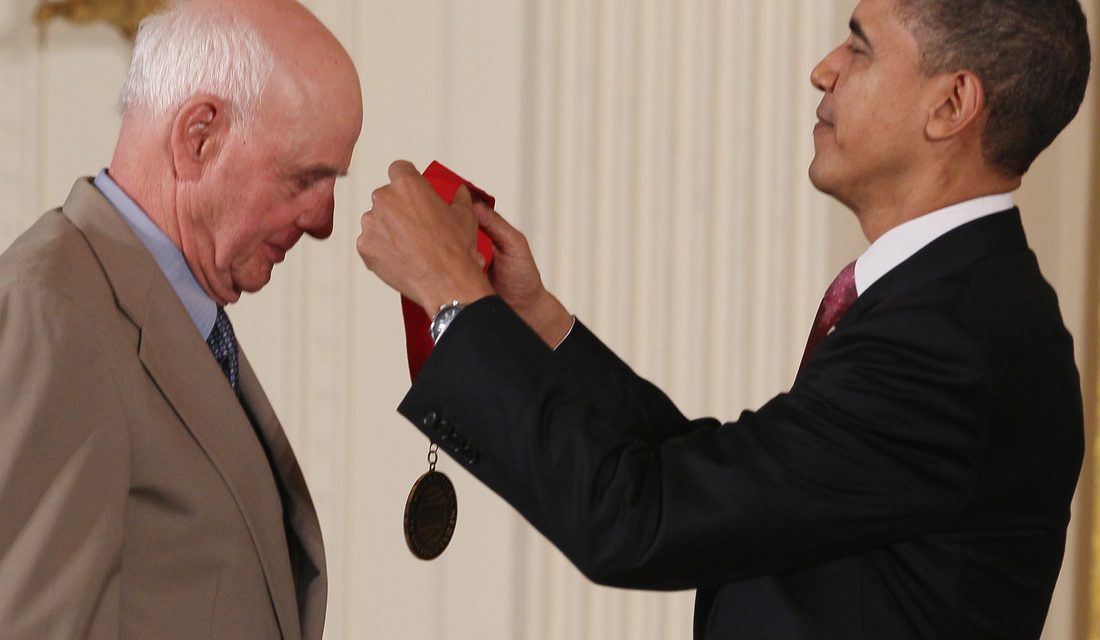
President Barack Obama presented the 2010 National Humanities Medal to Wendell E. Berry during a White House ceremony in 2011. Berry, a novelist and poet, spent his life cultivating both his farm and his literary craft on land his family had tended for seven generations. He passed away at age 92 in Port Royal, Kentucky.
Berry’s writing career began in academia, with studies at the University of Kentucky and Stanford. By age 28, he held a prominent position at New York University. Despite these achievements, Berry chose to return to his native Henry County, Kentucky after two years, embracing life as a farmer and writer. In his essay “A Native Hill,” Berry expressed this choice: “I had made a significant change in my relation to the place: before it had been mine by coincidence or accident; now it was mine by choice. My return, which at first had been hesitant and tentative, grew wholehearted and sure. I had come back to stay. I hoped to live here the rest of my life.”
Berry’s work drew from his farm and local community, serving as a foundation for his critique of industrial farming. He expressed skepticism about technology, preferring handwritten manuscripts and a trusty typewriter from 1956. His writing aimed to capture the essence of his environment, reflecting on natural and societal elements.
In poems like “June Wind,” Berry wrote:
Light and wind are running
Over the headed grass
As though the hill had
Melted and now flowed.
Berry also touched on social issues, as in “Against the War in Vietnam.” He described:
In the name of ourselves
we ride at the wheels of our engines,
in the name of Plenty devouring all,
the exhaust of our progress
falling deadly on villages and fields
we do not see.
We are prepared for
millions of little deaths.
His achievements include receiving the National Humanities Medal in 2012 and induction into the Kentucky Writer’s Hall of Fame in 2015, becoming its first living member.
During a 1998 interview with NPR’s Noah Adams, Berry hesitated to advise young people. He shared, “I think advising the young about a life course is probably not a responsible thing to do.” However, he suggested seeking the opportunity to “stop some place, and stay there. Learn the history of it, and the names of the plants and animals and the neighbors.”
Berry’s work serves as a timeless reminder to slow down and cultivate a deep appreciation for our environment and community.
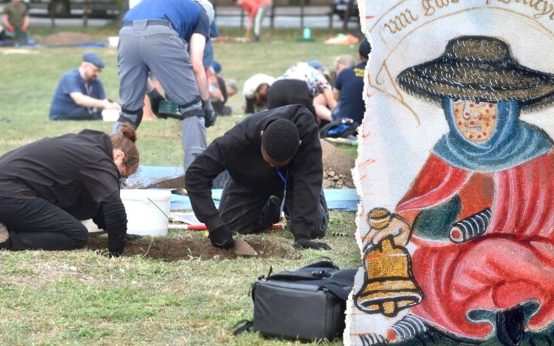 New Discoveries at Medieval Leprosy Hospital in Lincoln
  Bob Woodward Reveals Former Confidential Sources in New Memoir
  Reactions to National Anthem Renditions and Controversies
  Public Spaces and Reading Habits
 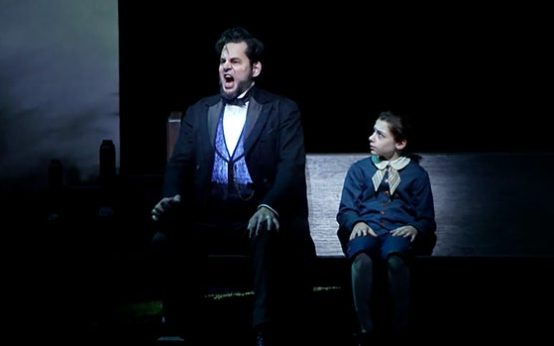 Missy Mazzoli’s Journey to the Metropolitan Opera with ‘Lincoln in the Bardo’
  The Enduring Legacy of Harry Houdini: Master of Escape