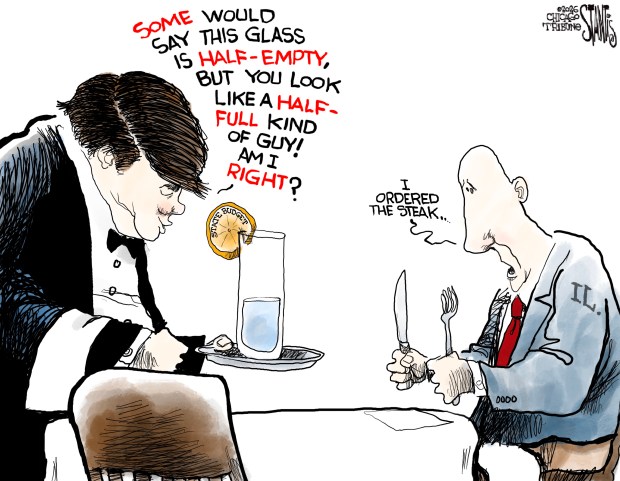
The recent spring legislative session in Springfield presented two perspectives. Some viewed it with disappointment, noting that urgent issues went unaddressed. These included assistance for the Chicago Bears, a growing imbalance in energy supply and demand, the lack of new housing initiatives, and the need to make life more affordable for Illinoisans facing financial challenges.
Others saw a silver lining. The session concluded without major negative policy impacts. No significant new taxes on individuals and corporations were introduced. Progressive lawmakers pushing for a constitutional amendment to tax millionaires were temporarily rebuffed. Governor JB Pritzker’s ‘maintenance’ budget was largely accepted, with some improvements, such as local governments benefiting from increased income tax revenues, securing an additional $60 million for their budgets, including $12 million for Chicago.
To balance the state’s finances, Pritzker had proposed keeping the municipal share of state income tax receipts static, which would have worsened property tax issues hampering growth in many communities. Although the budget was approved without much controversy, the state appeared to lack decisive leadership. The Democratic supermajority engaged in internal disagreements over key issues instead of taking decisive action.
While Republicans played a minor role, Peoria Rep. Ryan Spain, a Republican House budget participant, acknowledged the Democrats’ increased transparency regarding the spending plan compared to previous years.
For Governor Pritzker, this final spring session before seeking a third term was underwhelming. His primary goals were to negotiate a deal to keep the Bears in Illinois and to introduce housing initiatives statewide. The outcome for the Bears in Illinois remains uncertain. The housing package stalled due to local government objections about state-superceded zoning authority. In both cases, Pritzker’s visible leadership was limited. He outlined broad objectives, hoping lawmakers would align, but they did not.
State lawmakers representing Chicago and Mayor Brandon Johnson effectively blocked the plan to prevent the Bears from relocating to a suburb. On the housing initiative, suburban officials resisted to protect their authority, reassuring residents about developments in residential neighborhoods.
Efforts to tackle an impending electricity supply issue received no attention. This crisis has been exacerbated by plans for energy-intensive data centers and existing clean-energy policies that incentivize removing power-generating resources in northern Illinois. Simple adjustments to Pritzker’s 2021 Climate & Equitable Jobs Act would have helped maintain power availability and prevent further increases in electric bills. Yet, no action was taken by Springfield Democrats.
Accomplishments beyond the budget included full funding of the state’s pension obligations and an additional $350 million allocated to public schools. Lawmakers also responded to Pritzker’s call to ban cellphones in public-school classrooms. Measures to regulate artificial intelligence use were passed, and a licensing process for hemp producers was finally established, addressing the sale of THC-infused products in various retail outlets.
In terms of affordability, Pritzker, House Speaker Emanual ‘Chris’ Welch, and Senate President Don Harmon promised it would be a priority. However, actions taken were modest. An automatic gas tax increase was paused, saving drivers 1.3 cents per gallon. Additionally, a one-time payment of $400 for individuals losing SNAP benefits due to GOP policies in Washington, D.C., was approved, at a cost of $70 million to state taxpayers.
To fund this maintenance budget, narrow tax increases on digital ads and social media platforms were introduced, though they face potential legal challenges. By Democratic Party standards in Springfield, this was not a tax-heavy budget.
The 2026 spring session will likely be remembered for what’s missing. With heightened interest in the Bears’ future, voters paying attention to the state’s governance under Democratic control had an opportunity to see Springfield’s operations. The question remains whether they approved of what they observed.
 Italian PM Giorgia Meloni Skips UN General Assembly Amid Growing Tensions
  Calls Grow for Ireland’s Soccer Team to Boycott Matches Against Israel
  Congressman Randy Fine’s Bold Political Stance and Views on AI Regulation
  Political Messaging and Strategy Leading Up to Midterms
  President Trump Proposes ‘Super Intelligence’ as New AI Term
  Trump Administration Considers Diesel Export Ban Amid Rising Prices