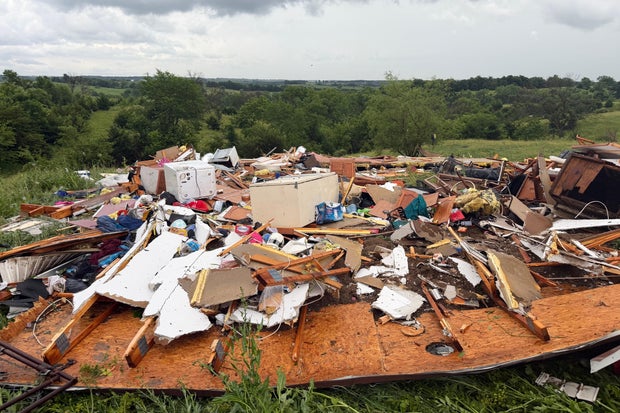
The Midwest faced severe weather conditions that resulted in widespread power outages, building damage, and flight cancellations. The storms claimed at least one life and led to fresh tornado sightings near Chicago.
Tornadoes and High Winds Hit Illinois and Wisconsin
Meteorologist Nikki Nolan reported tornado activity in around 11 cities in Illinois and Wisconsin. Wind speeds reached 75 mph in Mason City and 70 mph in Morton and Washington, Illinois. Over 243,000 customers lost power in Illinois, as tracked by PowerOutage.us.
The National Weather Service raised the severe risk level to 4 out of 5 for the Chicago region. This was the first time since July 2024 that such a risk level was recorded, when 32 tornadoes touched down. Tornadoes struck mostly rural areas Southwest of Chicago, with reports of building damage in Streator.
Rescue Efforts and Casualties
No fatalities were reported in Streator, but storm chaser Scott Lasker helped rescue a man trapped in debris there. In Des Moines, Iowa, a homeless man died after a tree fell on him during the storm. No other casualties or serious injuries were reported.
Continued Severe Weather and Flight Disruptions
Tornado advisories continued across Illinois, Indiana, Iowa, Missouri, and Wisconsin. The storms paused flights at several airports including in Chicago, Philadelphia, and Newark, impacting over 1,000 flights based on data from FlightAware.
Impact on Local Communities
In Unionville, Missouri, Shane Tipton and his father narrowly escaped a tornado that obliterated their home. Kylie Rouse, Shane’s daughter, began a GoFundMe to aid in their recovery. Springfield, Illinois, witnessed extensive damage, with buildings at an animal shelter severely damaged but no animals harmed.
The storms also struck the Abraham Lincoln Capital Airport. In the Chicago area, strong winds partially tore the roof off an apartment building.
Benefits and Heat Wave Concerns
Cool air from Canada clashed with warm Southern air, creating further storms expected to move east. The Midwest braced for potentially dangerous heat, with temperatures that might feel like over 100 degrees Fahrenheit.
Philadelphia declared a heat emergency and activated cooling centers. New York officials advised residents to stay hydrated and seek cool environments if air conditioning was inaccessible.
Restoration and Ongoing Efforts
Commonwealth Edison Company faced challenges restoring power after storm damage. It aimed to restore 80% of impacted customers by June 13. Photographs and videos showed collapsed structures in various Midwest regions, highlighting the storms’ severity.
 Texas Man Charged with Capital Murder in Shooting of 5-Year-Old
  Far-Left Groups Allegedly Organize Protests in Austin
  Austin Police Release Footage of Arrest After ICE-Involved Shooting
  Himalayan Pilgrimage: A Couple’s Narrow Escape and Lingering Questions
  Religious Trends: Decline in Affiliation with LDS Church
  UC Berkeley Student’s Harrowing Encounter Raises Questions About Safety and Legal Protections