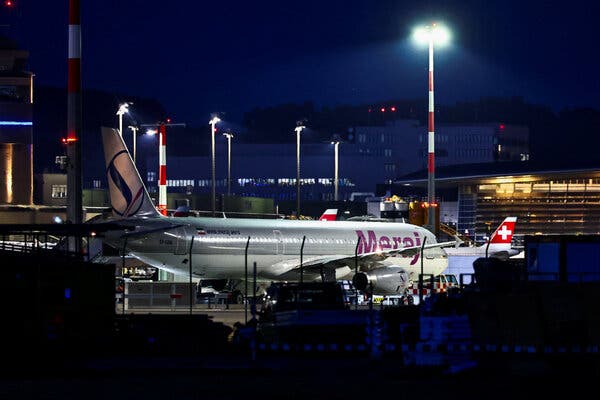
The next phase of negotiations to conclude the conflict in Iran is set to commence on Sunday. This development occurs amidst ongoing combat in Lebanon and renewed uncertainty surrounding the Strait of Hormuz.
A plane transporting an Iranian delegation touched down at Zurich International Airport in Switzerland on Saturday. The delegation comprises key figures such as Gen. Mohammad Bagher Ghalibaf, Iran’s lead negotiator in previous discussions and the speaker of Iran’s parliament, along with Abbas Araghchi, Iran’s foreign minister.
Vice President JD Vance arrived in Switzerland early Sunday, preceding the talks intended to build upon a preliminary deal to end the Iranian war. Mr. Vance will participate in the talks for a limited period, leading a team that includes special envoys Steve Witkoff and Jared Kushner, who were already in Switzerland at his arrival.
Pakistan, a mediator in the peace process, announced that “technical talks” would start on Sunday. The Pakistani delegation is led by Prime Minister Shehbaz Sharif and Army Chief Field Marshal Syed Asim Munir, with Qatari mediators also participating. The discussions are occurring at a sensitive time. Conflict between Israel and Hezbollah threatens broader peace efforts and could disrupt shipping in the Strait of Hormuz.
The U.S.-Iran negotiations, initially scheduled for Friday, were delayed due to continued skirmishes between Israel and Hezbollah in Lebanon. Iran accused Israel of violating a previously agreed cease-fire through its strikes and stated it had blocked the Strait of Hormuz. However, the U.S. military asserted that shipping in the strait was unaffected and that Iran does not have control over the passage.
Various complex issues will likely arise in the discussions. The interim agreement by President Trump with Iran left decisions on its nuclear and missile programs to future talks and did not clarify whether the crucial Strait of Hormuz will stay accessible for international trading.
Esmail Baghaei, spokesperson for Iran’s foreign ministry, mentioned that the trip aims to ensure the other parties fulfill their commitments. He emphasized negotiations on a final agreement would not progress unless Iran perceived the U.S. as adhering to the existing deal.
Tehran has accused the U.S. of failing to manage tensions between Israel and Hezbollah, which flared anew even after a cease-fire in Lebanon was declared on Friday. The U.S.-Iran agreement calls for a cease-fire across all regions, including Lebanon, but Israel and Hezbollah have yet to agree formally.
Vice President Vance expressed hope that the negotiations would address the nuclear program and cease-fire in Lebanon, acknowledging that Iran likely has additional concerns to discuss in the talks.
 Emergency Landing of Flydubai Plane Highlights Cockpit Security
  Passengers Prevent Mid-Air Crisis Amid Pilot Stabbing Incident
 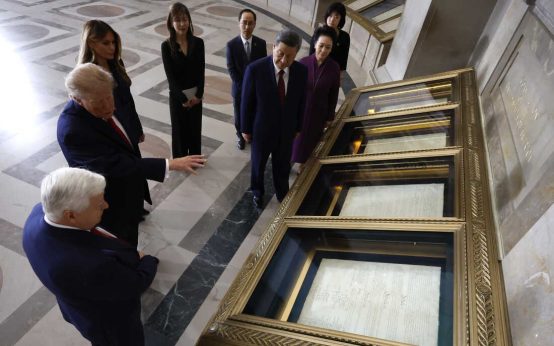 Sensitive Discussions During Trump’s National Archives Visit with Xi Jinping
 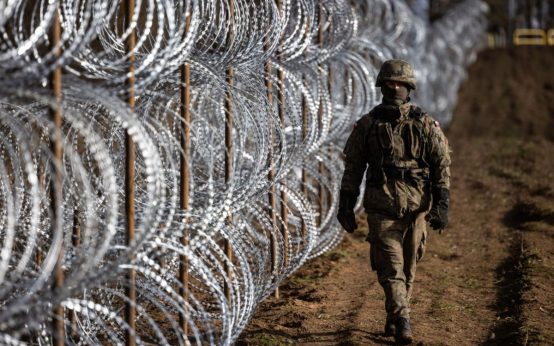 Escalating Tensions Between Russia and the UK
  Key Events in Politics and Technology: U.S. and U.K. Developments
  Secretary of State Rubio Comments on Recent UK Terror Threat