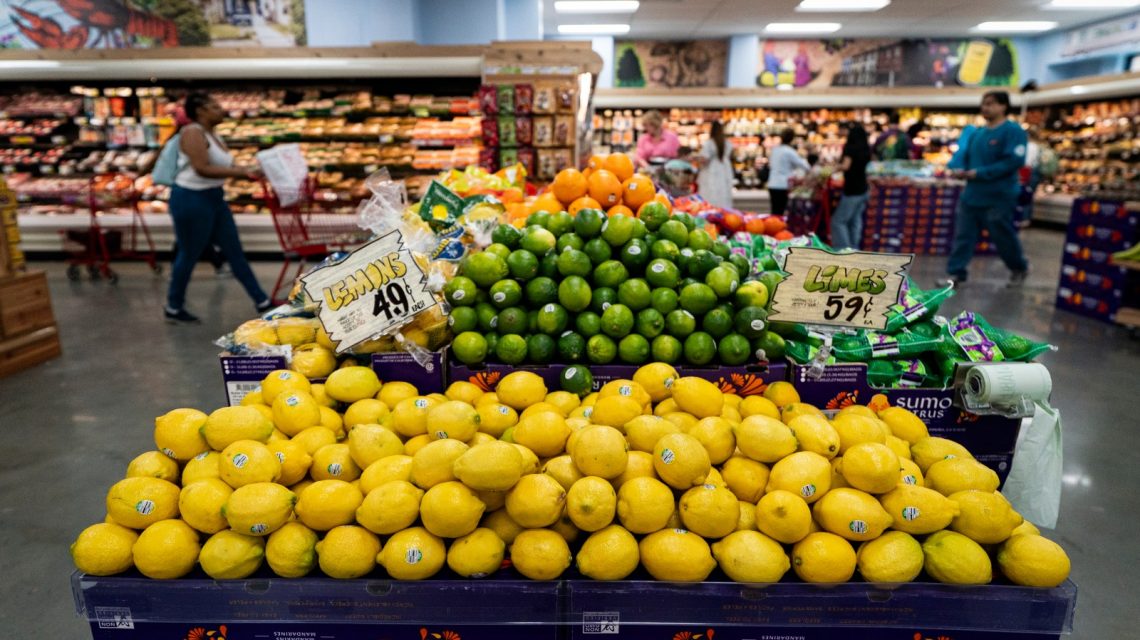
Analysts are raising concerns about a powerful El Niño developing in the Pacific Ocean, warning of potential significant impacts on global food prices in the future. In early July, the World Meteorological Organization (WMO) predicted that current El Niño conditions would rapidly intensify, increasing the probability of heatwaves, droughts, heavy rainfall, and other extreme weather in many regions worldwide. The National Oceanographic and Atmospheric Administration (NOAA) reported an 81 percent probability of a very strong El Niño occurrence between October and December, potentially ranking among the most significant El Niño events since 1950.
Experts, including World Bank analysts, fear that such an event, termed a “super” or “Godzilla” El Niño by some, could disrupt global agriculture and food supply chains into next year, worsening economic pressures worldwide. According to an analysis by Goldman Sachs, cited by The Guardian, the El Niño may lead to a 15.8 percent rise in global food commodity prices, a change expected to be fully realized by the second half of 2028.
What Is an El Niño?
El Niño, which means “little boy” in Spanish, is a climate phenomenon characterized by unusually warm ocean surface temperatures in the central and eastern tropical Pacific. This warming disrupts typical weather patterns globally, often causing flooding and heavy rainfall in some areas while triggering droughts and heatwaves in others. The World Food Programme (WFP) explains that these conditions can lead to simultaneous extremes, damaging crops, livestock, and infrastructure, thus reducing food production and disrupting markets.
Potential Increase in Food Prices
In early June, the World Bank noted that El Niño could exacerbate current issues in the food supply chain already impacted by oil, gas, and fertilizer shortages due to the U.S.-Iran conflict. Schroders Wealth Management analysts indicated that a super El Niño might cause significant food price hikes over the next year, as weather-related challenges combine with existing economic and geopolitical strains. “If historical correlations remain consistent,” they wrote, “a very strong El Niño could lead to a doubling of global food prices from current levels over the next year or so.”
Risilience, a climate-risk analytics firm, suggests that an extreme scenario could reduce global agricultural production by 14.3 percent, resulting in an estimated $342.2 billion loss and causing price shocks of 10 percent to 50 percent for major food crops. However, William A. Masters of Tufts University noted that the U.S. might experience limited impact due to diversified import supply chains. For American consumers, the main factors affecting food price inflation remain suppliers’ access to energy, labor, and trade.
Chris Barrett, a professor at Cornell University, indicated that regions like Australia, South Asia, and Southeast Asia might face the most substantial impacts, with anticipated rises in wheat, rice, and palm oil prices. This situation, he explained, will “concentrate the pain” in areas dependent on imports already dealing with Iran-related supply disruptions. Thankfully, global cereal stocks are currently high after a successful harvest last year, providing a buffer to manage the upcoming El Niño shock if coordinated effectively.
Professor Joseph Balagtas from Purdue University stated that the impact on U.S. and global markets would “depend on the crop.” Fruits and vegetables grown in “relatively concentrated regions” may see quicker retail price impacts due to local weather effects. Of particular concern is the impact on rice-growing regions since rice serves as a staple food for billions in Asia, relying heavily on seasonal monsoon rainfall. Disrupted rains from El Niño could threaten food security and affordability in rice-dependent nations.
In addition to food, energy markets may also experience disruptions. According to global consultancy Wood Mackenzie, El Niño could widen impacts on energy trade. Variations in cloud cover, wind speeds, precipitation, and snow melting may significantly alter renewable energy generation.
 Challenges in California’s Home Insurance Market
  Race Against Time: Preserving Quinhagak’s Archaeological Heritage
  Managing Drying Rivers: The Need for New Approaches
  Coastal Damage from Kelvin Waves and Rising Sea Levels in Southern California
  Heat Dome Tightens Over South-Central US with Triple-Digit Temperatures
  Army Corps Resumes Construction on Brandon Road Lock and Dam Project