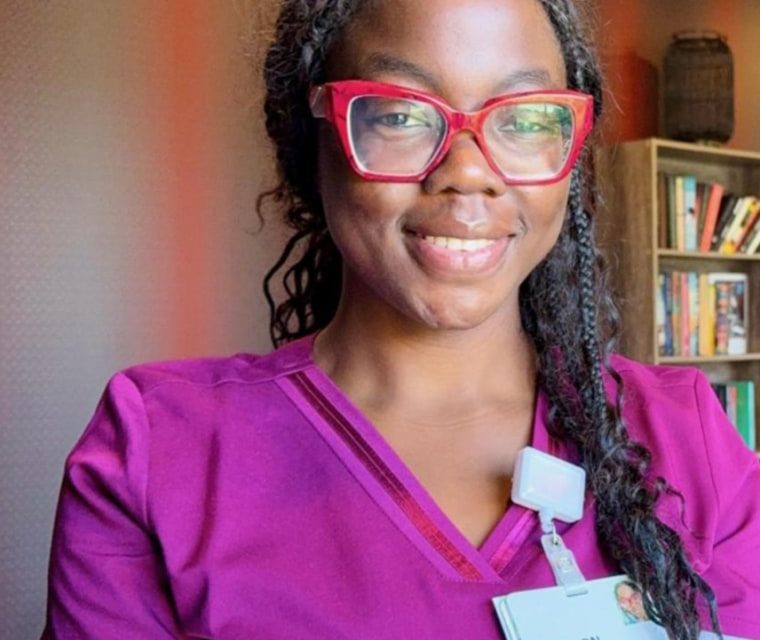
Nurse Returns Home After Detention
Debora Kapisha, a registered nurse, has been reunited with her family. This followed a weeklong campaign by her community and colleagues from Maine Medical Center. They demanded her release from immigration detention. On Thursday evening, after her release, Kapisha expressed her gratitude. “I am so thankful to be home and eager to return to my co-workers and patients,” she stated. Her colleague, Sara English, shared this statement on her behalf at a news conference organized by National Nurses United and the Maine State Nurses Association.
Support from Colleagues and Union Leaders
Janelle Crowley, a NICU nurse and union leader, emphasized their commitment to standing up for Kapisha. “We protect each other and our patients. And in this instance, we protected Debora,” she said.
Kapisha, originally from Zambia, works with dialysis patients at Maine Medical Center. Her expertise is deemed crucial by her colleagues. Kelli Brennan, co-president of the Maine State Nurses Association, highlighted the importance of Kapisha’s role, stating, “It’s definitely an area that we need her in.”
Her Legal Status and Concerns
Kapisha has a pending asylum case. She was detained by ICE on July 30 at Boston’s Logan International Airport. The Department of Homeland Security and ICE did not comment but had previously stated that Kapisha entered the U.S. legally in 2024 on a five-month visa, which had expired. Despite this, Kapisha’s union and employer insist she has been living and working in the U.S. legally.
Kelli Brennan confirmed ongoing support for Kapisha. “We’re celebrating today’s victory, but the fight continues,” she noted.
Impact on Healthcare Staff and Workers
Britt Crewse, president of MaineHealth’s Southern Region, expressed concerns about the detention. He pointed out that Kapisha seems to be living and working legally. Her detention sheds light on broader immigration enforcement issues affecting healthcare workers under the Trump administration.
In Maine, increased immigration enforcement has impacted the hospital workforce. Staff shortages resulted after the killing of Johan Sebastián Durán Guerrero. This affected healthcare, cleaning, and dietary workers. As a result, doctors took on tasks outside their usual roles, like transporting patients.
“Everyone was worried for each other,” Brennan shared. Colleagues and patients feared leaving their homes or attending appointments due to the enforcement environment. Brennan emphasized the healthcare system’s reliance on immigrant workers, noting the uncertainty this situation creates for many.
Crewse added that the enforcement surge has left many staff members anxious and on edge.
 Managing Distress and Discomfort Effectively
  Trump Administration Seeks to Influence NIH Grantmaking
  Understanding School Shooting Preparedness Drills
  Addressing the Complex Issue of Suicide and Its Prevention
  Quality of Sleep Linked to Risk Reduction in Various Diseases
  Exploring Diets and Their Potential to Reduce Alzheimer’s Risk