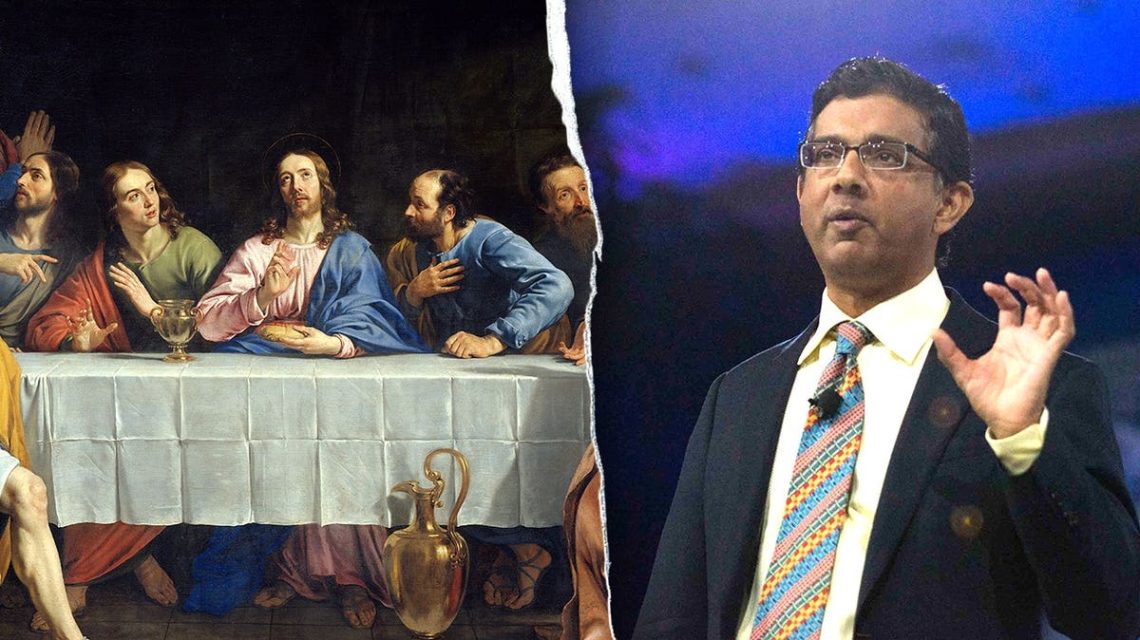
Bestselling author and filmmaker Dinesh D’Souza embarked on a journey to Israel, sparking a three-year exploration into biblical archaeology. He asserts this field strongly supports the Bible’s historical validity. During an interview with Fox News Digital, D’Souza expressed his fascination with how archaeological findings reinforce biblical historicity.
“The Stones Cry Out,” D’Souza’s latest book, represents this multi-year endeavor beginning in 2022, set to release on October 13. The book investigates archaeological findings related to figures, locations, and events in the Old and New Testaments, analyzing their implications for the Bible’s historical credibility.
D’Souza examines numerous discoveries, some involving lesser-known biblical characters. He highlights that their existence is supported by archaeological evidence.
Dinesh D’Souza explores archaeological discoveries tied to biblical narratives in his new book.
Some remain skeptical about these findings corroborating the biblical record, a notion D’Souza dismisses. He stated, “The skeptics generally are armchair critics.” He believes archaeology provides evidence contradicting their claims.
He mentioned historians’ previous doubts about Pontius Pilate, the Roman governor who ordered Jesus’ crucifixion. The Pilate Stone, discovered in 1961, bore his name and title as prefect of Judea, validating biblical accounts.
“Boom. Not only does it confirm the existence of Pilate, but the Bible writers had his title exactly correct,” said D’Souza.
In another example, he mentioned the Old Testament story of Israelites moving through Moabite territory. Archaeologists, working in modern-day Jordan in 1967, found an inscription referring to “Balaam, son of Beor,” aligning with the biblical narrative.
One stunning discovery involves Caiaphas, the high priest in Jesus’ trial and crucifixion. For centuries, Caiaphas remained a shadowy figure in history. However, an ossuary unearthed in Jerusalem, labeled “Yehoseph bar Caiapha,” contained bones of a 60-year-old man from the first century A.D., corroborating his biblical portrayal.
D’Souza remarked, “It’s a complex field, but it’s very rewarding.” He pointed out, “Archaeology provides this kind of corroboration for the people, the places, and the events in the Bible.”
Describing his book as bridging academic and public understanding, D’Souza urged Christians to visit Israel, describing it as their “spiritual homeland.” He emphasized the significance of experiencing biblical sites to gain deeper insight into the scriptural context.
For those unable to visit Israel, D’Souza describes “The Stones Cry Out” as the next best experience, bringing the historical significance of biblical archaeology to the reader.
 New York Magazine’s First Men’s Style Issue Stirs Debate
  Art Collective Strikes with Game Console Installation on National Mall
  American Hagwon: A Journey Through the Korean Diaspora
  Robert Davi Leaves California Due to Crime and Political Issues
 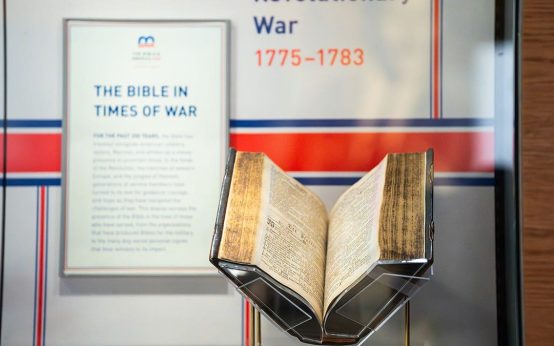 Bible’s Role in War: A Historical Exhibition
  Arrival of Giant Pandas Strengthens U.S.-China Relations