
Scientists have dismissed the most extreme scenarios for future warming, reflecting modest progress in combating climate change. These changes, however, have also made it clear that the goal set in 2015 to limit warming is now unattainable.
Researchers propose new plausible carbon pollution scenarios, sidelining past extreme projections. This shift has occurred due to changes in energy sources worldwide. The burning of fossil fuels like oil, gas, and coal is the primary driver of global warming. However, increased use of green energies such as solar, wind, and geothermal has helped reduce top-level carbon pollution projections. Despite progress, these changes have not happened rapidly enough, causing lower projections to increase.
The Paris climate agreement aimed to limit warming to 1.5 degrees Celsius above pre-industrial levels, a target known as “1.5 to stay alive.” Current best-case scenarios still exceed this target. The worst-case future, previously predicted to lead to 4.5 degrees Celsius of warming by 2100, no longer seems viable. The new worst-case scenario suggests a warming of about 3.5 degrees Celsius, while the updated best-case scenario now slightly exceeds previous expectations, going beyond the Paris target.
According to Johan Rockström, director of the Potsdam Institute for Climate Impact Research, “There is kind of a narrowing of the futures.” The expected scenarios now include a middle path where warming reaches 3 degrees Celsius by the century’s end, a reflection of current global actions.
Warming already stands at 1.3 degrees Celsius above pre-industrial levels. Even minor temperature increases have significant implications, affecting ecosystems, water availability, and intensifying extreme weather events.
Challenges Ahead
The global rise in carbon pollution has made it nearly impossible to stay below the 1.5-degree target. It could take innovative technology to remove vast amounts of atmospheric carbon to reverse this trend. According to climate experts, the world is warming at a rate of 0.1 degree Celsius every five years.
Bill Hare, CEO of Climate Analytics, emphasized that the failure to limit warming is a result of political inaction rather than inevitable fate.This is just physics…It’s not an act of God or anything. It is just because politicians in many places are not acting fast enough,
he said.
Natalie Mahowald, a climate scientist at Cornell University, noted the significant consequences of exceeding the 1.5-degree threshold for small island nations. Many of these territories risk going underwater.
Reassessment of Worst-Case Scenarios
For years, the highest warming scenario, RCP8.5, served as a benchmark for thousands of scientific studies. Aid Institute’s Roger Pielke Jr. pointed out that this scenario was based on outdated coal-heavy energy models.
Keywan Riahi, who worked on the initial RCP8.5 scenario, noted its design was never meant to reflect the most probable outcome. Instead, it was a plausible extreme based on past data. He described the decreasing reliance on fossil fuels as a success, with renewables like solar and wind becoming significantly more affordable.
Despite political commentary dismissing past projections, scientist Van Vuuren stressed that while the worst-case scenario has not been realized, the future still poses significant climate challenges.However, we are still heading towards a future with significant climate impacts…,
he stated.
A Critical Outlook
Though emissions from fossil fuel burning are leveling off, other factors could still lead to higher temperature increases than current estimates suggest. Scientists like Mahowald, Rockström, and Hare emphasize that climate feedbacks—such as ocean current shifts and cloud behavior—remain difficult to project. These factors could add nearly an additional degree of warming beyond expected emissions impacts.
Feedback mechanisms include the release of stored carbon from oceans and forests, notably from the Amazon. These natural processes could amplify warming effects significantly.
**Note**: The Associated Press covers climate and environmental issues with support from private foundations. They independently manage content, adhering to specific standards available at AP.org.
 Cold Weather Alerts and El Niño Influence
 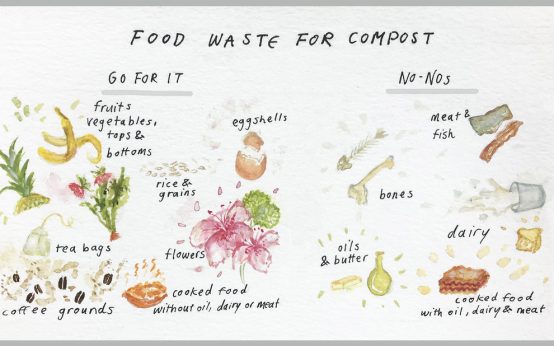 Turning Home Food Waste into Compost: A Guide
  Chicagohenge: When Sunlight Aligns with City Streets
  Fat Bear Week 2026: A Look at the Contest and Its Competitors
  California Governor Declares Statewide Emergency Ahead of El Niño Storms
 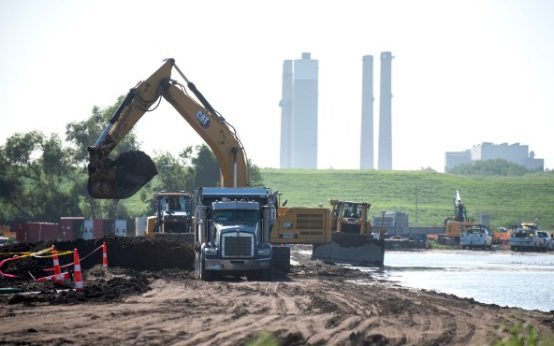 EPA Rollbacks and the Impact on Indiana Communities