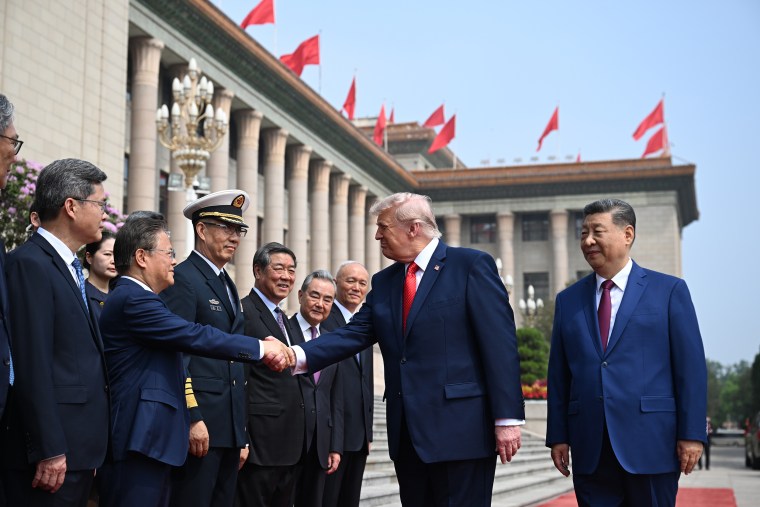
The recent visit of President Donald Trump to China involved high stakes and modest deals. While the outcomes may not have met all expectations, the groundwork for future collaboration with Chinese leader Xi Jinping was laid. The White House released information about their agreements, including China’s pledge to purchase $17 billion annually in U.S. agricultural products through 2028. Additionally, China ordered planes from Boeing, which did not excite the markets. China will also restore market access for U.S. beef and resume importing poultry from states considered bird flu-free.
The White House indicated that both countries will set up mechanisms for trade and investment discussions. China will address U.S. concerns over export controls on rare earths and crucial minerals needed for modern technology and weapons. However, there was no confirmation from Beijing, and issues like Taiwan and Iran remain unresolved.
Although the deals struck were modest, the personal interaction between Trump and Xi was significant. Trump announced Xi’s reciprocal visit to the U.S. on September 24.
Economic and Trade Agreements
China’s commitments were evident in agreements like the purchase of 200 Boeing planes. This number was fewer than expected, causing Boeing’s share prices to dip. China also secured its access to U.S. jet engines and parts. Analysts believe the inclusion of parts sales was a response to the U.S. weaponizing these sales.
The formation of a trade and investment board is a key aspect of the U.S.-China agreement. The trade board may lead to reduced tariffs on $30 billion worth of non-sensitive goods. However, Wang Zichen, a research fellow, expressed concerns about U.S. acceptance of Chinese investments due to security debates, such as a proposed factory in New Hampshire.
Geopolitical Challenges: Taiwan and Iran
Discussions on Taiwan and Iran were less clear-cut. The U.S. had no mentions of Taiwan in its readout, while China’s report did not include Iran. China had hoped for concessions on Taiwan, but Trump’s position on the issue remains unchanged.
On Iran, Trump and Xi showed mutual opposition to Iran’s trade route policies. Despite this agreement, Beijing has previously criticized the Iran war. Although Secretary of State Marco Rubio mentioned no requests were made of China, Trump indicated Xi had offered assistance.
Upcoming Visits and Continued Dialogue
The upcoming visit of Xi Jinping to Washington invites further dialogue. Having this trip scheduled could stabilize bilateral relations, despite potential challenges like cyberattacks and technology limitations. Wang noted Washington’s focus on its interests, pointing to potential future conflicts. Meanwhile, Ja Ian Chong from the National University of Singapore highlighted Xi’s portrayal of China as a powerful equal to the U.S., contrasting with Trump’s demeanor during the visit.
 New U.S. Military Bases Planned in Greenland Amid Strategic Security Deal
  Challenges Facing the Supreme Court’s Public Perception
  California Democratic Aide Arrested for Visa Overstay by Federal Authorities
  Twitch Streamer Hasan Piker Discusses Controversial Commentary
  Experts Doubt Export Ban Will Lower Fuel Prices
  A Shifting Political Landscape: The Decline of Autocratic Power