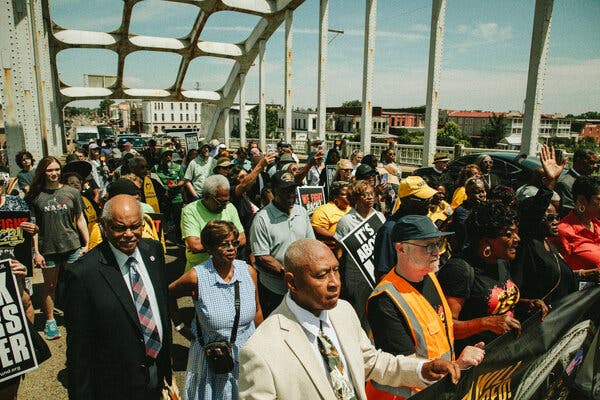
Earlier this month, individuals from across the United States gathered in Selma, Alabama, to participate in a march for voters’ rights. The event began at Tabernacle Baptist Church and concluded on the far side of the Edmund Pettus Bridge.
Republican officials are celebrating, while some voters express confusion and concern. Civil rights activists are mobilizing for what they believe is a critical struggle.
Emily Cochrane and Rick Rojas, reporters covering the South, have reported from Montgomery and Selma, Alabama; Baton Rouge, Louisiana; Nashville; and Atlanta. They highlight that it is a perplexing time to be a voter in the Southern United States.
In the wake of the Supreme Court’s decision to weaken the Voting Rights Act, Republican leaders in the region are swiftly redrawing congressional maps. This has led to postponed primaries, a veteran House member dropping out of his re-election campaign, and new candidates entering races in anticipation of the midterm elections.
The potential outcome might be a significant transformation of the region’s political landscape, shifting the already predominantly Republican area further in favor of the party. This development poses a risk to the political careers of numerous Black Democrats.
The hurried redistricting process has ignited intense debates about representation in the South. There are also practical concerns regarding district boundaries, which are in flux and affecting voters.
“They literally have created chaos,”
said Mayor Chaz Molder of Columbia, Tennessee. He is a Democrat who saw his constituency redrawn out of the district where he was campaigning for Congress when Republican lawmakers enacted a new map.
“It’s the voter that loses in this kind of partisan gamesmanship.”
Although recent redistricting is not confined to the South, and not all efforts are led by Republicans, President Trump had encouraged the strategy even before the court ruling. He recognized the challenges Republicans faced in maintaining their narrow House majority in the midterms.
Texas initiated the current redistricting clashes last summer at Trump’s urging, attempting to secure five additional House seats for Republicans. Democrats in California responded similarly, and several states followed in their footsteps. However, the Supreme Court’s recent decision prompted a new level of urgency in the South. The Voting Rights Act previously protected districts with majority Black voters who typically supported Black Democrats.
 Political Figures Energize Michigan Senate Race
  EPA Proposal May Boost Iowa Farmers amid Competitive Senate Race
 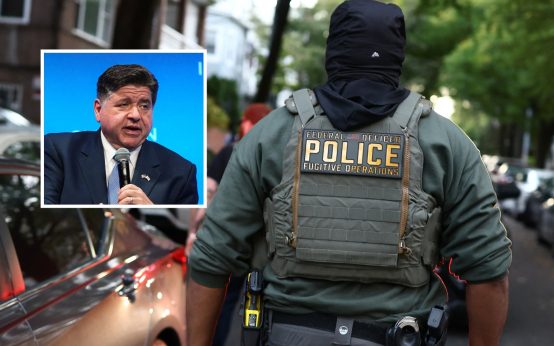 Accountability Commission Launches ‘Disappeared in America’ Project
  Iowa Senate Race: Josh Turek Gains Ground
 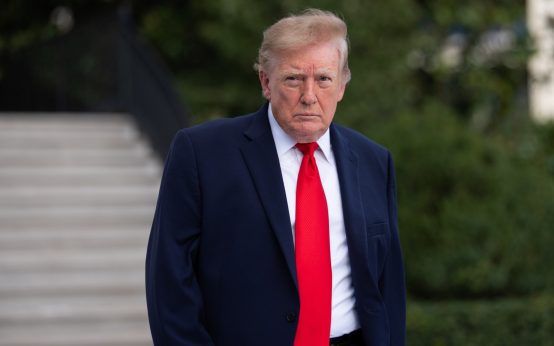 President Trump’s Approval Rating Drops to Record Low in New Polls
 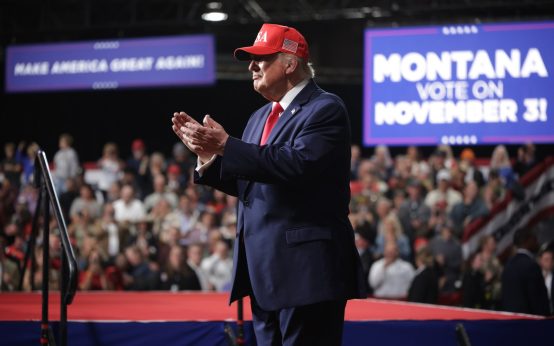 Trump Introduces Weapons-Testing Range in Montana, Discusses Gun Rights and Tariffs