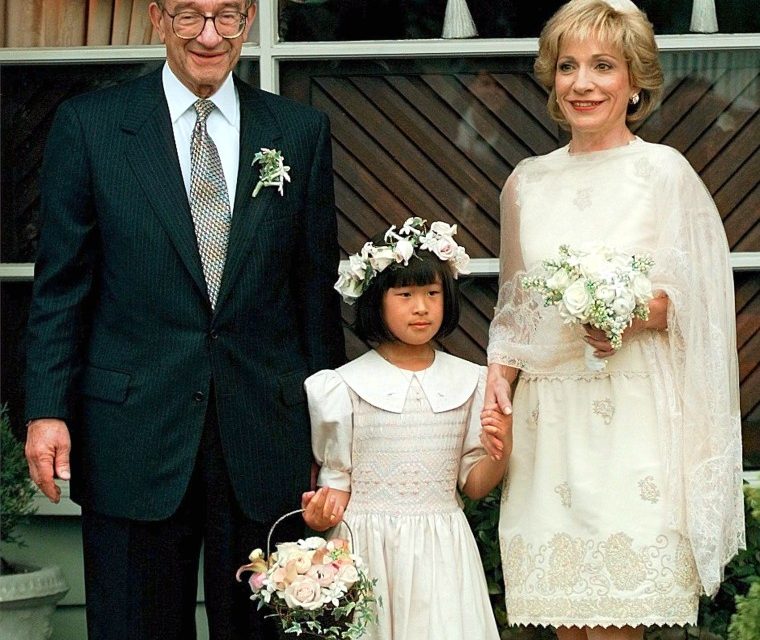
Alan Greenspan, a key figure in shaping U.S. monetary policy, passed away on Monday, according to his wife, Andrea Mitchell, an NBC News correspondent. He was 100. Focused on defining American capitalism from the late Cold War through the digital era, Greenspan’s tenure as chairman of the Federal Reserve marked one of the longest economic expansions in U.S. history. However, some decisions during his leadership are criticized for contributing to the 2007-08 global financial crisis, notably his support for financial sector deregulation.
Alan passed away at our home this morning at the age of 100 from complications of Parkinson’s disease. He was a giant of a man who helped shape the U.S. economy for decades under presidents of both parties,Mitchell stated.To me, he was my husband, who shaped my life from our first date in 1984. He had ‘irrational exuberance’ for baseball, the Washington Commanders, tennis, golf, and music, especially jazz. He will be remembered for his brilliance and kindness. Being his life partner was the joy of my life.
Born on March 6, 1926, in Washington Heights, New York City, Greenspan excelled in mathematics from a young age. He attended the Juilliard School and played jazz saxophone and clarinet before turning to economics, earning degrees from New York University and beginning a doctorate at Columbia University under economist Arthur F. Burns.
In the 1950s, Greenspan encountered Ayn Rand, whose objectivist philosophy had a lasting impact on him. He revered Rand, maintaining a close relationship until her death in 1982, acknowledging her influence in his memoir, The Age of Turbulence: Adventures in a New World.
Transitioning from academia, Greenspan co-founded an economic consulting firm, eventually becoming its president. His political journey began as an adviser in Richard Nixon’s 1968 presidential campaign, followed by a role in President Gerald Ford’s administration as chairman of the Council of Economic Advisers. His policies contributed to reducing inflation during Ford’s presidency.
Greenspan returned to government in 1987, filling Paul Volcker’s term as Federal Reserve chairman under President Ronald Reagan. He managed significant events, such as the 1987 market crash on Black Monday, where he acted to ensure market liquidity. Known as the “Greenspan put,” his strategies later defined crisis management.
His leadership received acclaim for steering the U.S. through 1991-2001’s economic expansion, overcoming challenges like the dot-com bubble and post-9/11 economic disruptions. However, his tenure’s legacy is double-edged, with the 2008 financial crisis drawing scrutiny over financial deregulation initiatives pursued during his terms.
Greenspan retired on January 31, 2006, having served five consecutive terms as Fed Chair. Post-retirement, he launched a consulting firm and authored several books.
Throughout his career, Greenspan had complex dynamics with various presidents, despite his Republican leanings. He appreciated President Bill Clinton’s fiscal policies, despite differing from him politically. He had mixed relationships with George H.W. Bush and George W. Bush due to economic disagreements, notably expressing disappointment in fiscal decisions made by the younger Bush.
His contributions were recognized internationally, receiving accolades like the French Legion of Honor and an honorary title from the British Empire. In 2005, he received the Presidential Medal of Freedom, acknowledging his impact on U.S. economic policies.
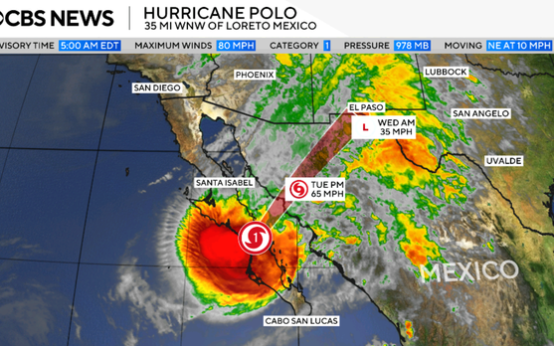 Hurricane Polo Poses Flood Threat as It Approaches Southwestern U.S.
  Family Struggles with Tragic Loss Amid Deportation Proceedings
  Maritime Expert Investigates Nantucket Shipwreck Exposed by Nor’easter
  Incident on USS Dwight D. Eisenhower Injures U.S. Service Members
  Reparations Debate Heats Up in New York Amid Delays
  Lindsay Clancy Holdout Juror Asks for One Thing in New Video After Mistrial Drama