
Populist Candidate Prevails in Maine
Graham Platner, a military veteran and first-time political candidate, won the Democratic primary for Senate in Maine. His campaign focused on a populist message that struck a chord with voters. Platner defeated the state’s governor to secure the nomination, positioning him against the Republican incumbent, Senator Susan Collins, in the upcoming elections.
Despite a series of scandals, Platner managed a successful campaign. His personal life was under scrutiny, but he urged voters to focus on larger issues, portraying Collins as a symbol of a failing political establishment. Nearly 30% of Democratic primary voters chose other candidates, indicating ongoing skepticism among some voters.
Platner’s main challenge will be convincing voters that Collins’s record is more problematic than his past controversies. He criticized Collins’s bipartisan claims, tying her voting record to former President Trump and significant votes like the confirmation of Brett Kavanaugh to the Supreme Court.
Trump-Supported Candidates See Success
Tuesday’s primaries were largely favorable for candidates backed by former President Trump. In South Carolina, Trump’s endorsed candidates succeeded, advancing to key runoffs. Lt. Gov. Pamela Evette, supported by Trump, emerged as a leading candidate, heading to a gubernatorial runoff.
In Nevada, two of Trump’s endorsed candidates won their House primaries, while a third race remained undecided. Similarly, in North Dakota, Trump-supported Representative Julie Fedorchak won her primary. These victories highlight Trump’s enduring influence in Republican primaries despite a recent setback in Iowa.
Lindsey Graham Avoids Runoff in South Carolina
Senator Lindsey Graham secured more than 50% of the vote in his primary, preventing a runoff in South Carolina. Once a critic of Trump, Graham has since become a loyal ally, which helped him gain support from the Republican base. His re-election campaign was well-funded, and he remains a favored candidate in the conservative state.
Maine’s Republican Primary for Governor Leads to Runoff
The Republican primary for governor in Maine will be decided through a ranked-choice voting system. Bobby Charles, who served under President George W. Bush, held a lead but did not secure the necessary 50% to win outright.
Maine’s system involves redistributing votes of lower-placing candidates until one achieves a majority. Charles’s campaign focused on conservative issues, resonating with Trump supporters. Ranked-choice voting is a distinctive feature in Maine, used for races with multiple candidates.
Nevada’s Competitive Governor’s Race
Aaron Ford, Nevada’s attorney general, won the Democratic nomination for governor. Ford’s campaign emphasizes his working-class background. He aims to challenge the incumbent, Gov. Joe Lombardo, a Republican. Ford stresses creating an economy by and for the people.
Nevada’s economy, including factors like unemployment and gas prices, remains a critical election issue. Ford’s background as a single father from Texas could appeal to Nevada’s working voters. His stance against Lombardo-Trump policies shapes his campaign strategy.
Ford has filed past lawsuits against the Trump administration, highlighting his opposition to various federal policies. He pledges to repeal Nevada’s ‘right to work’ law if elected. This race is pivotal for Democrats, eager to flip a Republican-held seat.
Ranked-Choice Voting Shapes Maine’s Democratic Primaries
Maine’s Democratic primary for governor also heads to a ranked-choice runoff. Several candidates are competing to succeed Gov. Janet Mills, who is term-limited. The system will eliminate the candidate with the fewest votes in successive rounds until a majority is reached.
In the Democratic contest for Maine’s 2nd Congressional District, Joe Baldacci, supported by national Democrats, currently leads. However, ranked-choice tabulation could influence the final outcome. The race will determine the successor to Jared Golden, a centrist Democrat.
South Carolina’s Congressional Race Heads to Runoff
The Republican primary for South Carolina’s First Congressional District advanced to a runoff. Charleston City Council member Jenny Honeycutt and state representative Mark Smith were the top candidates. Smith focuses on conservative legislation, while Honeycutt emphasizes preserving the state’s character and supporting Trump’s agenda.
With a mixed field of Republican candidates, the district will see a runoff to determine the final candidate.
 House Republicans Release Transcripts in Jack Smith Investigation
 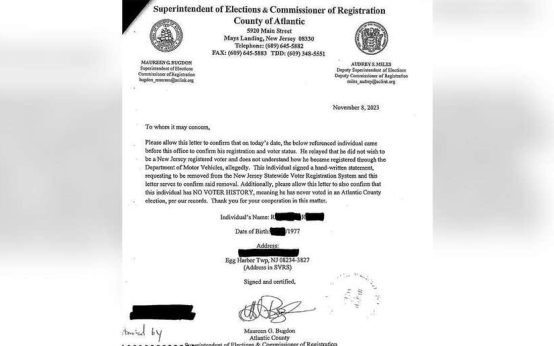 RNC Files Lawsuit for Transparency in New Jersey’s Voter Roll Maintenance
  Italian PM Giorgia Meloni Skips UN General Assembly Amid Growing Tensions
  Calls Grow for Ireland’s Soccer Team to Boycott Matches Against Israel
  Congressman Randy Fine’s Bold Political Stance and Views on AI Regulation
  Political Messaging and Strategy Leading Up to Midterms