Escalating Middle East Conflict
Fox News anchor Shannon Bream covers the rising tensions in the Middle East as Trey Yingst reports from Tel Aviv. The United States launched strikes against Iranian missile and drone storage sites after Iran targeted shipping in the Strait of Hormuz. Iran also sent drones toward Kuwait and Bahrain, while Israel attacked Hezbollah positions in Lebanon. These actions coincide with a diplomatic agreement between Israel and Lebanon.
Shipping Impacted by Military Strikes
A new environment of heightened risk and chaotic regulation is affecting the Strait of Hormuz, warned shipping firm Hapag-Lloyd. The escalating military actions and conflicting routing directives have led to operational confusion in the region.
German shipping giant Hapag-Lloyd expressed concerns as Tehran began moving millions of barrels of crude oil from Kharg Island for the first time in days. Windward AI reported simultaneous loading operations at Kharg, marking the restart of Iran’s crude export cycle. Outbound shipments included an estimated 4.12 million barrels of wet cargo, primarily crude oil, as detailed by analytics firm Vortexa.
Challenges in Gulf Shipping Operations
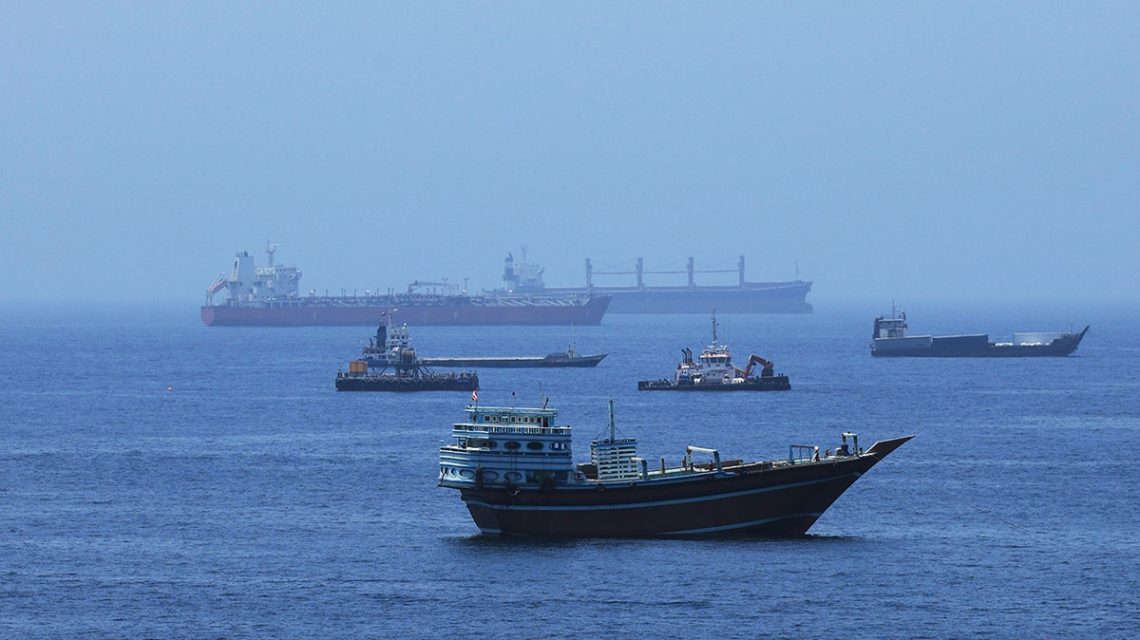
Commercial cargo vessels and crude oil tankers anchor in the Gulf of Oman off Muscat, Oman, preparing to transit through the strategic Strait of Hormuz. Hanja Maria Richter, Hapag-Lloyd AG spokesperson, acknowledged a new normal in the Persian Gulf, emphasizing the need for constant vigilance.
Richter highlighted the importance of regular risk assessments, involving security partners and relevant authorities to ensure safe navigation in the conflict zone.
USS Support and Regional Tensions
U.S. Central Command launched airstrikes on Iranian targets, including Qeshm Island, after a vessel was attacked in the strait. This prompted Iran’s Islamic Revolutionary Guard Corps to retaliate by targeting U.S. military sites in Kuwait and Bahrain.
Lloyd’s List described the strait’s fracturing into a confused, two-tier system, separating Iran-controlled routes from U.S.-protected pathways. Iran’s Foreign Minister Abbas Araghchi stated that Iran manages maritime traffic through the Strait under recent agreements.
Navigating the Strait of Hormuz
Iranian state television reported that navigation through the Strait of Hormuz requires coordination with the IRGC. Hapag-Lloyd opposed any future attempts to impose fees for passage through international waters, differentiating such fees from those for infrastructure investments like the Suez and Panama Canals.
Despite conflicting naval directives, Hapag-Lloyd successfully navigated the initial bottleneck, prioritizing crew safety amid regional challenges.
 Trump Delivers Warning to Iran, Cuba at UN General Assembly
 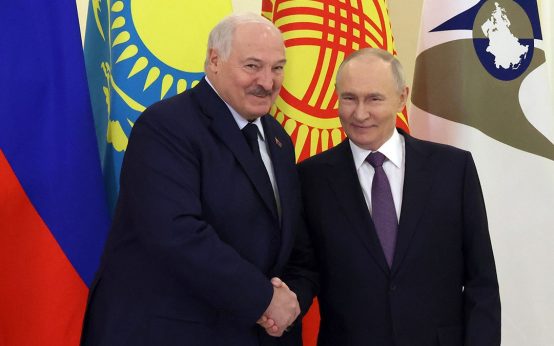 Lukashenko and Putin’s Unique Relationship and Belarus’ Strategic Role
  Alan Ritchson Faces Backlash Over Political Remarks
  Himalayan Pilgrimage: A Couple’s Narrow Escape and Lingering Questions
  Former CEO Sentenced for Bank Fraud and Sanctions Evasion
  Russia’s Potential Incursion Into Estonia: NATO’s Resilience Under Scrutiny