Mark Rutte has spent much of his tenure as the Secretary-General of NATO focused on keeping the United States committed to the alliance. His efforts have included direct engagement with U.S. President Donald Trump, attempting to deter any move by Trump away from NATO.
Initially, Trump criticized NATO allies for not spending enough on defense. During a past summit, these concerns were addressed when U.S. allies agreed to increase their spending to match that of the U.S., relative to their GDP. The current challenge is to convert this financial commitment into effective military capabilities, as Europe remains concerned about potential threats from Russia.
Rutte met Trump at the White House last month, presenting new data highlighting $1.2 trillion spent by European allies and Canada since 2017, marked as the “Trump Trillion” with gold letters. Trump, however, expressed dissatisfaction over NATO’s lack of support in the conflict with Iran, a conflict the U.S. initiated with Israel without consulting allies. Trump noted, “We do not need their money, we need loyalty.” His potential absence at the forthcoming summit, except for it being hosted by Turkish President Recep Tayyip Erdogan, signals a challenging path for Rutte and Erdogan to maintain a productive meeting.
Historically, the NATO Secretary-General’s role involves fostering consensus among member nations and articulating collective objectives. Throughout Trump’s presidency, both Rutte and his predecessor, Jens Stoltenberg, focused much of their efforts on keeping the U.S. within NATO.
Trump’s tenure has included threats to leave NATO, suggestions of U.S. military withdrawals from Europe, and proposals like acquiring Greenland. He has also implied that U.S. defense commitments depend on NATO members’ spending, impacting trust within the alliance.
Rutte has used diplomacy and flattery in dialogue with Trump, pointing out that thousands of U.S. jobs relate to $300 billion in military equipment orders from Europe. He addressed Trump’s grievances about NATO and Iran by citing that thousands of U.S. flights originated from European bases.
The integrity of NATO relies heavily on U.S. participation. Yet, recent Pentagon reductions in promised troops and equipment have unsettled allies, especially as Russia tests European defenses. Trump’s mixed messages on troop levels further strain unity.
NATO’s core promise, outlined in Article 5, is mutual defense. This principle has been invoked only once, in support of the U.S. after the September 11 attacks. The alliance’s last summit in Rutte’s home city, The Hague, saw NATO endorse increased defense spending, and Trump notably called the allies “a nice group of people.” However, the upcoming summit in Turkey, led by Erdogan—another independent NATO member—brings complications.
Rutte aims to assure Trump that European allies are increasing defense spending, enabling the U.S. to focus on security challenges from China while they address the conflict in Ukraine. Yet, Trump’s demands for “loyalty” appear intangible and difficult to substantiate.
Stoltenberg’s memoir recalls a near-disastrous 2018 summit due to Trump’s threats to abandon NATO, emphasizing the fragility of commitments if the U.S. withdraws its support.
This article was translated from English by an AP editor using AI tools.
 Migrant Caravan Moves North Through Mexico Amid U.S. Crackdown
  Pope Leo XIV Praises EU for Its Unity Efforts
  Colombian Warlord Extradited to U.S. on Drug and Terrorism Charges
  Rise in Troop Wounded Numbers in Iran Conflict
  Pacific Hurricanes Nolo and Polo Pose Threats to Hawaii and Mexico
 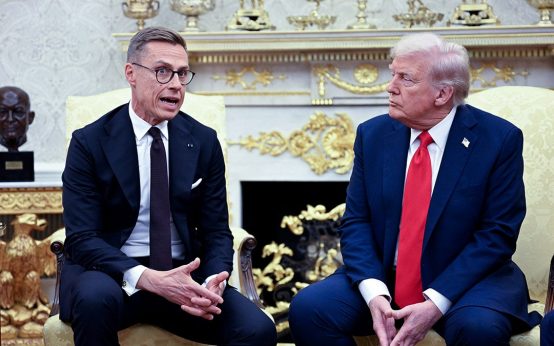 Calm Amidst Crisis: Finnish President Stubb on Europe’s Security