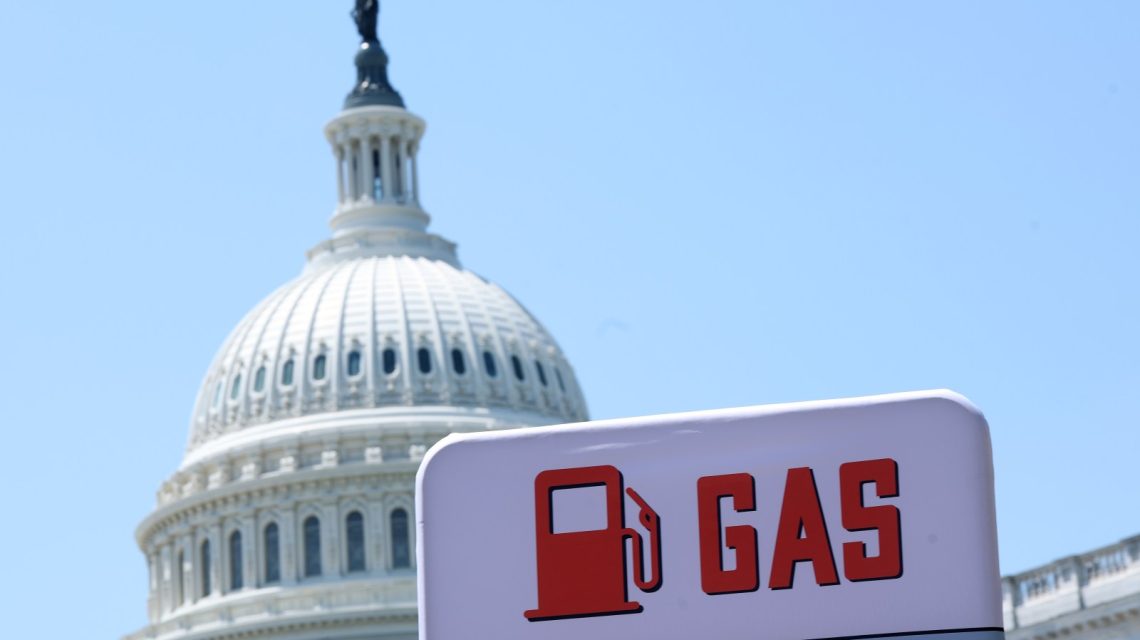
The ongoing conflict in Iran has led to a significant rise in fuel prices, impacting American households. Economists and think tanks warn that the economic fallout may act as a persistent tax on U.S. citizens. The conflict, now almost three months old, threatens to increase inflation across the economy, potentially hindering interest rate reductions set for 2026. This concern is backed by the Department of Labor’s latest consumer price index (CPI), which shows inflation surpassing wage growth for the first time since 2023, nullifying wage increases Americans received in the past year.
Prolonged Economic Impact for Consumers
The most direct economic impact of the Iran conflict is seen in energy prices. Oil costs have climbed since Iran began obstructing ships in the Hormuz Strait, a vital passage for about 20 percent of the world’s oil supply. This has caused domestic gas prices to spike. The AAA reported that the average cost of a gallon of regular unleaded gasoline rose from under $3 before the conflict to $4.49, despite a recent slight decrease due to negotiation prospects.
“Americans are likely dealing with an ‘Iran tax’ for months, possibly years,” said Justin Wolfers, an economist at the University of Michigan.
Research from Brown University’s Watson School of International and Public Affairs estimates that American consumers have incurred nearly $48 billion in additional fuel expenses since the conflict began on February 28. This increase has mainly affected gasoline but also pushed up diesel prices by over 50 percent. Combined, these changes represent an average increase of $364.40 in fuel costs per U.S. household.
Roger A. Pielke Jr., a political scientist at the American Enterprise Institute (AEI), noted that the overall cost impact on households averages about $410 more each month, owing to increased prices of other products like jet fuel and fertilizer as well.
Increased costs at the pump and grocery stores have heightened consumer inflation expectations, with the University of Michigan’s survey reporting year-ahead inflation expectations at 4.8 percent. The Department of Agriculture also predicts that prices on several goods will rise more steeply than previously anticipated.
Long-Term Economic Consequences
The U.S. administration believes that once military objectives are achieved and the conflict ends, prices of gas and other affected commodities will return to pre-conflict levels. In late April, President Donald Trump stated that prices would “drop like a rock” once the war concludes. Similarly, National Economic Council director Kevin Hassett indicated that normal shipment resumption via the Hormuz Strait could lead to a rapid decrease in fuel costs, particularly before the November midterm elections.
Challenges in Reducing Prices Quickly
Despite potential resolution, many analysts expect economic impacts could extend beyond the conflict’s end. Moody’s Analytics Chief Economist Mark Zandi expressed concern about a lasting risk premium in oil prices due to the Iranian regime’s influence over the Hormuz Strait, affecting global oil production.
Mark Blyth, a professor of international economics at Brown University, pointed out that the Strait’s closure disrupted supplies of plastic, petrochemical feedstock, and fertilizer inputs. This disruption may lead to food price increases as farmers face tighter margins. He indicated it could take up to a year for supply chains to stabilize.
Economist Justin Wolfers told MS Now that while ending the conflict may lead to lower fuel costs, the drop will not occur as swiftly as anticipated by the administration. “The White House suggests that oil prices will plunge once stability returns to the Middle East. While true, prices will not fall quickly,” he noted.
 Orland Park Plans New Traffic and Emergency Measures
  Texas Man Charged with Capital Murder in Shooting of 5-Year-Old
  Far-Left Groups Allegedly Organize Protests in Austin
  Austin Police Release Footage of Arrest After ICE-Involved Shooting
  Himalayan Pilgrimage: A Couple’s Narrow Escape and Lingering Questions
  Religious Trends: Decline in Affiliation with LDS Church