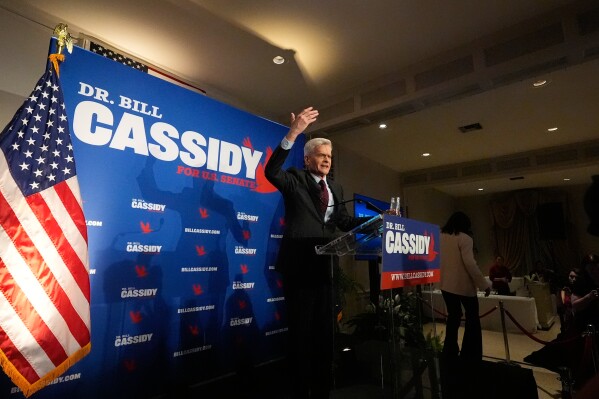
In Washington, a growing group within Congress, informally dubbed the ‘YOLO caucus,’ is taking shape. These members, often Republican lawmakers, have increasingly shown willingness to part ways with President Donald Trump’s policies. Despite Trump’s strong support among Republican voters, this faction might obstruct his legislative goals, particularly in areas like military involvement with Iran and immigration funding.
Notable Faces Among the Opposition
Senator Bill Cassidy from Louisiana recently joined this dissenting group. After losing his primary to a challenger backed by Trump, Cassidy supported legislation aimed at limiting U.S. military actions in Iran. He emphasized the Congress’s role in holding the executive branch accountable. Others, like Senator John Cornyn of Texas, might soon follow, as Trump supports Cornyn’s opponent in the nomination race.
Representative Thomas Massie of Kentucky has been part of this movement since Trump’s first term, opposing several of the president’s initiatives. With several months remaining in Congress, Massie suggested more actions might be forthcoming.
Emerging Patterns in Republican Dissent
Other Republicans like Senators Thom Tillis and Lisa Murkowski have also started to voice opposition. They have joined Democrats in resisting Trump’s actions, such as limiting his powers regarding war decisions. Senators Susan Collins and Mitch McConnell have rejected some of Trump’s cabinet nominations, while Representative Don Bacon has sought to restore Congressional authority over tariff decisions.
“If the legislative branch always votes with the president, we do have a king,” argued Massie in his concession speech.
Impact on Republican Party Unity
This shift does not signify a resurgence of the ‘Never Trump’ faction but indicates a new wave of independence within the party. Many of these Republicans either plan to retire or represent states that prioritize political autonomy over strict party loyalty. Their positions complicate Trump’s demand for unquestioning loyalty and leave room for dissenters who feel no obligation toward him.
Democratic Strategy and Response
The situation creates challenges for Senate Majority Leader John Thune and House Speaker Mike Johnson, who must manage slim majorities. Democrats, sensing opportunity, aim to exploit these divisions. House Democratic leader Hakeem Jeffries seeks to split Republican ranks on key issues through discharge petitions, which have previously proved effective in moving legislation.
Governor Gavin Newsom of California commented on Trump’s political influence, suggesting it holds more sway within the Republican party’s base rather than among the general American populace.
Counting on Possible Defections
Republican senators like John Hoeven of North Dakota remain optimistic about cooperation, describing Cassidy as a principled decision-maker despite recent loss. Cassidy’s criticism of the Trump administration’s $1.8 billion fund, intended for compensating Trump allies, further highlights his independent stance.
Cassidy’s departure from the Senate may symbolize the broader ideological shifts occurring within the Republican party. As Congress navigates these internal changes, outcomes remain uncertain for future legislative productivity.
 Fiery Student Protests at Florida International University: Immigration Policy Sparks Debate
  Democrats Urged to Address AI Regulation Amid Trump’s Position
  JD Vance’s Mother Responds to Critics; Bob Brooks Resolves Debt Issue
  Voter Fraud and Border Protection Initiatives Detailed
  Former Roanoke Swimmer Criticizes Virginia’s Policy Shift on Transgender Athletes
  Rep. Young Kim Targets Congressional Self-Enrichment with New Resolution