Labor Day marks the traditional start of the fall general election campaign. Candidates shift focus from downstate events to the Chicago area, crucial for winning statewide races. Political distractions are abundant in this year’s governor and U.S. Senate campaigns. National politics, internal conflicts, financial concerns, and future ambitions have hampered candidates’ messaging.
Chicago voters face the additional distraction of a mayoral race, which has overshadowed the November state election. Elections often serve as referendums on candidates. For Democrat JB Pritzker, it’s about his tenure as governor while eyeing a potential White House bid. Republican challenger Darren Bailey aims to distance himself from Trump and shake off the defeat he suffered four years ago.
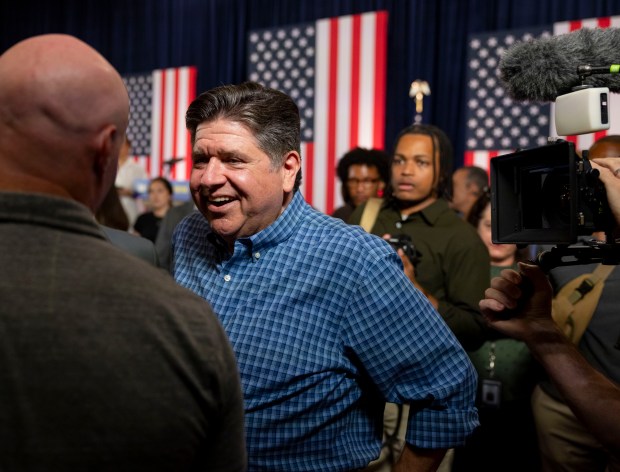
An independent candidacy from former GOP operative Collin Corbett adds another layer to the race. Pritzker kicked off his re-election bus tour on August 26 in Chicago’s West Loop.
Gov. JB Pritzker greets people as he kicks off a bus tour for his reelection campaign on Aug. 26, 2026, at Painters District Council #14 in Chicago’s West Loop. (Brian Cassella/Chicago Tribune)
In the U.S. Senate race, the contest to succeed retiring Sen. Dick Durbin is between Julian Stratton, Pritzker’s two-time running mate, and Don Tracy, a business owner and former Republican chair. Stratton largely ignores Tracy, who tries to link her to progressive Democrats. Tracy lacks resources to spread his message.
Both Tracy and Bailey hail from downstate areas, highlighting the regional divide within the Republican Party. The northeastern region of Illinois has become more Democratic. The absence of major donors impacts their campaigns. Bailey finished with a huge cash boost from conservative donor Richard Uihlein in past campaigns but now relies on small contributions.
Pritzker, a wealthy entrepreneur, has infused his campaign fund with $440 million since his first win in 2018. Bailey’s campaign leans on social media and stresses affordability as its core theme.
Bailey proposes reducing schools’ reliance on property taxes by increasing state funding but does not provide details on the funding sources. State school funding falls billions short of adequacy goals. Bailey also promises to end tolls on the Illinois Tollway, with similar challenges in funding and operations.
Bailey’s challenges extend beyond Pritzker. Bailey’s past views on social issues and his support for Trump’s policies present further obstacles. Despite support for Trump’s tariffs, he argues they offer long-term benefits. Bailey faces questions about the impact of Trump’s actions on fuel and agriculture, which he deflects as Democratic tactics.
The Republican Party grapples with division and conspiracy theories, affecting its leadership. Tracy resigned as state GOP chairman earlier, and internal tensions persist. Bailey promotes unity but has to spend significant time downstate bolstering support.
Pritzker’s campaign recycles messages from previous elections, labeling Bailey as too extreme. Pritzker explores a potential 2028 presidential bid and focuses on criticizing Trump rather than engaging Bailey directly.
The rhetoric heats up, yet the U.S. Senate race remains subdued. Stratton, a political newcomer, campaigns with aid from Pritzker. Her absence at key agricultural events raises questions about her priorities.
Tracy criticizes her approach and highlights her lack of understanding of downstate concerns. Stratton’s campaign reassures plans to engage with agricultural officials soon.
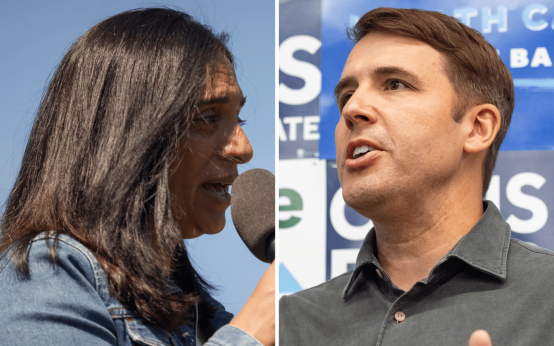 New Hampshire Senate Race: A Contest of Momentum and Uncertainty
 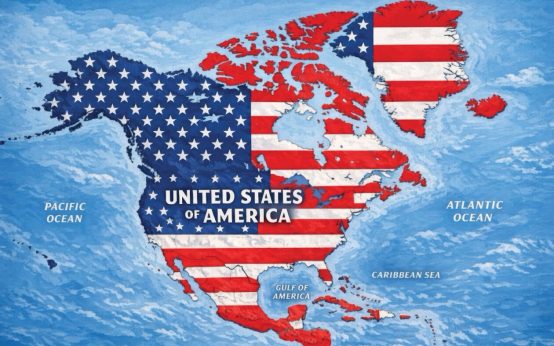 Trump’s AI-Generated Map Sparks Diplomatic Reactions
 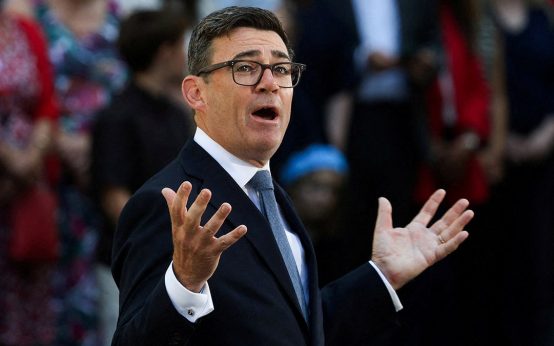 New UK PM Andy Burnham and US-UK Relations Under Scrutiny
  President Trump Proposes Renaming New Mexico
  Continuing Charlie Kirk’s Legacy: The Impact of His Work on Young Conservatives
  Political Insights on Future Elections and Current Campaigns