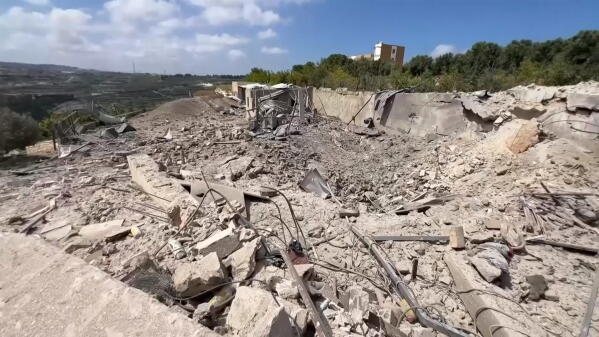
Israeli forces have taken over a strategic mountain, home to a Crusader castle, in southern Lebanon. This marks the deepest incursion into the region in over 25 years, according to a military statement released on Sunday. The Beaufort castle, located near Nabatiyeh, was taken following heavy airstrikes and battles against Hezbollah fighters in nearby villages.
The capture is a significant event in the ongoing conflict between Israel and Hezbollah, which began on March 2. The initial trigger was Hezbollah’s rocket attack on northern Israel, following a strike by the U.S. and Israel on Iran, Hezbollah’s main supporter. Since then, Israel has launched a ground invasion, seizing several Lebanese towns near the border, while Hezbollah has responded with missile and drone attacks.
Recent actions by Israel came despite a ceasefire supposedly in effect since April 17. The ceasefire will be a topic in upcoming talks scheduled for June 2 and 3 in the United States. Israeli Defense Minister Israel Katz shared a photo on X, showing troops at the castle, where they raised an Israeli flag. The castle was previously controlled by Israel from 1982 until their withdrawal in 2000.
The Beaufort fortress, built as a Crusader castle in the 12th century, has historically been a strategic military asset for various armies. It sits above Lebanon’s hills with views over the Litani River. Over centuries, it has been utilized by the Crusaders, Saladin’s army, Mamluks, Ottomans, the French mandate, the Palestinian Liberation Organization, and the Israeli military. It was partially restored for visitors after being vacated by Israel in 2000.
The capture of Beaufort in 1982 marked a decisive victory for the Israeli military under Defense Minister Ariel Sharon. At that time, Israeli forces advanced northward to Beirut. In a past Israel-Hezbollah conflict, UNESCO protected Beaufort and other cultural sites in Lebanon to prevent damage.
Israel launched operations recently in the Beaufort Ridge and Suluki valley, targeting Hezbollah’s infrastructure and minimizing threats to civilians. The military indicated readiness to expand their mission if necessary.
In recent actions, Israeli forces crossed the Litani River, urging residents in nearby towns to evacuate. This river historically acted as a boundary line. Recent airstrikes prompted many residents to leave, though several remain. Israeli troops are advancing toward Nabatiyeh and have warned residents of Nabatiyeh and Tyre, Lebanon’s fourth-largest city, to evacuate.
Hezbollah has not formally commented on Israel’s advances. Over recent days, they claimed dual attacks on Israeli military personnel near the border and reported clashes involving Israeli troops. Lebanon’s news agency noted airstrikes causing casualties, while Hezbollah fired rockets into northern Israel.
Heavy use of fiber optic drones by Hezbollah has posed challenges to the Israeli military, leading to numerous alerts over the past 24 hours for civilians in northern Israel. Fatalities include 3,350 people in Lebanon, displacing over 1 million individuals. Israeli Prime Minister Benjamin Netanyahu’s office confirmed at least 25 Israeli soldiers and a defense contractor have died, along with one civilian casualty in northern Israel.
Reporter Lidman contributed from Tel Aviv, Israel.
 Italian PM Giorgia Meloni Skips UN General Assembly Amid Growing Tensions
 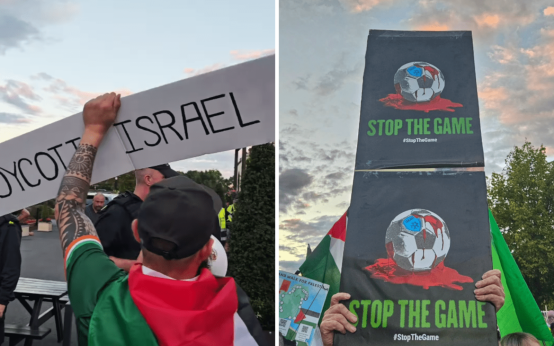 Calls Grow for Ireland’s Soccer Team to Boycott Matches Against Israel
 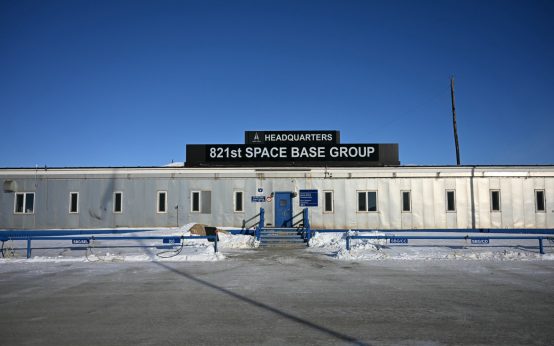 New U.S. Military Bases Planned in Greenland Amid Strategic Security Deal
  Twitch Streamer Hasan Piker Discusses Controversial Commentary
  A Shifting Political Landscape: The Decline of Autocratic Power
  Trump Delivers Warning to Iran, Cuba at UN General Assembly