A Japanese spacecraft launched toward Mars on Tuesday, aiming to explore its moons and bring back samples. This mission is a joint effort by five of the world’s space agencies and will last five years. It plans to land a robotic prospector and rover on Phobos, Mars’ larger moon.
The Japan Aerospace Exploration Agency, leading this mission, launched the spacecraft from Tanegashima Island’s spaceport. While NASA has successfully landed on Mars multiple times, no one has landed on Phobos or Deimos, its smaller counterpart. If successful, samples from Phobos should return to Earth in 2031.
There’s a lot of adrenaline and a lot of excitement and a lot of wow.– Tom Statler, NASA astrophysicist involved in the project
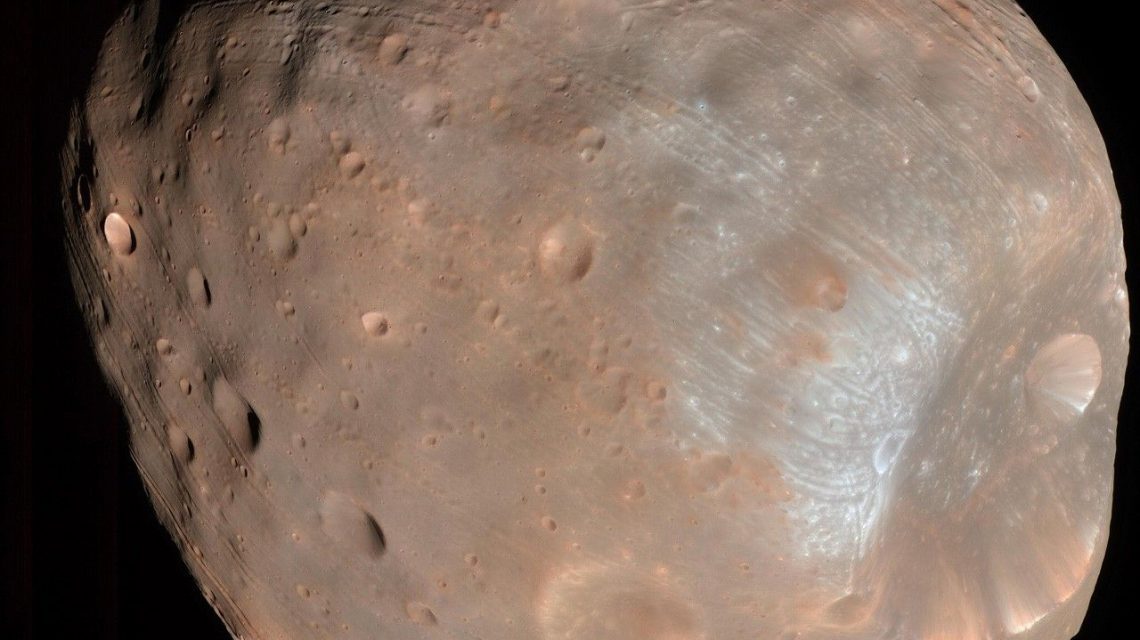
Japan has had success in collecting asteroid samples, aiding this mission. An image taken by NASA’s Mars Reconnaissance Orbiter in 2008 shows Phobos, a potato-shaped moon, highlighting its potential to reveal details about the formation of Mars’ moons and possibly others.
The Martian Moons Exploration mission, costing $578 million, features a 5-ton spacecraft set to reach Mars by next summer. It will synchronize with Phobos’ orbit before deploying a French-German rover named Idefix. This rover, similar in size to a microwave, will bounce on Phobos’ surface before stabilizing.
Idefix will serve as a scout for Phobos’ terrain for 100 days. Japanese flight controllers want to avoid problematic terrain when the mothership attempts to gather samples in 2028 or 2029. The mothership will drill and vacuum material from Phobos’ surface for two hours before returning to space. It will also study Deimos before heading back to Earth for a 2031 sample delivery.
This venture poses challenges with a history of past failures. The names of the moons, Phobos meaning fear and Deimos meaning dread, add a daunting aspect. Russia has three failed Phobos missions, and Japan’s previous Mars mission was unsuccessful.
Scientists aim to determine if Phobos and Deimos were formed from a collision involving Mars or if they are captured asteroids. Samples from Phobos may contain traces of Mars, offering insights into planetary formation and possibly the origins of life.
The findings could influence future Mars missions, including manned ones. Lindsay Hays, NASA’s acting planetary science director, emphasizes this mission’s importance in being the first to return samples from the Martian system.
It is a once-in-a-lifetime chance. We are part of the first sample return mission from the Martian system.– Markus Grebenstein, Germany Space Agency’s rover chief
Japan isn’t alone in pursuing Martian samples. China plans a similar mission in 2028. NASA also seeks to retrieve samples collected by its Perseverance rover. Japan and China aim for a 2031 return of samples.
Funding for the mission totals $350 million from Japan, with NASA contributing $87 million, the French Space Agency around $68 million, the German Space Agency $56 million and the European Space Agency about $17 million.
The mission’s progress will contribute to understanding Mars and its moons, enhancing future space exploration. Keeping informed through trusted journalism is vital.
 Concerns in the U.S. Over French Riots
 US Vice President JD Vance Chooses Not to Endorse Netanyahu Amid Israeli Elections
 Rising Violence in Europe and Its Political Impact
 Christiane Amanpour to Leave CNN After Over Four Decades
 Setback in the Search for Amelia Earhart’s Missing Plane
 Ukrainian President Responds to U.S. Abandonment Amid Strained Relations