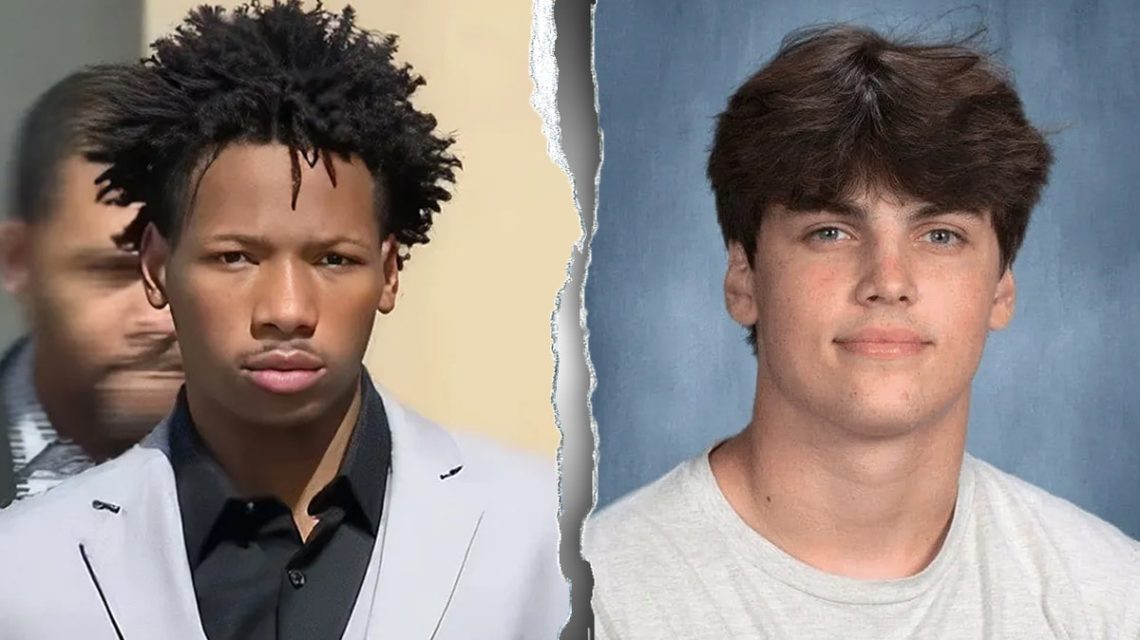
The Karmelo Anthony murder trial continued with testimonies drawing strong emotions and evidence being presented to the jurors. The trial revolves around the fatal stabbing of Austin Metcalf, a Texas teenager, at a high school track meet.
Courthouse Tensions
The case has attracted national attention and public scrutiny. Tensions heightened on Thursday as supporters of both Anthony and Metcalf engaged in heated exchanges outside the courthouse. Demonstrators held signs and shouted profanities, reflecting the deep divide over the case.
Juror Decision-Making
Legal analyst Jeremy Rosenthal noted the significance of opening statements in shaping jurors’ opinions. Studies suggest that most jurors form their decisions during these initial presentations. The central issue remains whether Anthony’s actions were criminal or a case of self-defense.
911 Call and Surveillance Footage
Jurors were presented with surveillance footage from the track meet as well as a 911 call made after the stabbing. These pieces of evidence provide a timeline of events and the immediate responses from those at the scene. The call highlighted efforts to save Metcalf, with voices urging him to keep fighting.
Testimonies from Responders
Tiffany Whitaker, an athletic trainer, testified about her attempts to administer CPR on Metcalf. She recounted a student approaching her, pointing at Anthony, and claiming he was the perpetrator. Another witness, Joshua Rebmann, used his military training in an effort to help Metcalf but concluded the injuries were unsurvivable.
Coaches Describe the Aftermath
Coaches from the track meet also took the stand. Vincent Hooper shared an emotional interaction with Anthony, discussing the potential consequences if Metcalf did not survive. Robert Starr, a track coach, recounted finding Metcalf wounded and noted the issue of an uninvited presence in team tents as a significant factor in the altercation.
Continuing Proceedings
As the trial progresses, a critical aspect will be the consistency of testimonies from those closest to the incident. The prosecution aims to establish a clear narrative, while the defense maintains that Anthony acted in a moment of fear and chaos. More witnesses are expected to contribute, potentially shifting the jury’s perspective.