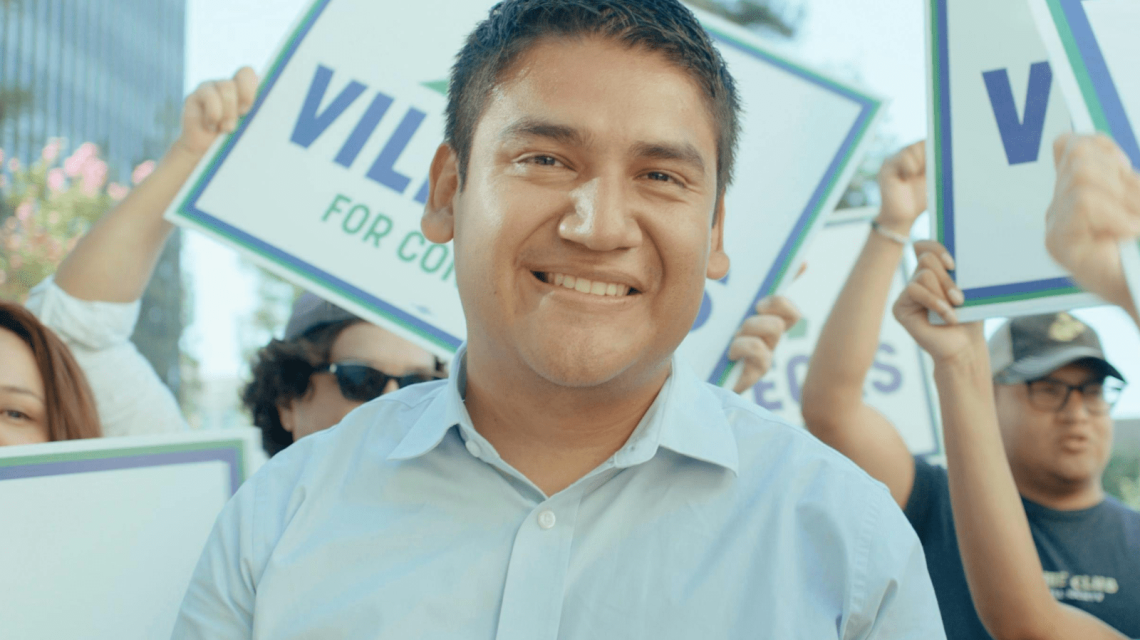
Prediction markets indicate Democrats have an advantage in California’s 22nd Congressional District, but the situation is more complex than the numbers suggest.
Political Landscape
The upcoming election will test progressive Democrats against moderate Republican incumbents in swing districts.
Platforms like Polymarket and Kalshi place Democratic chances of victory at 68% and 78%, respectively. This signals confidence in a Democratic win despite past competitiveness.
The Cook Political Report and Sabato’s Crystal Ball still categorize the race as a toss-up, indicating a fragile perceived advantage for Democrats.
Primary Election Insights
In the June 2 all-party primary, Republican David Valadao led with 40.7%, and Democrat Randy Villegas followed with 32.2%.
Assemblymember Jasmeet Bains, a more moderate Democrat, garnered 27.2% and did not advance.
The results revealed divisions within the Democratic Party, demonstrating the district’s balance and the challenges ahead.
Villegas, supported by Senator Bernie Sanders, secured a spot in the general election despite late support coalescing behind Bains.
Valadao’s lead highlights his continued strength as a Republican incumbent.
District Demographics
The Central Valley district is majority Latino and younger than average. It faces economic challenges such as higher poverty and lower educational attainment.
Political volatility is evident; Joe Biden carried the area in 2020, while Donald Trump won in 2024.
This mix creates a battleground where past Democratic advantages and current Republican trends coexist.
Valadao’s Resilience
First elected in 2012, Valadao has survived challenging political climates.
He lost his seat in 2018’s Democratic wave but regained it in 2020.
Valadao’s moderate image, vote to impeach Trump, and local ties as a dairy farmer contribute to his durability.
In 2024, he won comfortably while the district favored Trump.
Villegas and Progressive Strategy
Villegas’ candidacy tests whether progressives can succeed in competitive districts by focusing on local and economic issues.
He emphasizes change and critiques corporate influence in politics.
Skeptics argue that a progressive platform may not appeal to moderate voters who often decide these races.
Role of Prediction Markets
Prediction markets like Kalshi and Polymarket indicate sentiment by translating trading activity into probabilities.
While informative, these markets have limitations, especially in down-ballot contests with lower trading activity.
Market probabilities reflect sentiment, not precise forecasts.
Continued Toss-Up Status
Despite favorable signals, forecasters like Cook Political Report retain a toss-up rating.
Factors like Valadao’s incumbency advantage and the district’s swing history contribute to this assessment.
Turnout patterns, which are uneven in the Central Valley, also add uncertainty.
Significance of the Race
CA-22 is crucial for determining the House majority, with the outcome impacting Democrats’ control and GOP margins.
This race explores important strategic questions: Can progressive nominees win competitive districts? How are Latino voter trends evolving?
Future Developments
Fundraising, spending, and turnout will influence the November 3 general election outcome.
Central Valley’s uneven turnout patterns could play a decisive role.
Local polling may offer clarity, but races like CA-22 often stay volatile late into the campaign.
 Challenges Facing the Supreme Court’s Public Perception
  California Democratic Aide Arrested for Visa Overstay by Federal Authorities
  Experts Doubt Export Ban Will Lower Fuel Prices
  Trump Delivers Warning to Iran, Cuba at UN General Assembly
  Trump Delivers Stern UN Speech on Iran, AI, and Global Security
  Lukashenko and Putin’s Unique Relationship and Belarus’ Strategic Role