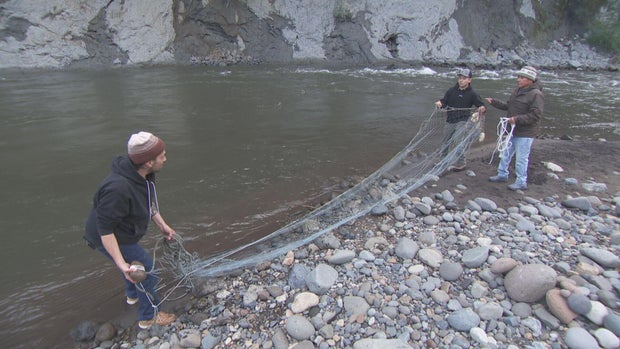
The Muckleshoot tribe values salmon as more than just food. For them, salmon represent a deep connection to their culture and history. The tribe descends from the Duwamish and Upper Puyallup peoples, who lived in the Seattle area for thousands of years.
Salmon hold a special place for the Muckleshoot, who are often referred to as the Salmon People. “We have a connection with the fish and the water,” says Mike Jerry Jr., a young tribe member. His father, Michael Jerry Sr., along with his brother, Cory Jerry, teaches him traditional techniques of catching spring salmon using a small net. This practice connects them to their ancestry and ensures that their traditions endure.
Spiritual Connection to Salmon
Salmon fishing for the Muckleshoot is not only traditional but spiritual. According to oral historian Warren King George, the salmon are considered “relatives” who visit at least once a year. This relationship is commemorated through the legend of Salmon Boy, an ancestor who promised to maintain the waters for the fish in return for their sustenance.
The tribe celebrates this promise annually during the First Salmon Ceremony, where they express gratitude to the salmon for feeding the people.
Struggles for Fishing Rights
Obtaining fishing rights has been challenging for Native American tribes in the Pacific Northwest. Since the late 19th century, tribal members faced restrictions and legal issues. In 1892, a tribal member named Big John was fined and barred from traditional fishing practices. Such conflict continued during “The Fish Wars” of the 1960s, highlighting broader treaty rights and resource access.
These efforts eventually led to the 1974 Boldt Decision, a legal ruling that allotted tribes half the harvestable salmon.
New Challenges: Environmental Concerns
Phil Hamilton, from the Muckleshoot Fish Commission, states the tribe’s current challenge is environmental. Maintaining salmon habitat is crucial for the tribe, which accounts for 2% of the global wild salmon intake.
Over the years, the Muckleshoot have invested in protecting and restoring habitats. Despite these efforts, they lose 5% of the habitat annually. Ensuring clean water is key, and the tribe has secured significant water settlements for the salmon’s future.
Improvements since the 1990s have strengthened salmon populations, allowing 500 fishers and over 200 boats on the waters today. Hamilton appreciates the success achieved, seeing joy on fishers’ faces as the most rewarding part of his work.
 UMass Dartmouth Football Player Killed in Providence Stabbing Incident
  Understanding the Federal Reserve’s Interest Rate Adjustments
  Federal Judge Maintains Oversight on Maricopa County Sheriff’s Office for Racial Profiling Issues
  Latino Demographics in Chicago: A Shifting Landscape
  Chicago’s Business Community: A Pillar of Civic Engagement
  Controversy at University of Texas Over Racist Incident