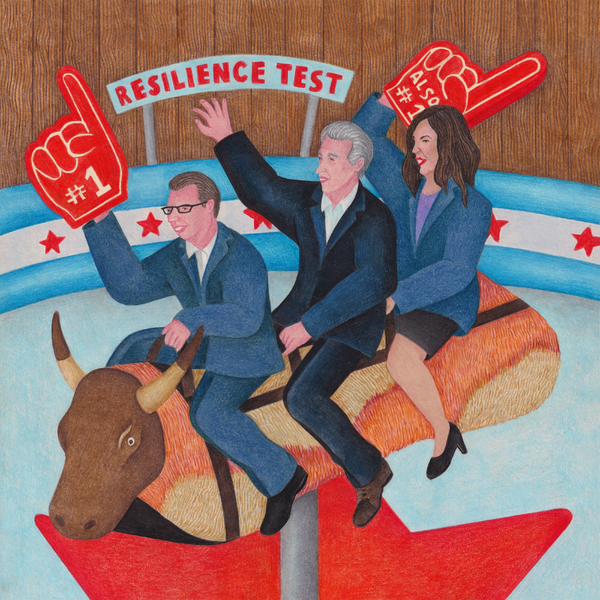
Richard Thaler, a Nobel laureate and professor at the University of Chicago, has made significant contributions to the understanding of human decision-making. Recently, he reflects on the Democratic Party’s process for selecting its presidential nominee, especially considering the importance of the 2028 election. Thaler discusses these thoughts with David Leonhardt, an editorial director at Times Opinion.
Challenges in Selecting Leaders
Leonhardt begins the conversation by highlighting Thaler’s research on suboptimal decision-making. He asks about common hiring mistakes, noting that nominating a political candidate is akin to hiring for a crucial role — to win an election.
Thaler explains that hiring decisions become more challenging at higher organizational levels. Predictive tests are valuable; for instance, evaluating a chef through a cooking test is effective. However, predicting her ability to manage a large staff is more complex. A suitable test for such skills is often lacking.
In the absence of direct job performance tests, employers often default to interviews. Thaler points out that unstructured interviews yield limited insights into future performance. He cites the high turnover of head coaches in the National Football League (NFL) as evidence. Despite comprehensive selection processes, nine out of 32 NFL teams fired their head coaches last year, with a tenth coach resigning. This resulted in a turnover rate exceeding 30% in just one year.
Improving the Candidate Selection Process
The stakes in selecting a presidential candidate are immense. The Democratic Party seeks a leader capable of handling the world’s most challenging job and winning a popularity contest scheduled for 2028. Many potential candidates lack experience in national elections or the full scope of presidential responsibilities, making a true ‘test’ of their capabilities impossible.
Nonetheless, Thaler believes that meaningful improvements can be made to the selection process. While specifics are not detailed in this conversation, it suggests a need for innovative approaches to candidate evaluation.
 Challenges Facing the Supreme Court’s Public Perception
  California Democratic Aide Arrested for Visa Overstay by Federal Authorities
  Experts Doubt Export Ban Will Lower Fuel Prices
  Trump Delivers Warning to Iran, Cuba at UN General Assembly
  Trump Delivers Stern UN Speech on Iran, AI, and Global Security
  Lukashenko and Putin’s Unique Relationship and Belarus’ Strategic Role