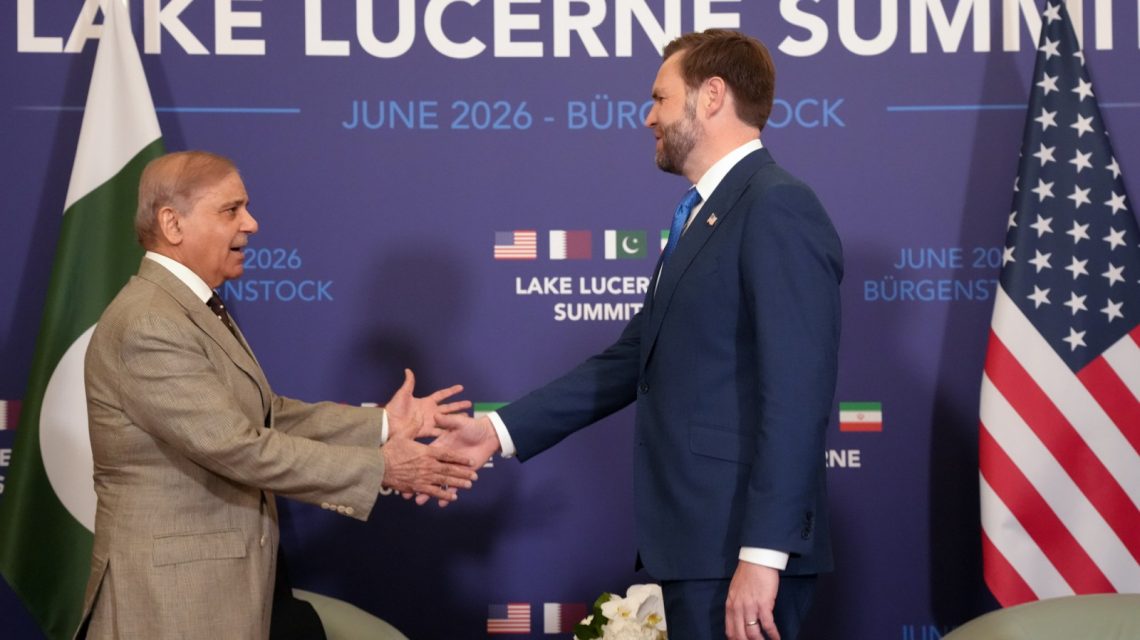
Republicans criticized President Barack Obama’s 2015 Iran nuclear agreement, viewing it as a trade-off offering too much sanctions relief for temporary restrictions. Now, similar arguments are being made against President Donald Trump’s continued negotiations with Iran, despite the shift in leadership.
Currently, critical details of Trump’s memorandum of understanding (MOU) with Iran remain under negotiation, with expectations for resolution in the next 60 days. This means a complete comparison to Obama’s Joint Comprehensive Plan of Action (JCPOA) cannot yet be made. However, Trump asserted that the final deal to end the conflict that began in late February will include stringent inspection processes. He stated on Truth Social that Iran will agree to substantial weapons inspections to ensure ‘Nuclear Honesty.’
The Trump administration describes ongoing engagement with Iran as thorough, involving discussions on nuclear issues, the Strait of Hormuz, and southern Lebanon’s deconfliction mechanisms involving Israel and Hezbollah. Officials view the existing framework as preliminary, serving as a basis for detailed technical talks.
Despite these developments, early political reactions are emerging, focusing on sanctions relief, inspection rigor, uranium enrichment, and congressional approval—concerns reminiscent of Republican criticisms of Obama’s deal.
White House spokeswoman Olivia Wales countered criticisms, stating Trump and his team negotiated an MOU that advances U.S. interests by ending conflicts, reopening the Strait of Hormuz for lower energy prices, and compelling Iran to abandon nuclear ambitions.
Familiar Objections
When Obama introduced the JCPOA, he portrayed it as comprehensive, blocking Iran’s nuclear pathways while imposing strict verification. Republicans criticized it for several reasons, including:
- Excessive sanctions relief granted too soon
- Temporary rather than permanent nuclear limitations
- Failure to completely dismantle Iran’s nuclear program
- Lack of binding congressional approval
These critiques are now impacting reactions to Trump’s framework. Republicans in 2015 also criticized the JCPOA for narrowly focusing on nuclear issues without addressing Iran’s missile program or regional actions, an argument reappearing in current discussions.
Cotton Then, Now
Senator Tom Cotton of Arkansas was a vocal critic of the JCPOA in 2015, warning about agreements lacking congressional approval. With Trump’s framework, Cotton is more measured but maintains concerns, emphasizing the importance of maintaining U.S. leverage over Iran.
Cruz and Graham
Senator Ted Cruz of Texas called the Obama deal a significant error, alleging risks from providing Iran with financial benefits. While his rhetoric has changed, Cruz remains critical of Trump’s framework’s perceived concessions.
Senator Lindsey Graham supported Trump but expressed skepticism about the framework’s viability. He suggested attempting diplomacy but remained doubtful about a lasting settlement.
More GOP Voices
Other Republicans echo similar views. Senator Roger Wicker cautioned that Trump’s proposals risk undermining past military achievements, while Senator James Lankford stressed the need for congressional ratification for durability, linking back to concerns about the JCPOA.
- No premature sanctions relief
- Strong, verifiable inspections
- Limits on enrichment
- A durable agreement with congressional backing
Trump vs. Obama
Trump often criticized the JCPOA, likening it to enabling Iran’s nuclear capabilities. Meanwhile, Obama questions the differences a new deal may bring compared to JCPOA benefits. He highlighted increased costs and effort to regain similar ground post-withdrawal.
 President Trump’s Visit to the Presidents Cup in Medinah
  White House Chief of Staff Susie Wiles on Battling Cancer While Working
  Trump Criticizes Supreme Court Over Missouri Redistricting Decision
  The Challenges Facing Federal Oversight of Disability Education
  Senator John Fetterman Clarifies Political Affiliation After Misstatement
  Gov. Newsom Signs New Rules for Industrial Companies