Republicans Show Willingness to Raise Taxes for Social Security
An increasing number of Republicans are signaling readiness to raise taxes on high earners to bolster Social Security as it nears potential insolvency. This marks a shift from the GOP’s historical resistance to tax hikes. Congressional leaders are under pressure to address Social Security’s looming funding issues.
Current projections suggest the Social Security trust funds may be depleted in the early 2030s. If Congress does not act, this depletion could lead to automatic benefit cuts. Kevin Thompson, CEO of 9i Capital Group, explained to Newsweek, “Reality is setting in, and retirees don’t want their benefits cut.” He emphasized that the onus will likely fall more heavily on the working public, particularly as they grapple with rising living costs.
Importance of Social Security
Social Security is crucial, providing retirement, survivor, and disability benefits to millions of Americans. It serves as the primary income source for many retirees. The debate over funding carries political weight. Traditionally, Republicans have opposed tax increases, while Democrats have favored raising taxes on wealthier individuals to strengthen Social Security’s finances. Any bipartisan agreement on new revenue options could reshape discussions about the program’s future.
Recent Developments
Some Republican lawmakers are now open to increasing the income subject to Social Security payroll taxes. Presently, Social Security taxes apply only to earnings up to an annual limit. For 2026, this cap is $184,500; earnings above this amount are not taxed.
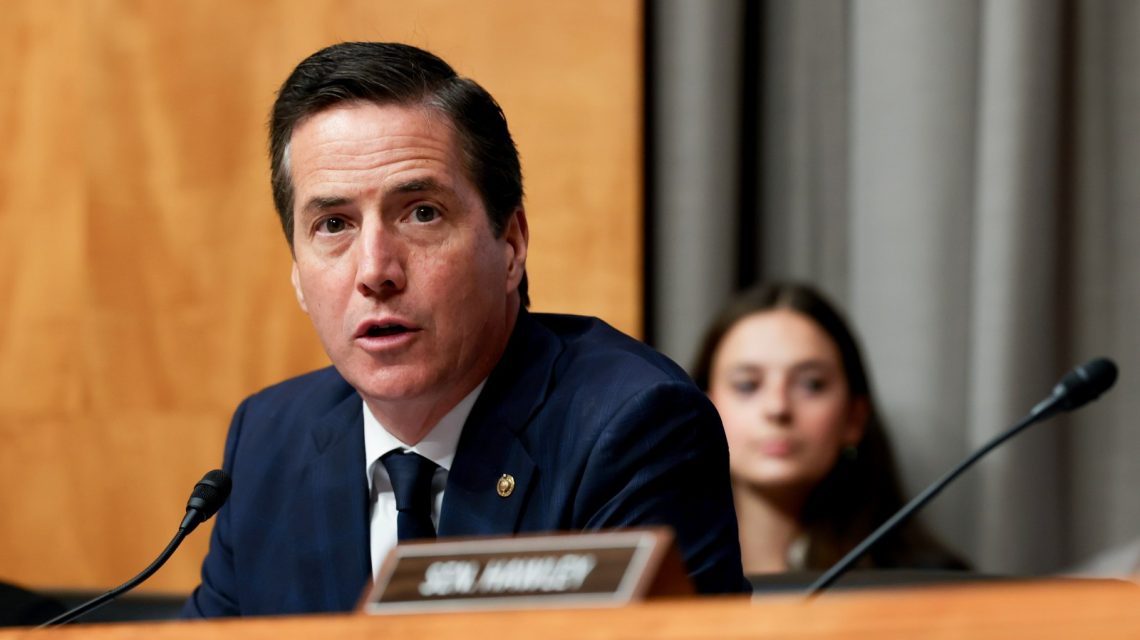
Republican Senator Bernie Moreno of Ohio joined Democratic Senator Elizabeth Warren in backing a proposal to significantly raise the cap. This would require higher earners to pay Social Security taxes on a larger portion of their income. Moreno and Warren stated, “The wealthiest Americans, who have benefited the most from America’s opportunities, should contribute the same percentage of their income as a factory worker.”
Republican Representative Tom Cole, Chairman of the House Appropriations Committee, indicated that lawmakers should consider boosting payroll tax revenue in solving the program’s financial challenges. He said, “I’m willing to look at the tax rate. I am willing to raise the amount of income through tax.”
Underlying Challenges
Social Security’s financial troubles result largely from demographic shifts. Previously, payroll tax collections exceeded benefits, allowing the buildup of trust fund reserves. However, the retirement of the baby boomer generation, longer life expectancies, and lower birth rates have disrupted the balance between workers funding the system and beneficiaries receiving payments.
Alex Beene, a financial literacy instructor at the University of Tennessee at Martin, noted the urgency in considering higher taxes for Social Security. He stated, “The reality is that spending cuts alone become much harder to implement when the deadline is only a few years away.” Projections from trustees suggest that without congressional intervention, the retirement trust fund could be depleted by around 2032.
Proposed Tax Increases
The idea gaining traction involves raising or removing the payroll tax cap. Currently, workers and employers pay a 6.2 percent Social Security tax on wages up to the taxable maximum, with earnings above that exempt. Therefore, high-income individuals contribute a smaller portion of their total income compared to many middle-class workers.
The proposal by Moreno and Warren advocates for taxing all wages for higher earners. This approach could generate significant revenue, reducing the program’s funding gap without cutting benefits. Critics, however, argue that higher payroll taxes might hamper investment and job creation.
As the deadline for reform approaches, Thompson predicts more Republicans will support the measure to avoid the unpopular alternative of cutting benefits. He stated, “No one wants to be remembered as the politician who cut Social Security.”
Potential Solutions
Lawmakers and experts have suggested various alternatives:
- Increasing the Social Security payroll tax rate.
- Raising the retirement age for future beneficiaries.
- Reducing benefits for higher-income retirees.
- Changing benefit formulas.
- Expanding taxation of Social Security benefits.
- Combining tax increases with targeted spending cuts.
Financial experts agree that multiple reforms are likely necessary rather than a single change. Beene emphasized that raising the payroll-tax cap challenges Republicans’ stance against tax increases yet could be key in closing the funding gap.
The Tax Foundation has suggested broadening the tax base by applying Social Security taxes to previously untaxed compensation forms, such as employer-sponsored health insurance.
Future Challenges
Bipartisan interest in raising payroll tax revenue might shape future congressional debates on Social Security reform. Yet, any legislative solution remains politically challenging, as both parties aim to protect benefits while avoiding unpopular voter measures. Thompson remarked, “Higher taxes on workers have historically been the easier political way out than cutting benefits.” Though unpopular, some form of tax increase might be essential for closing the funding gap.
Contact Newsweek editors on this story: Jenni Fink and Dave Siminoff.
 Democrats Aim for Significant Wins in Ohio Elections
  Democrats’ Prospects in Midterm Elections Improve
  Nebraska Senate Race: Dan Osborn’s Challenge Against Republican Incumbent
  The Intersection of Reality TV and Modern Politics
  Trump’s Economic Policies Face Key Midterm Test
  California’s Electric Vehicle Journey Amid Political Challenges