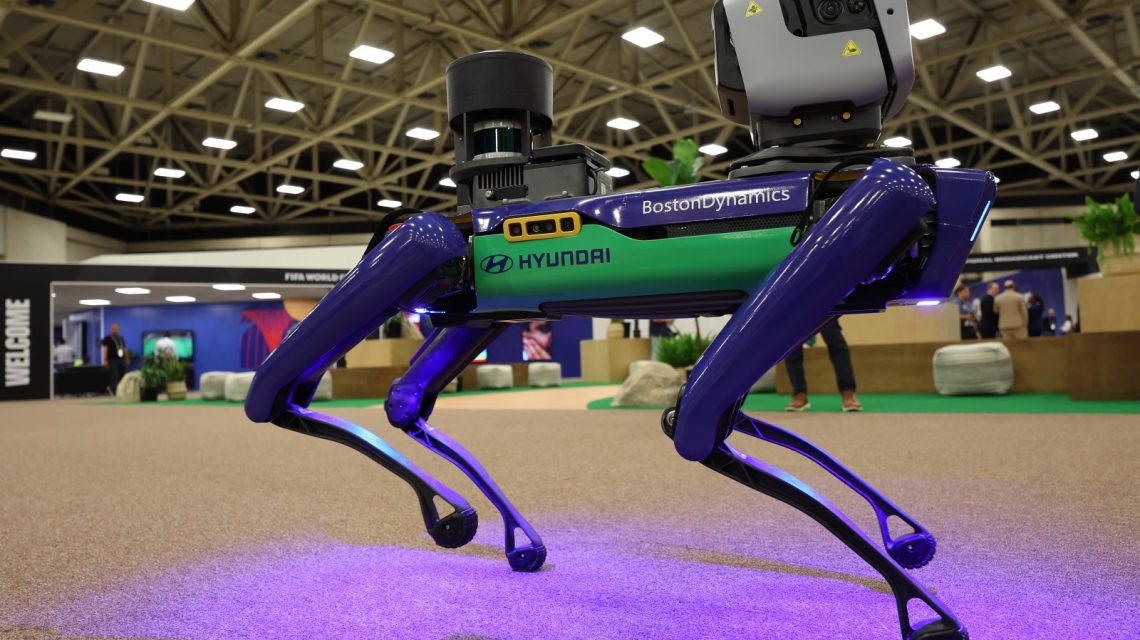
As the FIFA World Cup begins across the U.S., Canada, and Mexico, a significant security operation is underway. The tournament features 48 international teams, competing in 104 matches across 16 cities, drawing millions of fans.
Andrew Giuliani, executive director of President Donald Trump’s World Cup task force, highlighted the unique security challenges this summer represents. “There’s never been a summer like this in American history from a security angle,” Giuliani stated.
Security Measures Implemented
A multi-agency effort includes the use of robot dogs, AI-powered cameras, and drone-detection technology to monitor potential threats. This response comes in the wake of a recent shooting in Kansas City, Missouri, which injured nine people near England’s World Cup base. While this incident was unrelated to the tournament and occurred before the team’s arrival, it highlights ongoing concerns about gun violence risks.
Gun violence in the U.S. remains a pertinent issue, with the Gun Violence Archive reporting over 400 mass shootings in 2025.
Why the Security Matters
This World Cup not only stands as the largest in history, but it also garners significant interest from President Trump, who hosted FIFA’s chief Gianni Infantino at the White House.
Giuliani explained that the security planning is akin to managing “78 Super Bowls over 39 days.” Authorities have not identified any credible threats so far. The Federal Emergency Management Agency has allocated $625 million to help 11 U.S. host cities cover security expenses, with an additional $250 million focused on drone management.
Coordinated Security Efforts
More than 400 law enforcement agencies are collaborating with federal entities and private security to protect stadiums and secondary sites, like teams’ base camps and hotels. Boston Dynamics’ Spot robots, created by a Hyundai-owned company, will assist on-site personnel by inspecting suspicious packages or materials.
Mexico plans to deploy robotic canines as well. Additionally, some police officers will carry body cameras capable of translating in real-time to communicate with international fans effectively.
Other high-tech measures include giant X-ray trucks and AI-driven cameras watching public areas crowded with fans. The risk posed by drones is particularly concerning. Fortem, a drone detection company, will deploy quadcopters to trap unauthorized drones in stadium airspaces using nets.
Geopolitical Considerations
Heightened geopolitical tensions factor into security strategies. The ongoing conflict involving Iran, a nation participating in the tournament, adds complexity, marking the first instance of a host country at war with a participating country.
Looking Ahead
The World Cup kicks off on Thursday, June 11, with co-hosts Mexico and South Africa opening the tournament in Mexico City.
 Far-Left Groups Allegedly Organize Protests in Austin
  Kurt Angle Reflects on His TNA Wrestling Career
  Analyzing NFL Teams After Two Weeks
  Seattle Seahawks Coach Mike Macdonald’s Strategic Approach
  Austin Police Release Footage of Arrest After ICE-Involved Shooting
  Massachusetts Youth Hockey Player Suspended Indefinitely After Slashing Incident