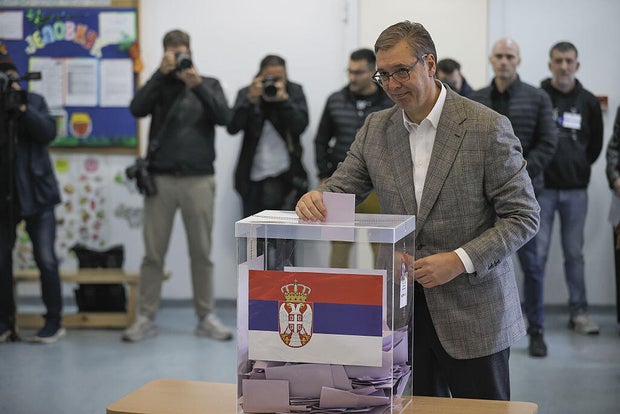
On October 25, 2026, Serbia experienced a significant political shift when Aleksandar Vucic, the long-time leader, conceded defeat in a parliamentary election. Vucic and his right-wing Serbian Progressive Party faced a dynamic opposition led by university students, marking a pivotal change in the nation’s governance.
Vucic, who had served with seemingly absolute power for 14 years and received endorsement from Russian President Vladimir Putin, faced off against a student-led movement that emerged after two years of protests. The diverse Students’ List, accusing Vucic’s government of corruption and undermining democracy, gained substantial public support, reflecting growing tensions and discontent.
Serbia’s 6.4 million voters were tasked with electing representatives to the 250-member Parliament. Vucic’s concession revealed that the Students’ List was predicted to secure between 135 and 140 seats, compared to around 105 for his party. Despite blaming the independent media and claiming interference from foreign entities, Vucic acknowledged the outcome during his party’s election night event.
“The Students’ List has won,” Vucic declared, emphasizing his party’s struggles against what he portrayed as external pressures.
Vucic reported approximately 1.7 million votes for his party, while his opponents allegedly gained around 2.2 million. Supporters of the Students’ List celebrated in the streets of Belgrade and other cities, marking the end of Vucic’s leadership with chants and celebrations.
The announcement came just an hour and a half after polls closed, amidst heightened tensions throughout voting day. Police presence included anti-riot gear and special vehicles around central Belgrade as Vucic’s loyal supporters gathered near the election commission headquarters.
Having resigned as president to pursue the prime minister role, Vucic aimed to continue his political journey despite waning popularity. The collapse of a concrete canopy at a Novi Sad train station in 2024 that resulted in 16 deaths fueled youth protests that attributed the tragedy to governmental corruption and mismanagement.
The Students’ List revolved around a non-partisan campaign to revitalize Serbia’s economy and democracy, attracting votes from disillusioned citizens. In stark contrast to Vucic’s authoritarian approach and media portrayal, the student-led initiative utilized grassroots efforts, gaining traction even in rural regions traditionally loyal to Vucic.
Echoing similar youth-driven political change in Hungary, where long-standing leader Viktor Orbán was recently unseated, Serbia’s election resonated across Europe as nations grapple with youth-led activist movements.
Election turnout, projected at nearly 70%, indicated widespread engagement not seen since 2000. Voters at home and abroad formed lengthy queues. The Serbian diaspora faced logistical challenges, forced to vote according to local Serbian time, often at inconvenient hours.
Irregularities marred recent Serbian elections, with independent monitors reporting instances of coercion, vote-buying attempts, and surveillance concerns. International bodies, including the EU, watched closely as Serbia navigated its candidate status for EU membership amidst these challenges.
Prior local elections were marked by violence against journalists and activists, illustrating the volatile political climate. Previous parliamentary elections also faced allegations of fraud, leading to opposition protests.
 Economic Trends, Security Incident, and Cultural Icon Passing Impact on Society
 Robert C. White Jr. Resigns from D.C. Council to Run for U.S. House Delegate
 White House Engages Veterans Ahead of Court Clash
 Senate Race Forecasts Shift in Favor of Democrats Ahead of Midterms
 Pentagon Revises U.S. Military Casualty Figures Related to Iran Conflict
 Republicans in Defensive Mode Ahead of Midterm Elections