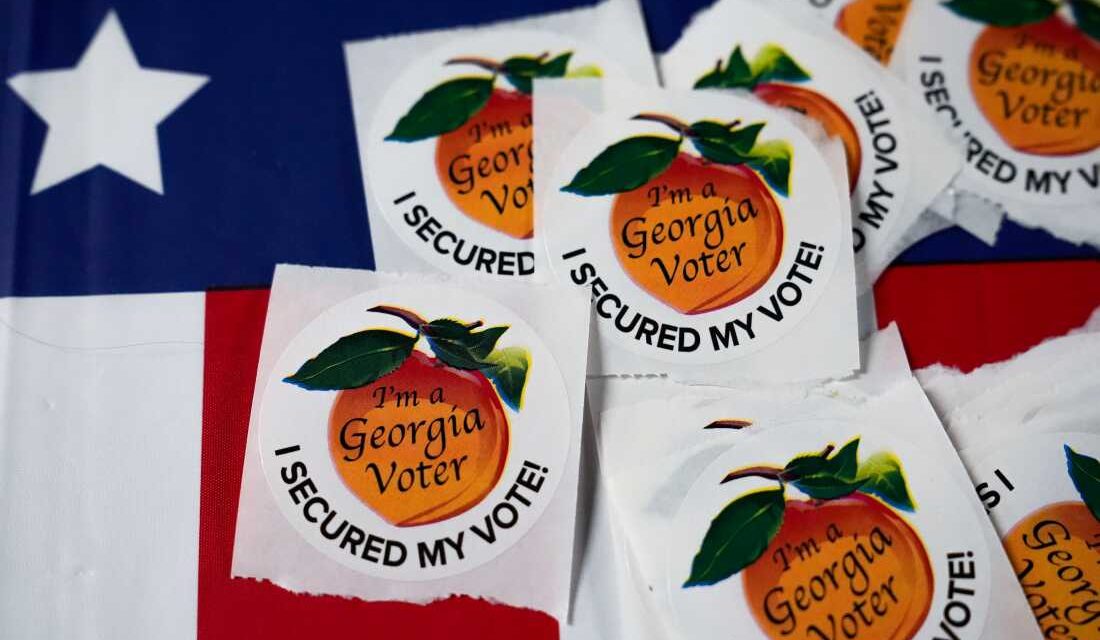
In Georgia’s primary elections, significant developments have unfolded. The elections have been characterized by notable fundraising efforts, intense Republican primaries, and increased voter turnout driven by enthusiastic Democrats. Key races are expected to lead to runoffs on June 16, as Republicans decide on their candidate to challenge incumbent Democratic Senator Jon Ossoff. Both parties face a crowded field of candidates for the governor’s race, with Republican Governor Brian Kemp reaching his term limit.
Competitive Senate Race
Senator Jon Ossoff is considered vulnerable as the fall elections approach. A contentious Republican primary has drawn much attention. Rep. Mike Collins leads the polls and campaign finance reports, followed by Derek Dooley, son of the famous University of Georgia football coach Vince Dooley. Dooley has support from Governor Brian Kemp, who chose not to run himself. Rep. Buddy Carter is also a contender. Former President Trump has yet to endorse a candidate, likely due to an anticipated runoff.
Governor’s Race Fueled by Self-Funding
Georgia’s gubernatorial race ranks among the most competitive nationally. Both parties’ primaries have focused on electability. On the Republican side, Lt. Gov. Burt Jones, endorsed by Trump, held a strong lead over Attorney General Chris Carr and Secretary of State Brad Raffensperger. However, billionaire Rick Jackson entered the race, investing over $80 million of his own money in ads that position him as a staunch Trump ally. Jones, with family wealth from a gas station empire, has personally invested nearly $20 million.
Republican candidates, mindful of the party’s national unpopularity, emphasize their ability to galvanize the Republican base and attract moderate voters. This makes the governor’s race widely viewed as uncertain. Both the Republican and Democratic primaries are expected to result in runoffs. For the Democrats, former Atlanta Mayor Keisha Lance Bottoms, ex-state Senator Jason Esteves, and former Lt. Gov. Geoff Duncan are prominent candidates. Democrats worry that a poor candidate choice could hinder their chances, especially given Bottoms’ controversial mayoral term and involvement in the Biden administration.
Focus on Nonpartisan Court Races
Tuesday’s elections will also decide two seats on the Georgia Supreme Court. These races are officially nonpartisan, but the Republican incumbents Charlie Bethel and Sarah Warren face Democratic challengers. Former state Senator Jen Jordan and attorney Miracle Rankin, endorsed by figures like Barack Obama, challenge these incumbents, highlighting recent U.S. Supreme Court decisions as justification for focusing on state courts.
The race has gained attention since Governor Kemp announced the return of Georgia lawmakers to consider redrawing federal and state maps for the 2028 cycle, following the primary runoffs. Unlike other Southern states, Georgia has not rushed to redraw districts to eliminate Democratic representation. The existing map comprises nine Republican districts and five Democratic districts.
Sustained Democratic Enthusiasm
Since Trump’s presidency resumed in 2025, Democratic enthusiasm and voter turnout have noticeably increased in Georgia. Out of a record one million early voters, approximately 56.7% participated in the Democratic primaries, compared to 41.7% in the Republican primaries. The remaining voters selected ballots involving nonpartisan races. Georgia Democrats aim to capitalize on the November 2025 successes, which included significant Public Service Commission results.
Across other states with 2026 midterm primaries, there is a trend of heightened Democratic turnout compared to 2022, with record turnout in Texas, Democrats surpassing Republicans in North Carolina, and near equal turnout in Ohio. Polls suggest that, while many voters disapprove of the national Democratic party brand, dissatisfaction with Republicans and Trump’s agenda motivates votes for Democrats.
 Trump Delivers Warning to Iran, Cuba at UN General Assembly
  Trump Delivers Stern UN Speech on Iran, AI, and Global Security
  Lukashenko and Putin’s Unique Relationship and Belarus’ Strategic Role
  Harris Discusses Potential 2028 Presidential Run
  Far-Left Groups Allegedly Organize Protests in Austin
  Michigan Senate Nominee Abdul El-Sayed Criticized for Remarks on Reproductive Rights