For seven long years, Rachel Levasseur searched for an effective treatment for her complex form of obsessive-compulsive disorder (OCD), which instills a persistent fear of harming others. During these years, she attempted suicide numerous times. A turning point arrived last year when her parents contacted a therapist at Sheppard Pratt, a psychiatric hospital in Maryland. The hospital offers a self-pay, residential treatment program called The Retreat. This program connects patients to a personalized care team that includes psychiatrists, therapists, and other providers.
After a year in the program, Levasseur, 24, saw improvement. She had not attempted suicide during her stay. Her parents noticed a transformation from quiet and withdrawn to more social. She even started attending events like dinners and concerts with friends. However, her insurance provider, CareFirst BlueCross BlueShield, has only covered a small portion of her treatment. Consequently, her stay ended in March, as her parents couldn’t sustain the nearly $3,000 daily cost.
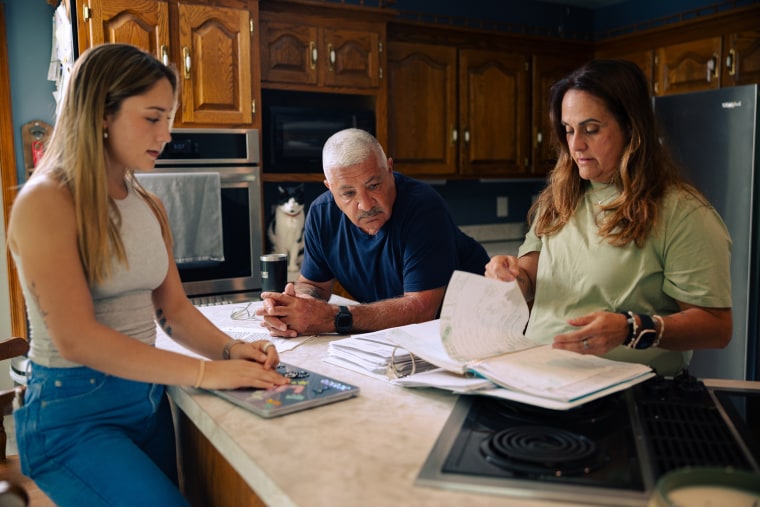
“It’s confusing that insurance doesn’t see my progress,” Levasseur said. “They seem more concerned about money than my life.” Her sister, Ellie Levasseur, assists her parents in resolving insurance issues related to Rachel’s treatment.
The Levasseurs reported owing about $1.3 million to the hospital, despite taking drastic financial measures such as a second mortgage and depleting Larry’s retirement savings. NBC News couldn’t verify the family’s debt, disclosed over the phone. CareFirst declined to comment on Levasseur’s case, and Sheppard Pratt also refrained due to privacy laws. Levasseur had allowed the hospital to share her medical information with NBC News.
The family’s story highlights the challenge of finding exceptional mental health providers covered by insurance, especially for complex cases. Over a third of psychologists surveyed by the American Psychological Association last year reported not accepting insurance, citing insufficient reimbursement and denied coverage as reasons.
Outside the specialized program, Rachel’s condition is worsening. She remains in the hospital’s in-network inpatient unit, but cannot rejoin the Retreat until her family clears their debt. Her OCD includes an extreme fear of germs, leading to thoughts of suicide. Autism spectrum disorder further complicates her condition, causing rigid thinking patterns.
Before the program, Larry watched her constantly during the day, while Kandy checked on her at night. Other programs failed to address her issues comprehensively, but Sheppard Pratt’s program did. “I truly believe Rachel wouldn’t be alive today without The Retreat,” Kandy said.
The Levasseurs understood the program wasn’t in their insurance network, but believed CareFirst might allow an exception, given Rachel’s lack of progress elsewhere. CareFirst occasionally agrees to a “single case agreement” for patients without in-network options. Larry was told that proving unmet needs elsewhere might prompt coverage.
In early 2025, Larry and Kandy penned a letter to CareFirst for reconsideration. At that time, CareFirst covered $521 of the $3,300 daily fee. However, CareFirst maintained its contribution, leaving the Levasseurs to appeal to Maryland’s Insurance Administration and Employee Benefits Division.
In April, the Benefits Division indicated that the Levasseurs had exhausted options. The hospital hadn’t shown interest in a single case agreement. However, Sheppard Pratt’s vice president emailed in May, expressing willingness for such an agreement.
The Benefits Division mentioned the Levasseurs had contacted an alternative in-network facility, but they disagreed and claimed not to receive equivalent care suggestions.
Rachel’s childhood bedroom showcases her struggles. A bathroom collage of motivational sayings includes: “I’m proud you’re still alive, despite it all.” A newspaper clipping reads, “The World is Not Better Without You.” On a wall, the suicide and crisis lifeline number is posted.
A barrier to her improvement has been finding autism-appropriate treatment. Traditional dialectical behavior therapy didn’t suit her, but a variant called ‘radically open’ dialectical behavior therapy, which encourages expressing hidden emotions and reducing black-and-white thinking, showed promise. “At The Retreat, nobody gave up on me,” Rachel said. “I felt focused support.”
The program agreed, stating in her treatment plan that she might finally be in the setting needed for sustainable progress.
The Levasseurs argue the program ultimately saves their insurance more by avoiding ineffective treatments. “If they covered The Retreat until I improved, it’d likely cost less, since I could stop needing treatment,” Levasseur said.
If facing overwhelming bills or coverage denials, email [email protected]. For crisis assistance, contact the 988 Suicide & Crisis Lifeline by calling or texting 988, or visit 988lifeline.org. Other resources are available at SpeakingOfSuicide.com/resources.
 Santa Ana Winds and Wildfire Risks in Southern California
  Push for Ensuring Lasting Smiles Act to Protect Families
  Americans’ Confidence in Food Safety Hits Record Low
  Prepare for an Early Influenza Season: Vaccination Timing Is Crucial
  Exploring the Promise of GLP-1 Drugs Beyond Weight Loss
  FDA Issues Highest Risk Warning for Recalled Salad Products